Shoulder Sleeve Insignias & Unit Patches

Historic military insignia preserved as artifacts of service, identity, and military history.


Collected as a Boy. Preserved for Generations.

These patches were collected in the 1940s by David H. Jones, marking the beginning of a lifelong interest in military history.

They have remained carefully preserved in original Old Home Fruit Cake box ever since.


United States Army Air Forces SSI

Unit:

First Air Force

Estimated Date

Circa 1940s–1950s

Branch

United States Army Air Forces
Description

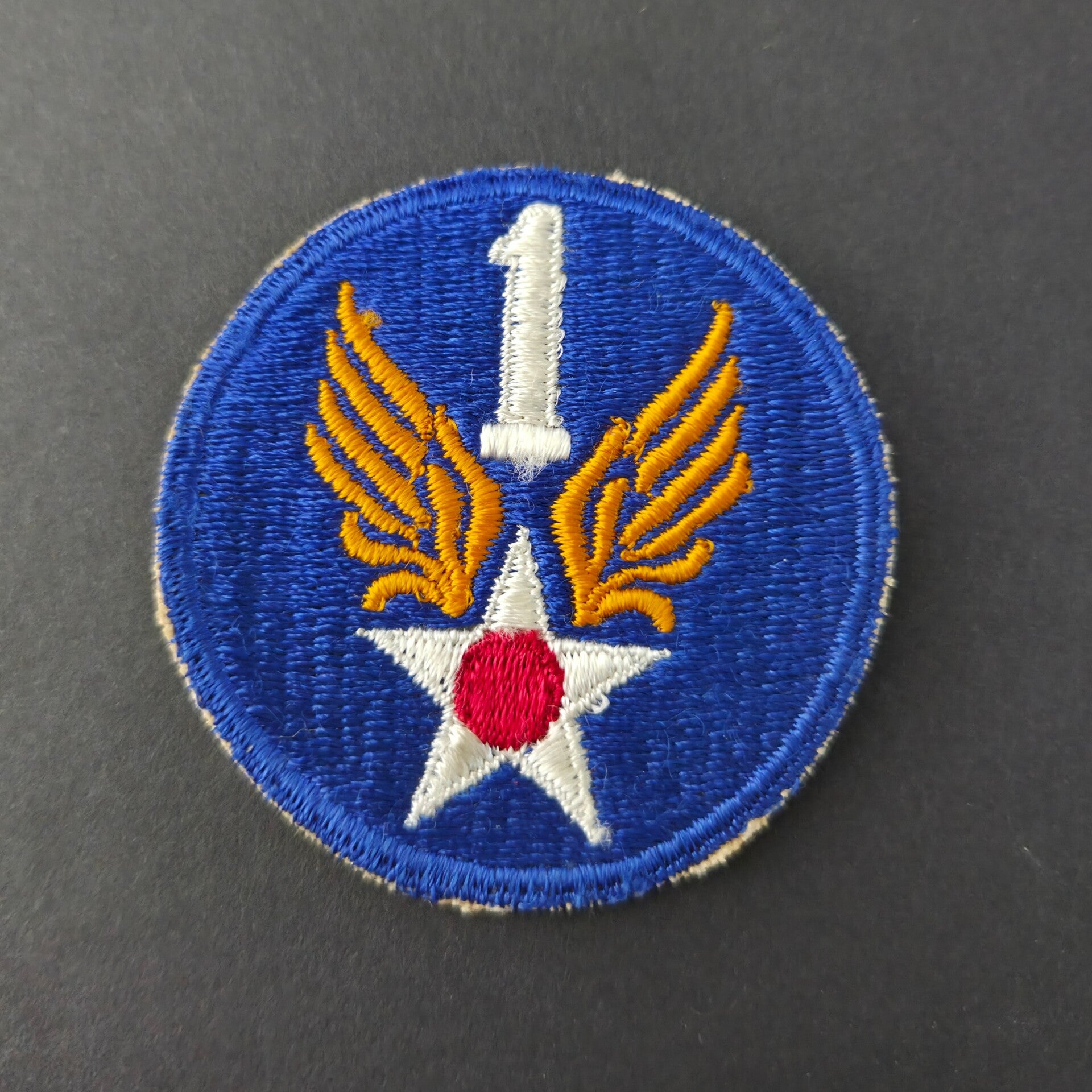
Original embroidered shoulder sleeve insignia representing the United States Army Air Forces First Air Force formation during the World War II and early postwar period. The design incorporates a white star with red center, stylized golden wings, and the numeral “1” over a blue aviation field.

First Air Force was responsible for the training, organization, and continental defense operations of Army Air Forces units within the northeastern United States during WWII. The command played an important role in preparing fighter and bomber personnel for deployment to overseas combat theaters.

This example displays characteristics consistent with mid-20th century manufacture, including embroidered cotton construction and a cut-edge border commonly associated with wartime-era insignia production.

United States Army Air Forces SSI

Unit:

Third Air Force

Estimated Date

Likely World War II era
Circa 1942–1945

Branch

United States Army Air Forces
Description

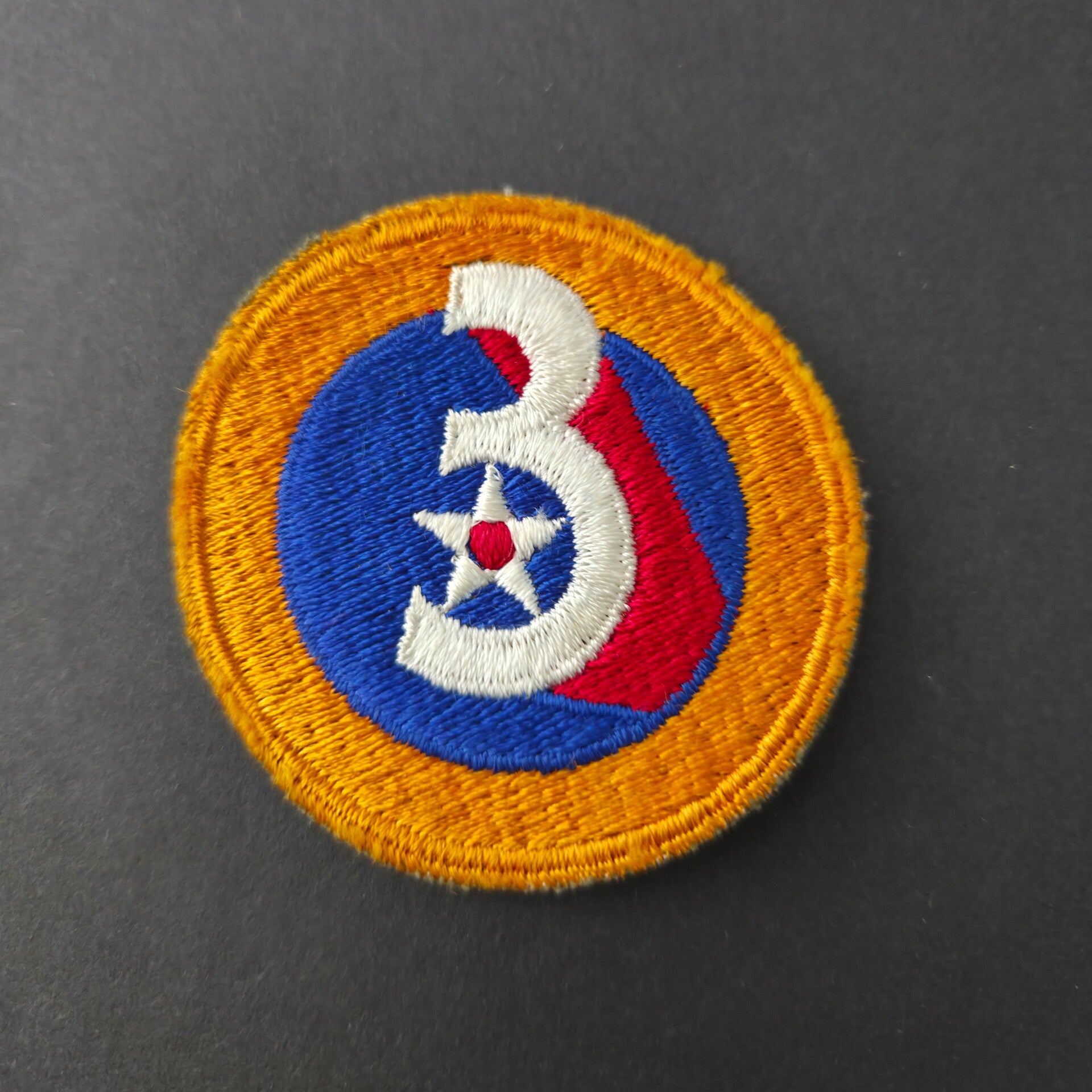
Original embroidered shoulder sleeve insignia representing the United States Army Air Forces Third Air Force command during the Second World War. The design features a large white numeral “3” incorporating the Army Air Forces star roundel against a blue field with red command element and golden border.

Third Air Force played a major role in the organization and tactical preparation of Army Air Forces combat units during WWII, particularly in fighter, bomber, and close air support training operations. Personnel trained under Third Air Force command contributed to multiple overseas combat theaters during the war.

This example displays characteristics associated with wartime manufacture, including dense embroidered construction, cut-edge finishing, and period-correct twill materials.

United States Army Air Forces SSI

Unit:

Fifth Air Force

Estimated Date

Circa 1942–1945

Branch

United States Army Air Forces
Description

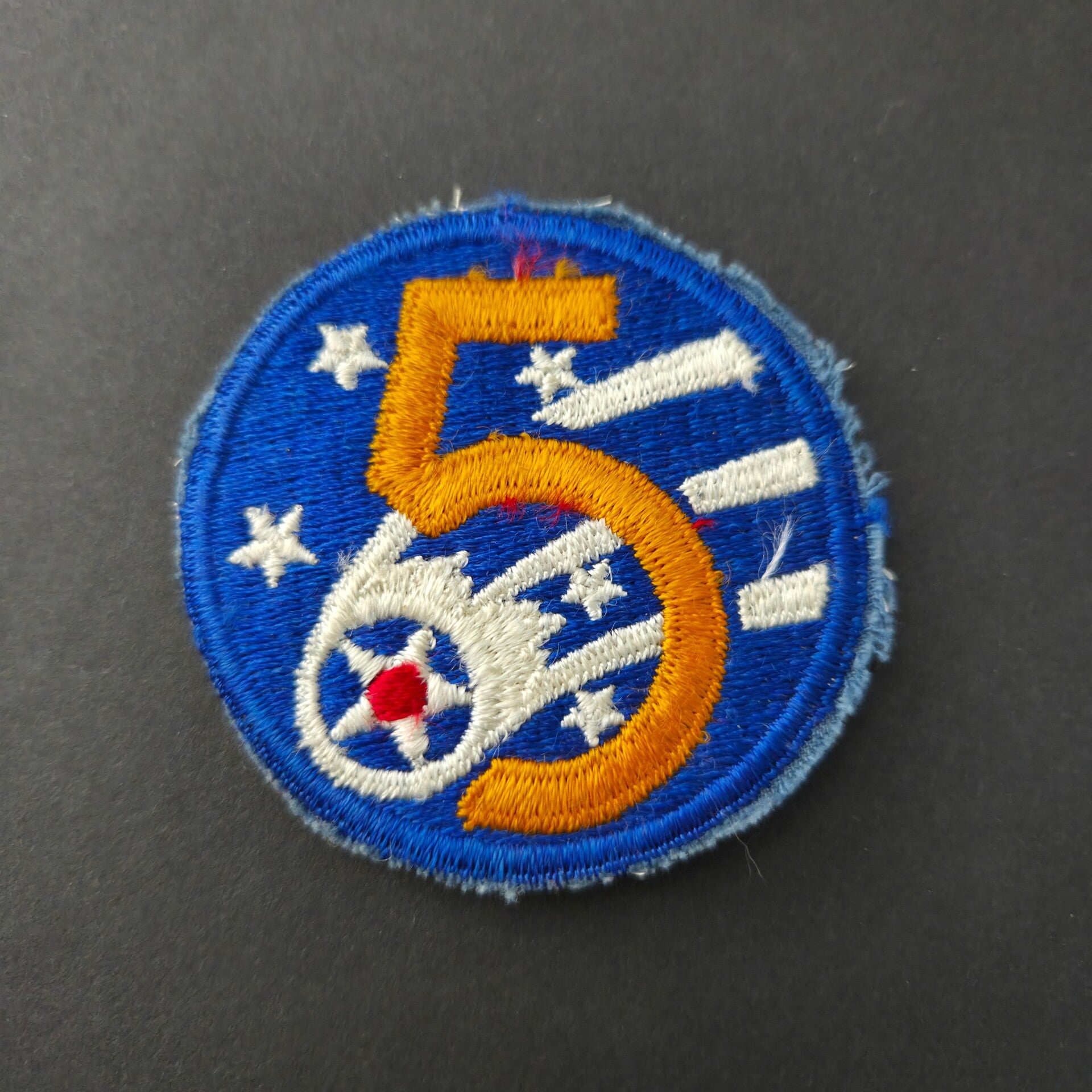
Original embroidered shoulder sleeve insignia representing the United States Army Air Forces Fifth Air Force command during the Second World War. The design features a stylized winged Army Air Forces star integrated within a large golden numeral “5” against a blue aviation field with white flight streaks and stars.

Fifth Air Force served as one of the principal American air combat commands in the Pacific Theater during WWII, participating extensively in operations throughout New Guinea, the Philippines, and other Pacific campaigns against Imperial Japanese forces.

This example exhibits characteristics consistent with wartime manufacture, including embroidered cotton construction, period twill materials, and cut-edge finishing associated with WWII-era insignia production.

United States Army Air Forces SSI

Unit:

Seventh Air Force

Estimated Date

Circa 1942–1945

Branch

United States Army Air Forces
Description

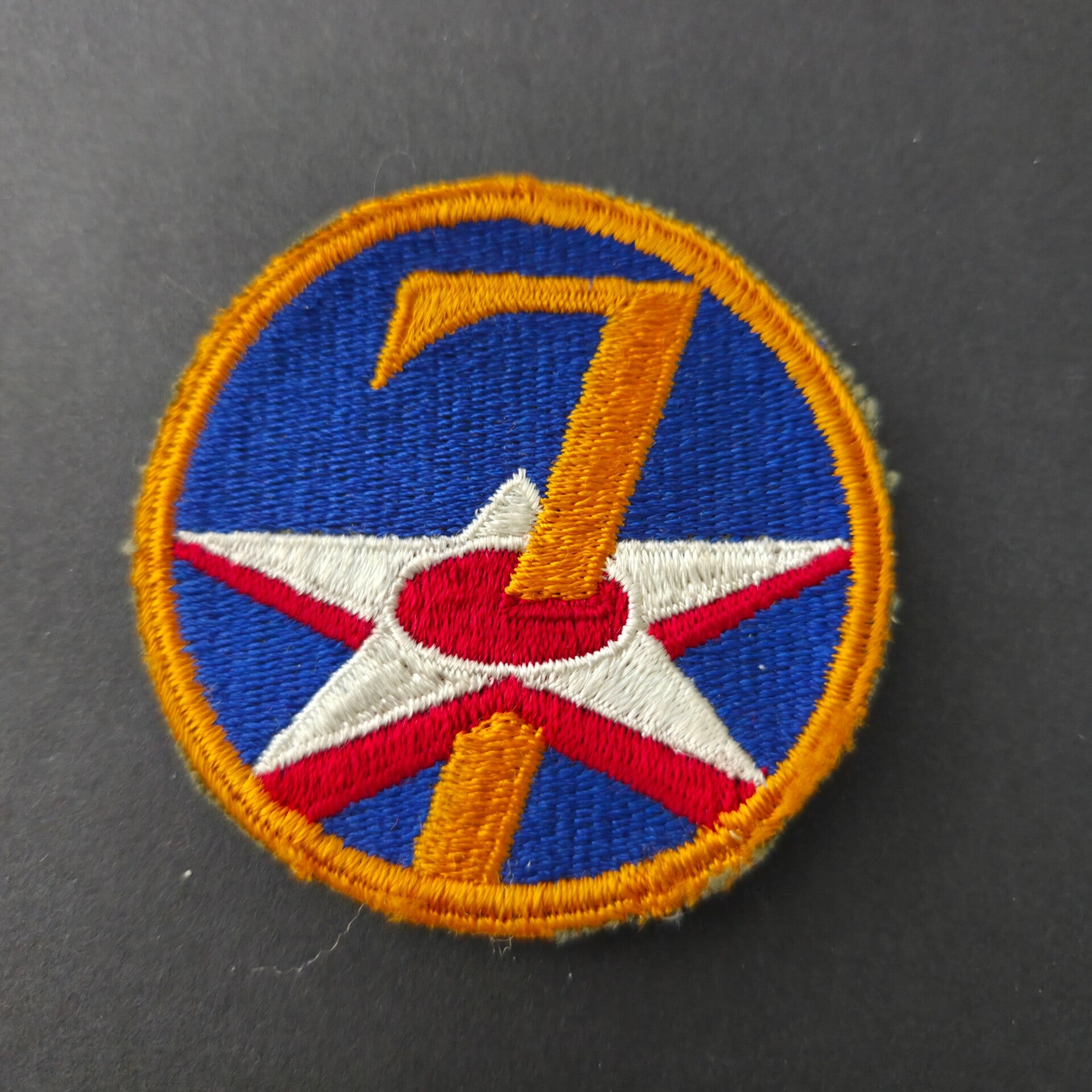
Original embroidered shoulder sleeve insignia representing the United States Army Air Forces Seventh Air Force command during the Second World War. The design features a large golden numeral “7” over the Army Air Forces star roundel against a blue aviation field with gold border.

Seventh Air Force operated extensively throughout the Pacific Theater during WWII and participated in major air operations connected to the island-hopping campaigns against Imperial Japanese forces. Units under Seventh Air Force command supported bombing, reconnaissance, escort, and tactical combat missions across the Central Pacific.

This example exhibits characteristics associated with wartime manufacture, including embroidered cotton construction, period twill materials, and cut-edge finishing typical of WWII-era insignia production.

United States Army Air Forces SSI

Unit:

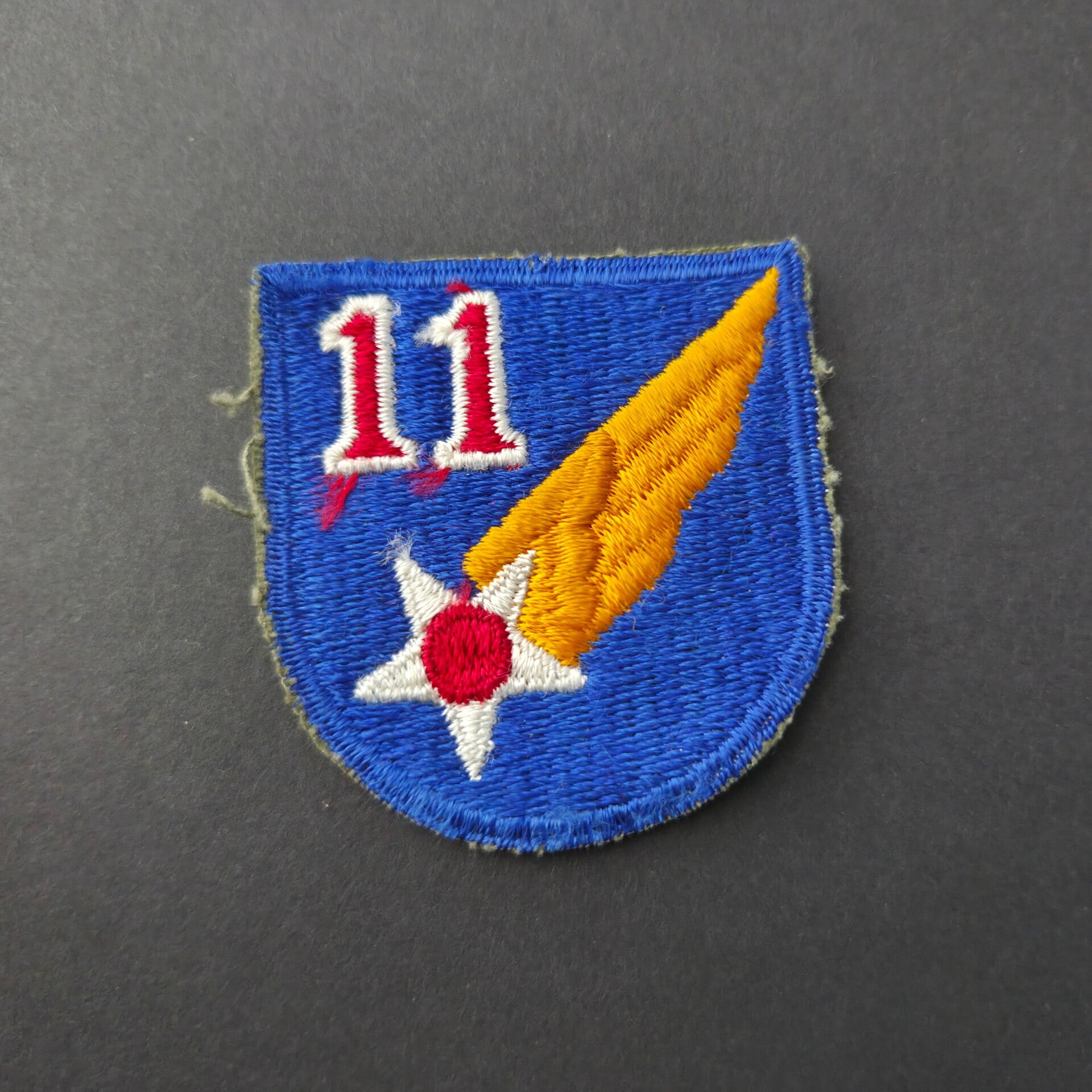
Eleventh Air Force (11th Air Force)

Estimated Date

Circa 1943 – 1945 (World War II Era)

Branch

United States Army Air Forces
Description

First authorized in August 1943, the 11th Air Force patch uses the blue shield field to signify the vast northern skies. The shooting star motif explicitly conveys the striking power and velocity of advanced aviation assets deployed to secure strategic air superiority.

During World War II, the unit operated out of remote airfields in Alaska and the Aleutian Islands. They launched relentless bombing and strafing runs against entrenched Japanese garrisons under some of the worst flying conditions of the war. Their successful campaign neutralized the enemy's northernmost foothold, securing a vital defensive shield for the Western Hemisphere.

United States Army Air Forces SSI

Unit:

Fifteenth Air Force

Estimated Date

Circa 1943–1945

Branch

United States Army Air Forces
Description

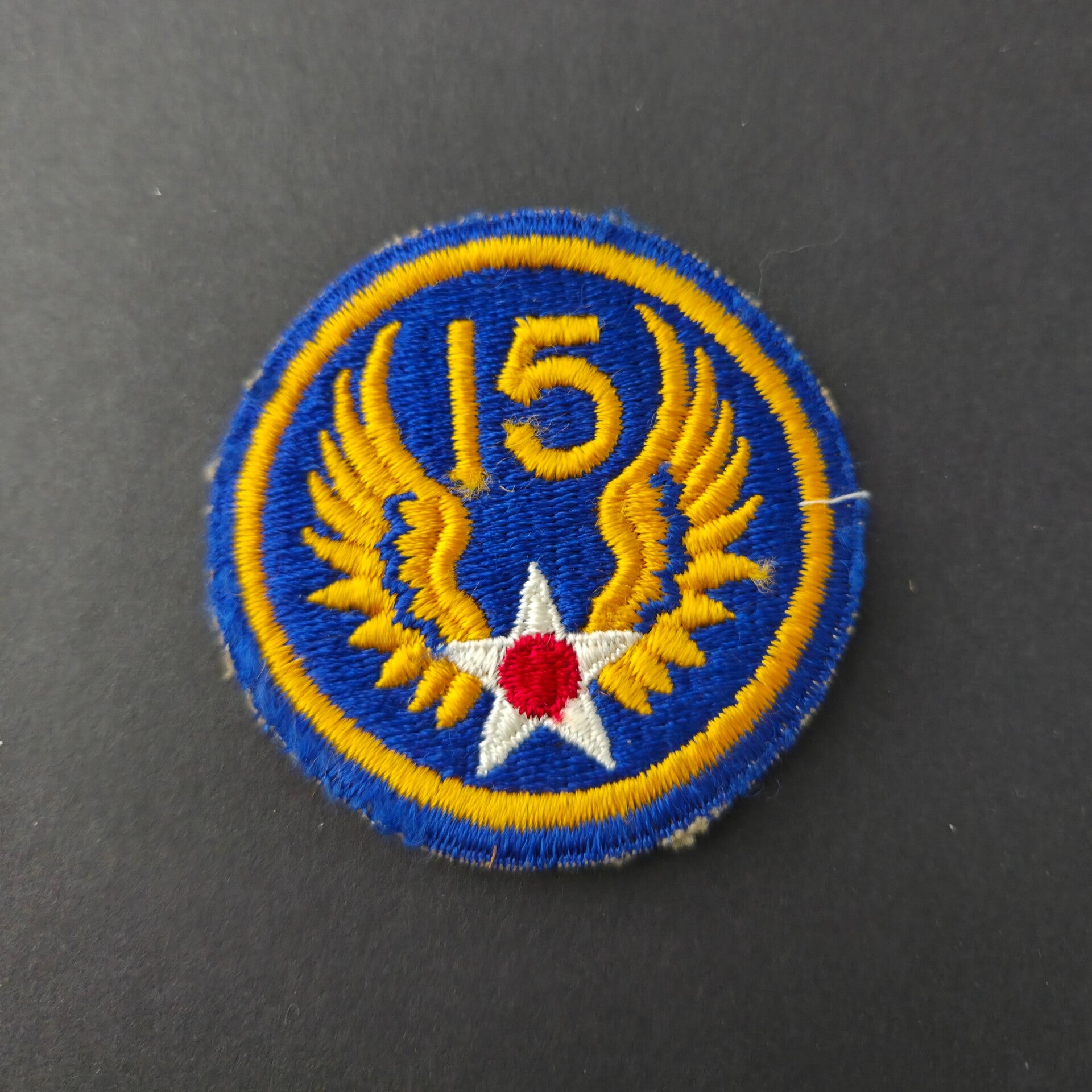
Original embroidered shoulder sleeve insignia representing the United States Army Air Forces Fifteenth Air Force command during the Second World War. The design incorporates golden wings and the numeral “15” above the Army Air Forces star roundel against a blue aviation field.

Activated in 1943, Fifteenth Air Force became one of the principal American strategic bombing commands operating from bases in Italy and the Mediterranean Theater. Aircraft and personnel under its command conducted long-range bombing missions against industrial, transportation, and petroleum targets throughout Axis-controlled Europe.

This example displays characteristics associated with wartime manufacture, including embroidered cotton construction, period twill materials, and cut-edge finishing typical of WWII-era insignia production.

United States Army Air Forces SSI

Unit:

Fourteenth Air Force (Flying Tigers)

Estimated Date

Circa 1943–1945

Branch

United States Army Air Forces
Description

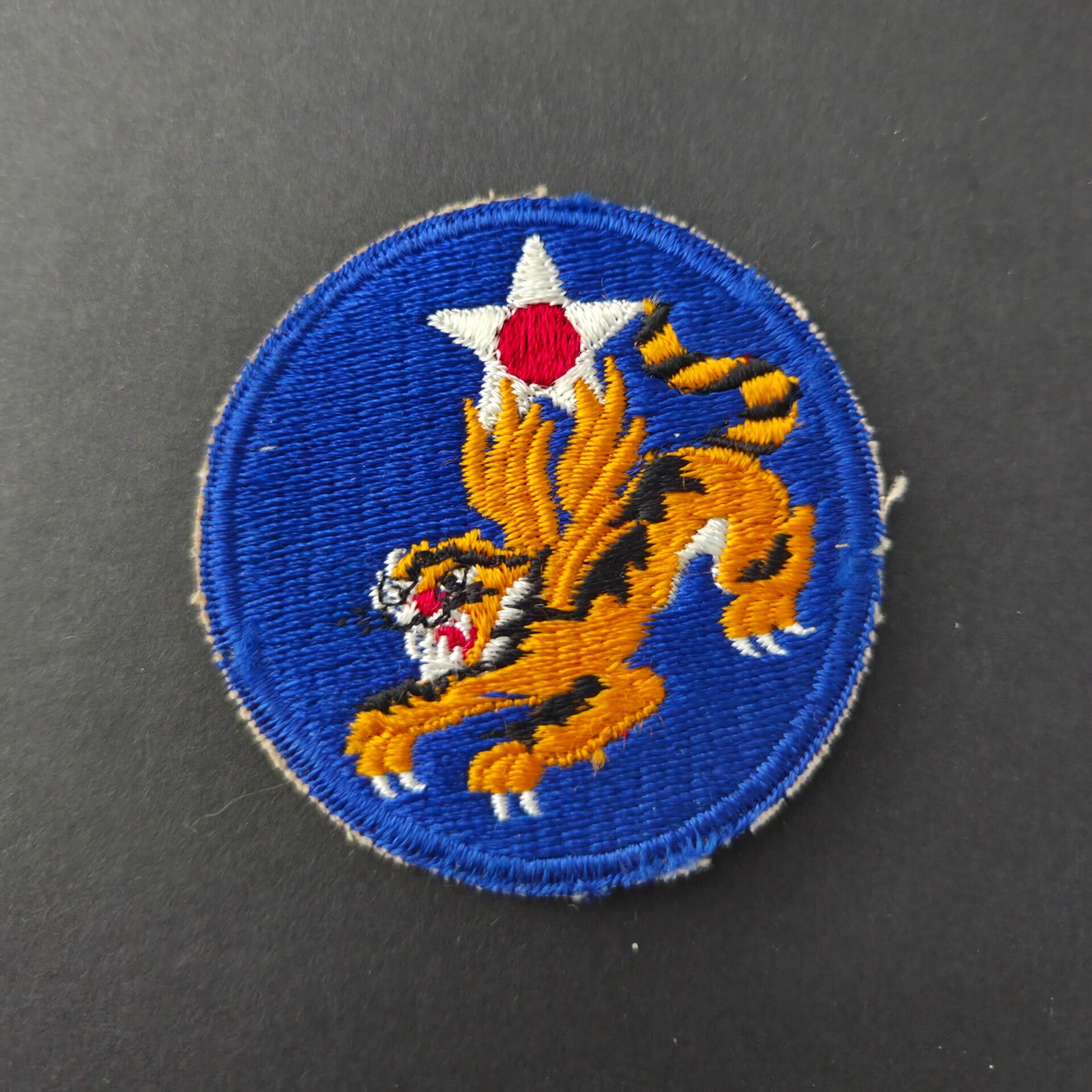
Original embroidered shoulder sleeve insignia representing the United States Army Air Forces Fourteenth Air Force during the Second World War. The design features the iconic winged tiger beneath the Army Air Forces star roundel against a blue aviation field.

Fourteenth Air Force operated primarily in the China-Burma-India Theater and descended from the legacy of the famed American Volunteer Group, popularly known as the “Flying Tigers.” Under the leadership of General Claire Lee Chennault, American air personnel conducted fighter interception, bomber escort, reconnaissance, and ground attack operations against Japanese forces throughout the region.

This example exhibits characteristics associated with wartime manufacture, including embroidered cotton construction, period twill materials, and cut-edge finishing typical of WWII-era insignia production.

United States Army Air Forces SSI

Unit:

Far East Air Forces (FEAF)

Estimated Date

Circa January 1945 – 1946 (World War II Era)

Branch

United States Army Air Forces
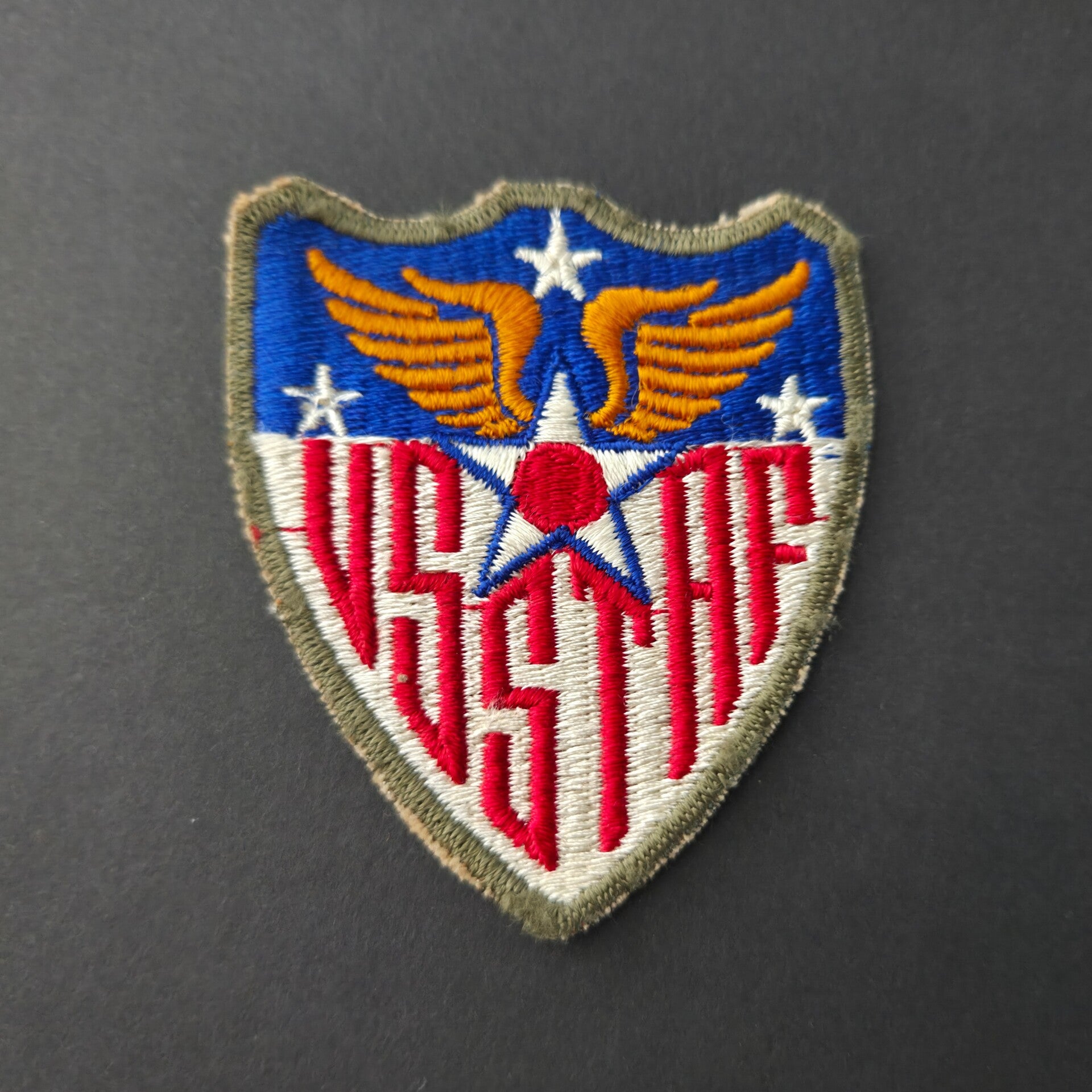
Description

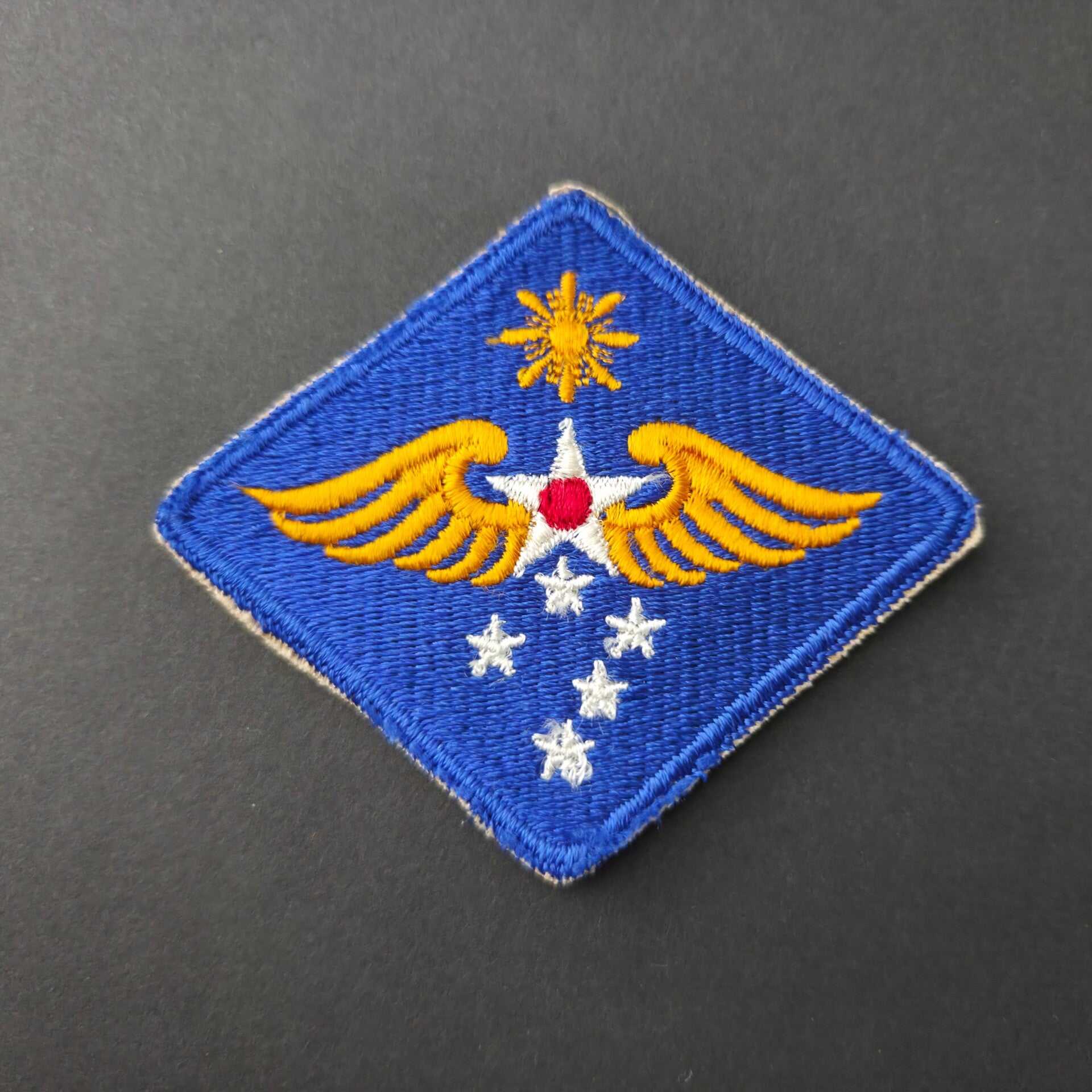
First authorized in January 1945, the FEAF patch explicitly charts the geography of its theater assignments. The golden wings and central star reflect parent USAAF ties, while the Southern Cross constellation and eastern sun chart their dynamic battlefield footprint across the Pacific Theater. 

During World War II, the command directed devastating counter-air and interdiction operations across New Guinea, the Philippines, and Okinawa, effectively dismantling the Japanese military aviation network. Following the cessation of hostilities, the unit transitioned to help govern the occupation zone, eventually being redesigned as the Pacific Air Forces (PACAF).

United States Army Air Forces SSI

Unit:

United States Strategic Air Forces in Europe (USSTAF)

Estimated Date

Circa March 1944 – 1945 (World War II Era)

Branch

United States Army Air Forces
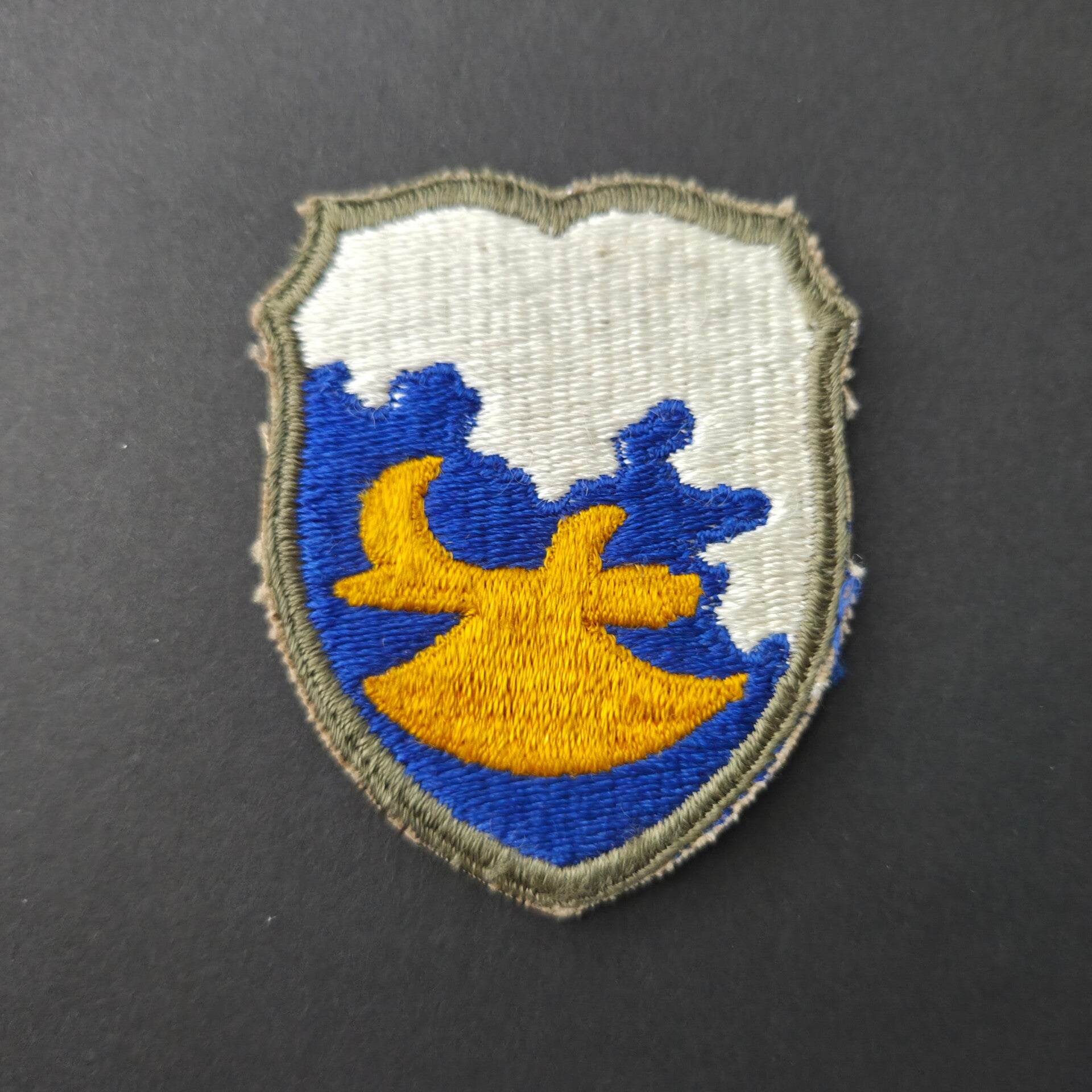
Description

First authorized in March 1944, the USSTAF patch reflects the command's control over the heavy bomber forces in the European Theater. The blue and white fields signify the dual arena of day and night operational realities, while the integrated red lettering underscores the definitive presence of United States strategic air mastery.

During World War II, this supreme aviation headquarters orchestrated the round-the-clock bombing offensives over Occupied Europe. By coordinating the massive heavy bomber streams of the 8th and 15th Air Forces, USSTAF successfully crippled the industrial output and logistics of the Axis powers, securing total air supremacy over the continent and altering the strategic timeline of the European war.

United States Army Air Forces SSI

Unit:

United States Air Forces in Europe (USAFE)

Estimated Date

Circa December 1944 – 1946 (World War II Era)

Branch

United States Army Air Forces
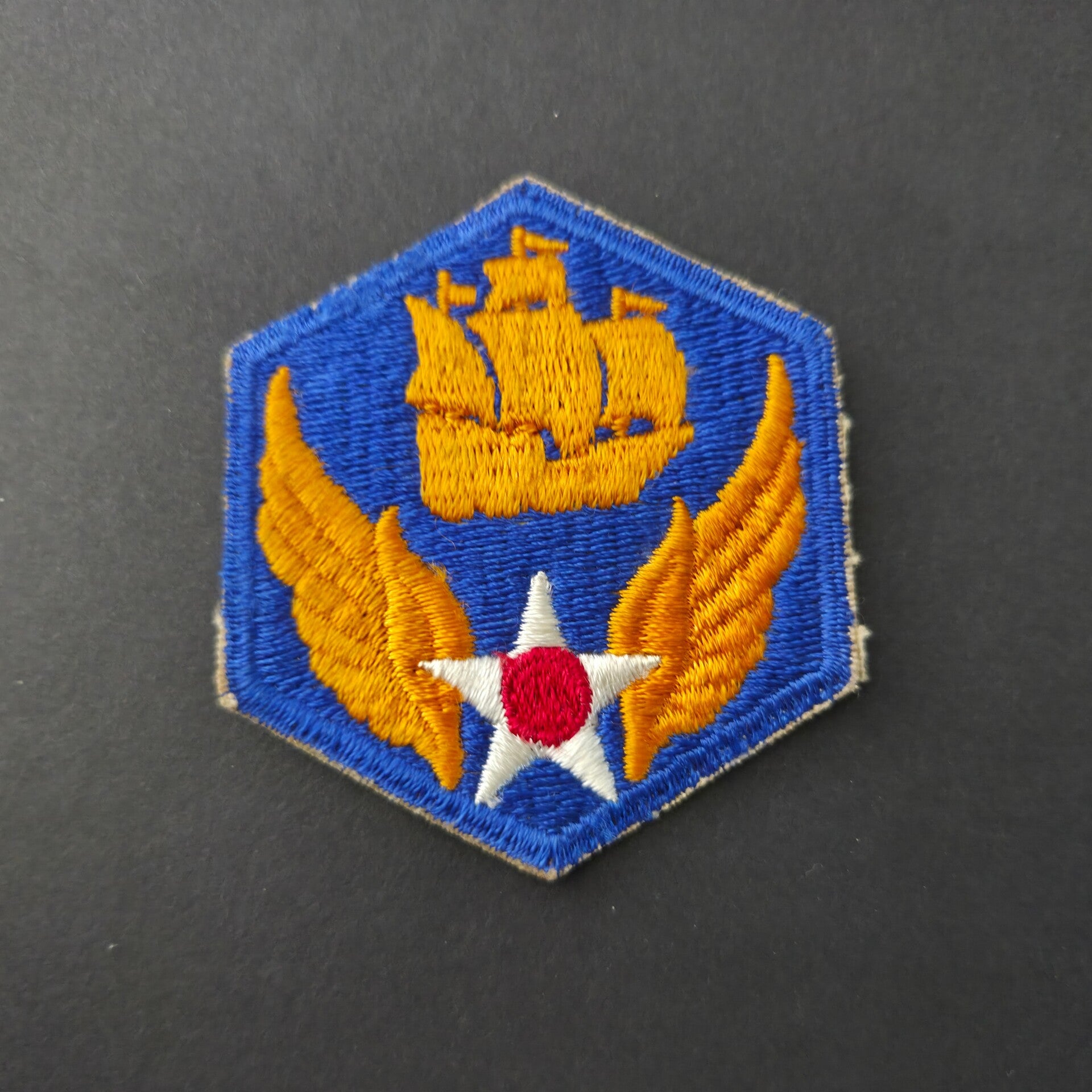
Description

First authorized in December 1944, the USAFE insignia reflects the command's control over tactical aviation assets across the European continent. The split cloud-and-sky motif signifies mastery of the upper atmosphere, while the rising gold emblem captures the rapid velocity and strategic dominance of American air power.

During World War II, this theater-level air command directed massive fighter-bomber and troop carrier operations that effectively paralyzed German defenses ahead of advancing ground forces. Following V-E Day, the command shifted its focus to humanitarian and Cold War defense operations, proving instrumental in sustaining the blockaded city of Berlin during the 1948 airlift operations.


United States Army Air Forces SSI

Unit:

Caribbean Air Command (Historically the Sixth Air Force / 6th AF)

Estimated Date

Circa December 1944 – 1946 (World War II Era)

Branch

United States Army Air Forces
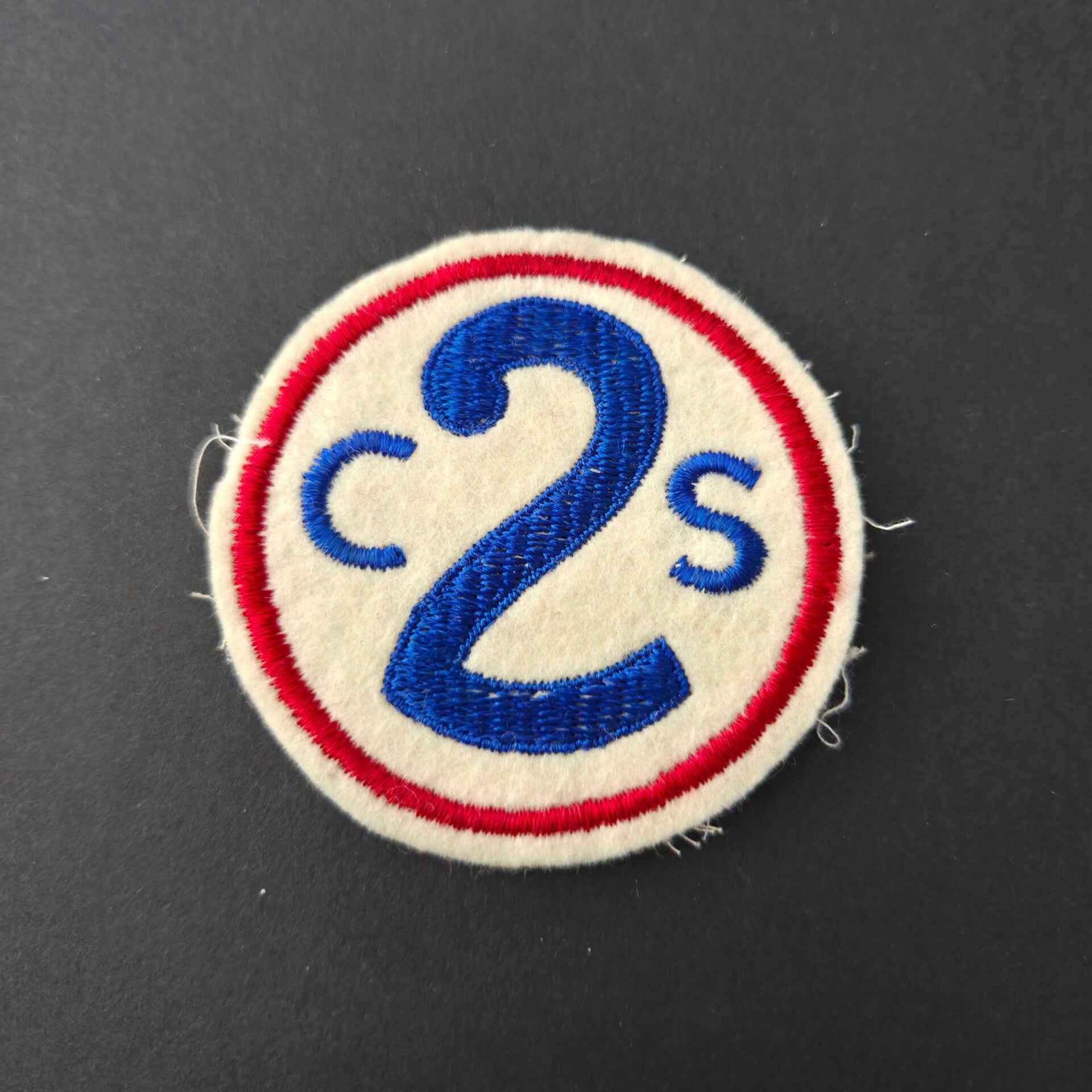
Description

First authorized as the 6th Air Force before being restructured in early 1945, this patch explicitly blends historical regional imagery with modern military capability. The Spanish galleon pays homage to the naval history of the Caribbean theater, contrasted against the winged star representing United States air defenses.

During World War II, this command formed a protective shield over the strategic infrastructure of Central America. Operating a network of remote air bases, its crews logged thousands of hours flying long-range reconnaissance and anti-submarine missions to guarantee that the Panama Canal remained safely open for the constant transit of Allied warships and supply fleets.


United States Army Training School Shoulder Patch

Unit:

2nd Corps School

Estimated Date

Circa 1930s–1945

Branch

United States Army
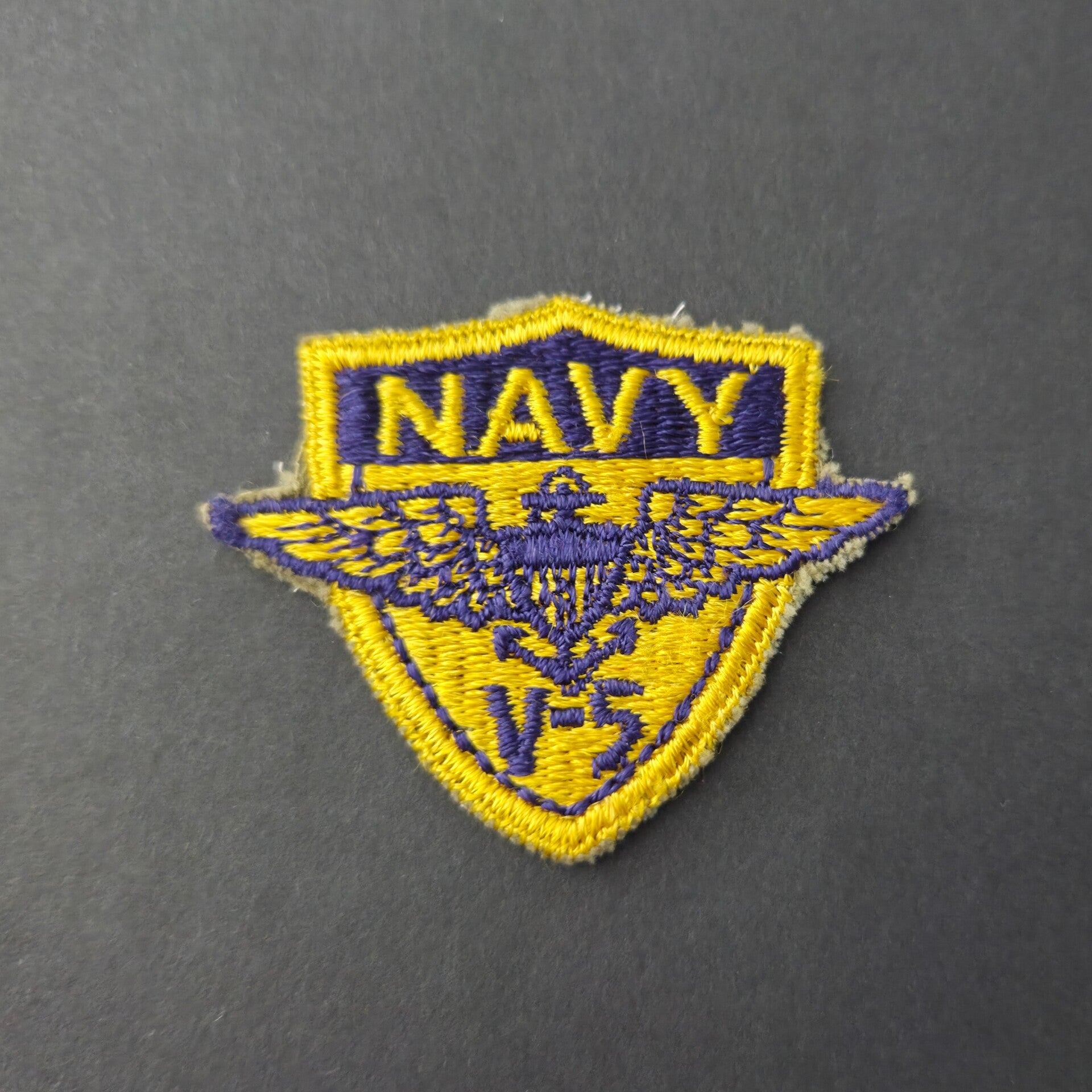
Description

Authentic embroidered shoulder patch representing the United States Army 2nd Corps School. The design features a large blue numeral “2” centered between smaller embroidered letters “C” and “S,” all positioned on a white felt field enclosed by a red circular border.

The initials “C.S.” stand for “Corps School”

This insignia was associated with Army training personnel and soldiers assigned to specialized instructional programs connected to the 2nd Corps during the World War I period.

The example shown here displays construction methods typical of early-to-mid 20th century military insignia manufacture, including cotton embroidery applied directly onto felt backing material.

United States Navy Aviation Cadet Identification Patch

Unit:

V-5 Aviation Cadet Training Program

Estimated Date

Circa 1930s–1945

Branch

United States Navy
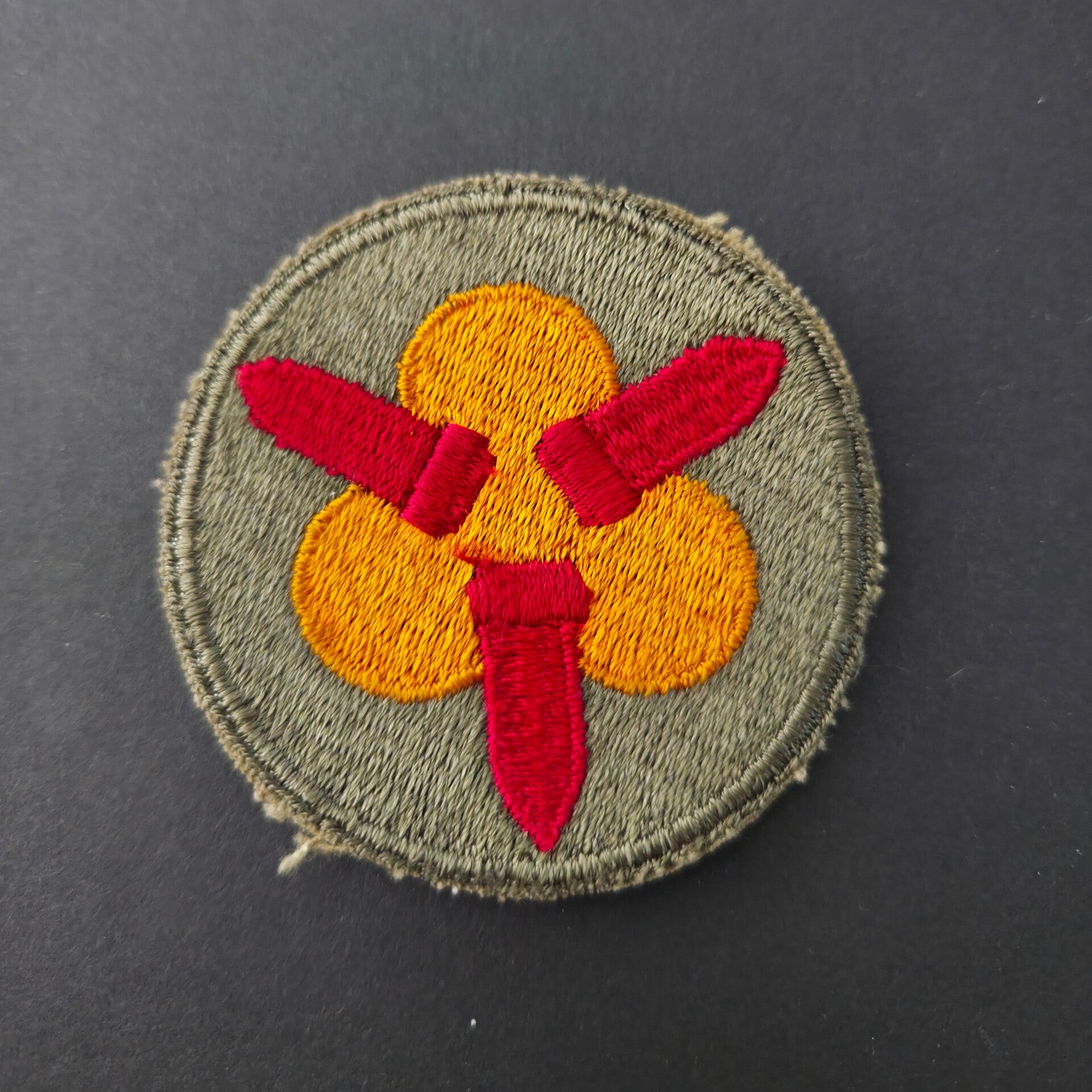
Description

First deployed during the massive pre-war aviation mobilization, this insignia identifies a candidate in the U.S. Navy's V-5 program. The golden-yellow shield and blue accents match the traditional Navy colors, while the central emblem mirrors the coveted officer flight wings the cadets aspired to earn.

The V-5 program was a critical component of victory in the Pacific, transforming tens of thousands of civilian students into the skilled fighter, dive-bomber, and torpedo-bomber pilots needed to crew the Navy's rapidly growing carrier fleets. These patches were typically worn on the breast pockets or sleeves of cadet flight coveralls and training uniforms, making them a relatively scarce find compared to standard fleet insignias.

United States Army coastal defense / artillery command SSI

Unit:

Chesapeake Bay Frontier Defense Sector
(formerly associated with the 3rd Coast Artillery Command)

Estimated Date

World War II era
(circa 1941–1945)

Branch

United States Army
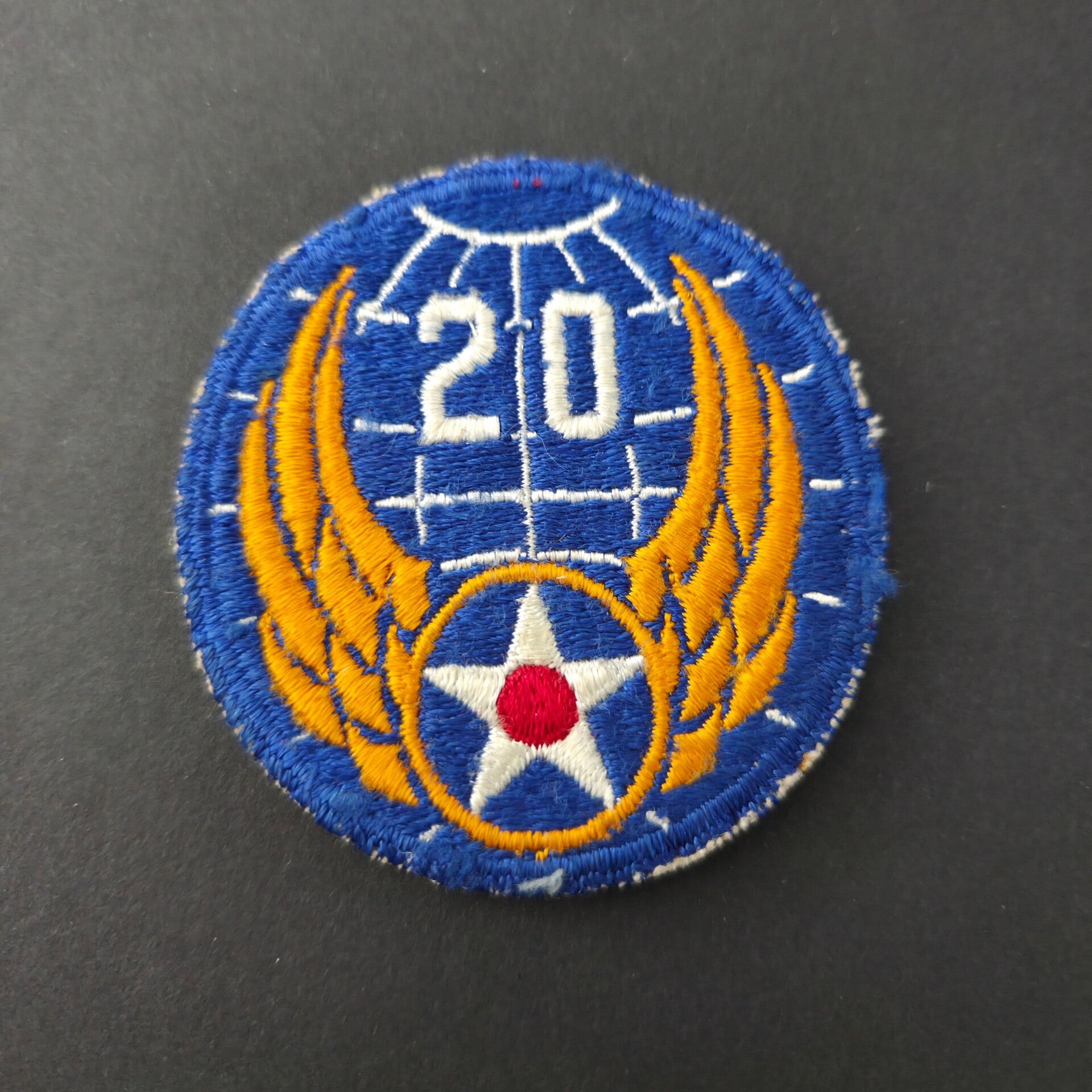
Description

Original embroidered military insignia associated with the Chesapeake Bay Frontier Defense Sector during the Second World War. The design features a yellow three-part central device overlaid by three outward-pointing red artillery projectiles against an olive drab circular field.

The imagery reflects the mission of coastal artillery and harbor defense units responsible for protecting strategic portions of the American eastern seaboard during WWII.

This example exhibits characteristics associated with wartime insignia manufacture, including embroidered cloth construction and period edge finishing. Authentic examples from this period are commonly encountered with “green back” or “white back” construction styles typical of WWII-era production.

United States Army Air Forces SSI

Unit:

Twentieth Air Force

Estimated Date

Circa 1944–1945

Branch

United States Army Air Forces
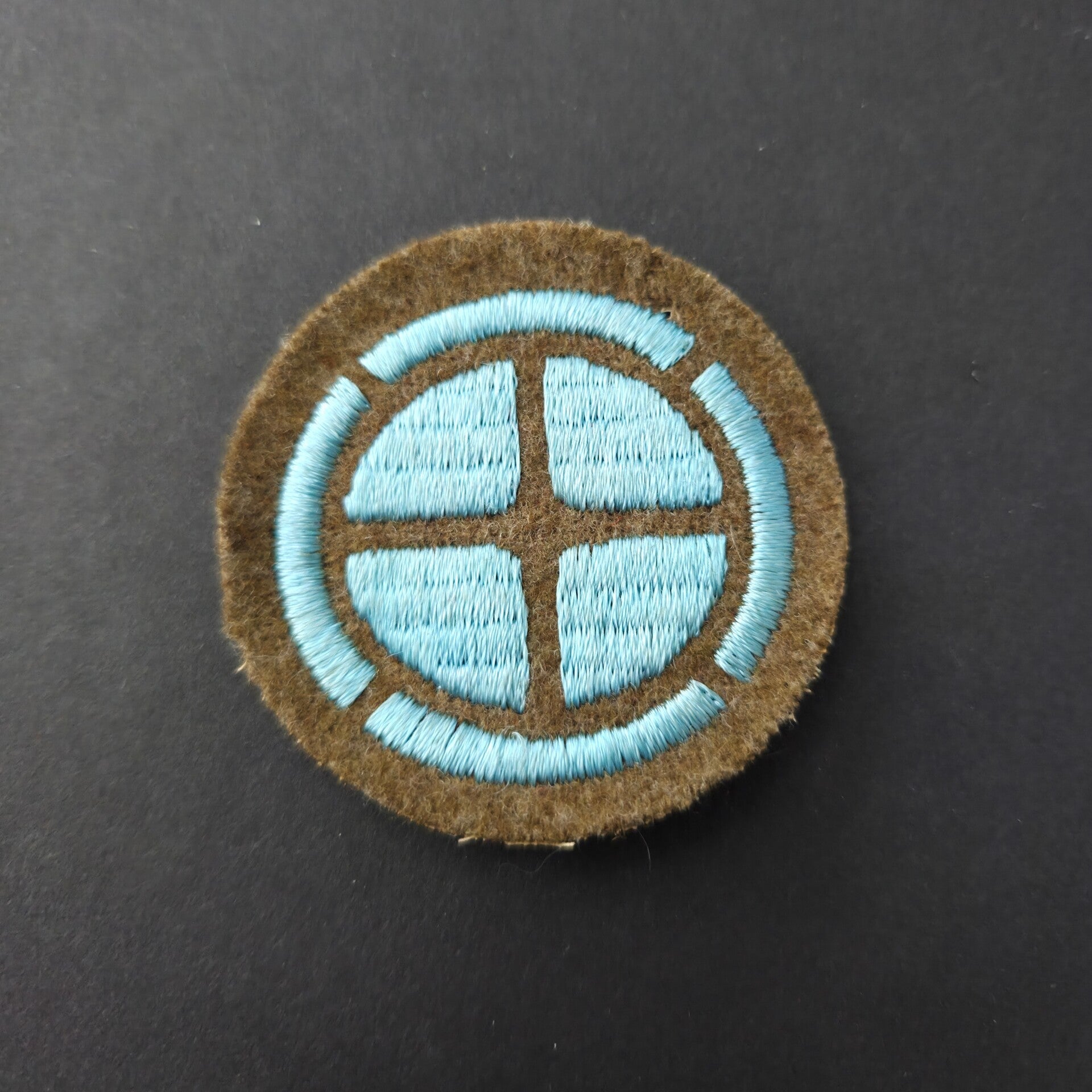
Description

Original embroidered shoulder sleeve insignia representing the United States Army Air Forces Twentieth Air Force command during the Second World War. The design incorporates a stylized globe beneath the numeral “20,” flanked by golden wings above the Army Air Forces star roundel against a blue aviation field.

Twentieth Air Force directed the long-range strategic bombing campaign against Imperial Japan during the latter stages of WWII and became closely associated with the Boeing B-29 Superfortress program. Aircraft and personnel under its authority conducted strategic bombing operations from bases in the Pacific and China-Burma-India theaters.

This example displays characteristics associated with wartime manufacture, including embroidered cotton construction, period twill materials, and cut-edge finishing typical of WWII-era insignia production.

United States Army SSI

Unit:

35th Infantry Division (Santa Fe Division)

Estimated Date

World War II era
(circa 1941–1945)

Branch

United States Army
Description

Original embroidered shoulder sleeve insignia representing the United States Army 35th Infantry Division during the Second World War. The design features a segmented light blue cross enclosed within a circular border embroidered onto an olive drab wool felt field.

The insignia symbolically represents the historic Santa Fe Trail, reflecting the division’s historical ties to Kansas and Missouri National Guard units.

This example is constructed in the classic “woolie” or cut-edge style associated with early-to-mid 20th century military insignia manufacture. The embroidered light blue thread and wool felt backing are characteristic of wartime production methods commonly encountered on WWII-era shoulder patches.

United States Army SSI

Unit:

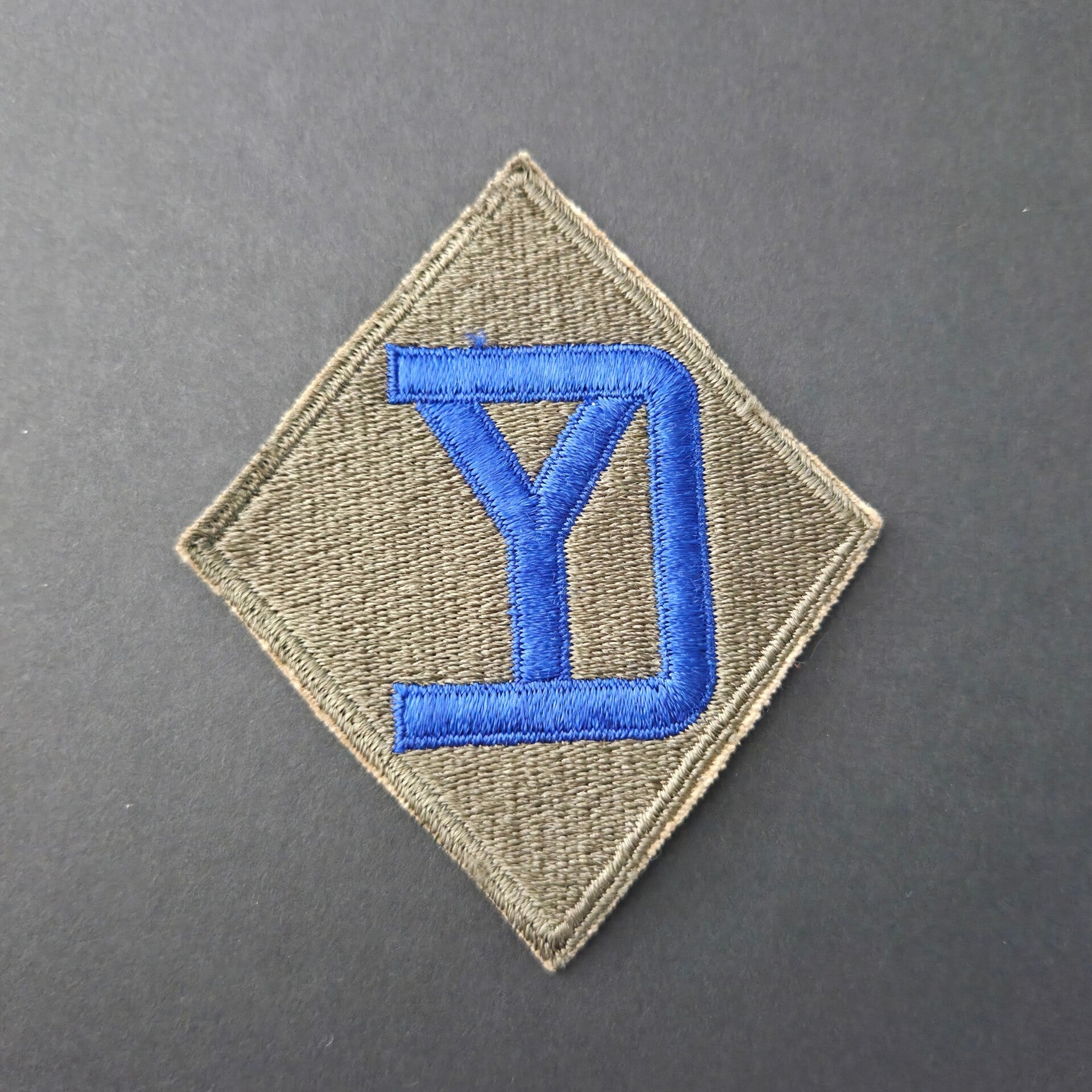
26th Infantry Division ("Yankee Division")

Estimated Date

Circa 1943 – 1945 (World War II Era)

Branch

United States Army
Description

First authorized in October 1918, the 26th Division patch utilizes a simple monogram layout to represent the New England origins of its original regiments. It holds the distinction of being one of the earliest official shoulder sleeve insignias ever adopted by the U.S. Army.

During World War II, the "Yankee" division served 199 days in continuous frontline combat operations across the European Theater of Operations (ETO). Serving as a dependable spearhead element under the Third Army, they broke through heavily fortified German river lines, braved sub-zero conditions to smash the Ardennes counter-offensive, and ultimately advanced deep into Czechoslovakia and Austria by V-E Day.

United States Army SSI

Unit:

13th Airborne Division ("Golden Unicorn Division")

Estimated Date

Circa 1943 – 1945 (World War II Era)

Branch

United States Army
Description

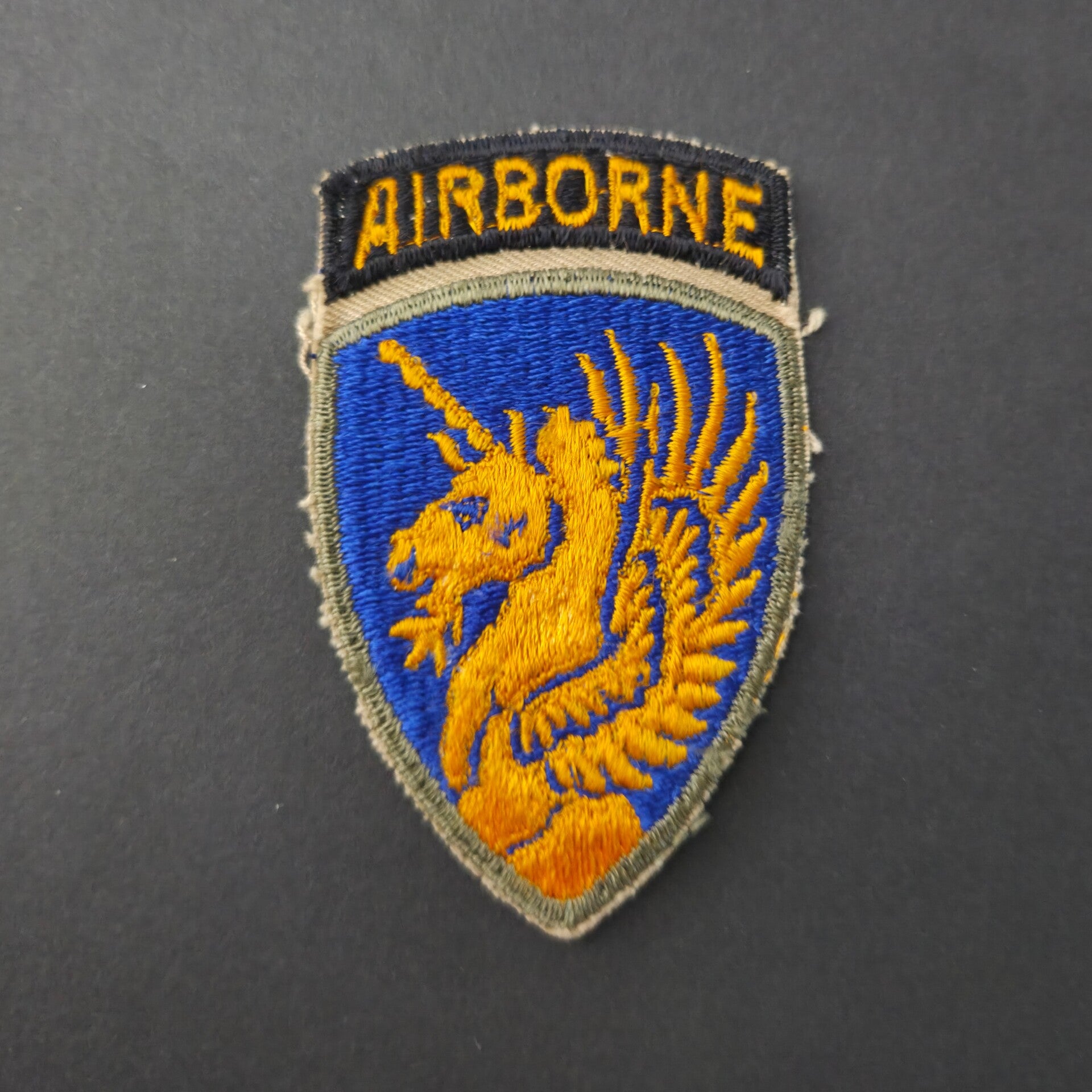
First authorized in June 1943, the 13th Airborne insignia utilizes the mythical winged unicorn to embody the speed, aggressive spirit, and unique tactical capabilities required of elite airborne infantry units.

During World War II, the division served as a highly mobile strategic reserve force in France. Although tactical breakthroughs by ground forces ultimately bypassed the need for their airborne deployments, the unit maintained a vital, high-readiness presence in theater until V-E Day. Following the German surrender, the division returned to the United States to prepare for deployment to the Pacific Theater before the sudden end of the war halted operations.

United States Army SSI

Unit:

94th Infantry Division (Pilgrim Division)

Estimated Date

World War II era
(circa 1941–1945)

Branch

United States Army
Description

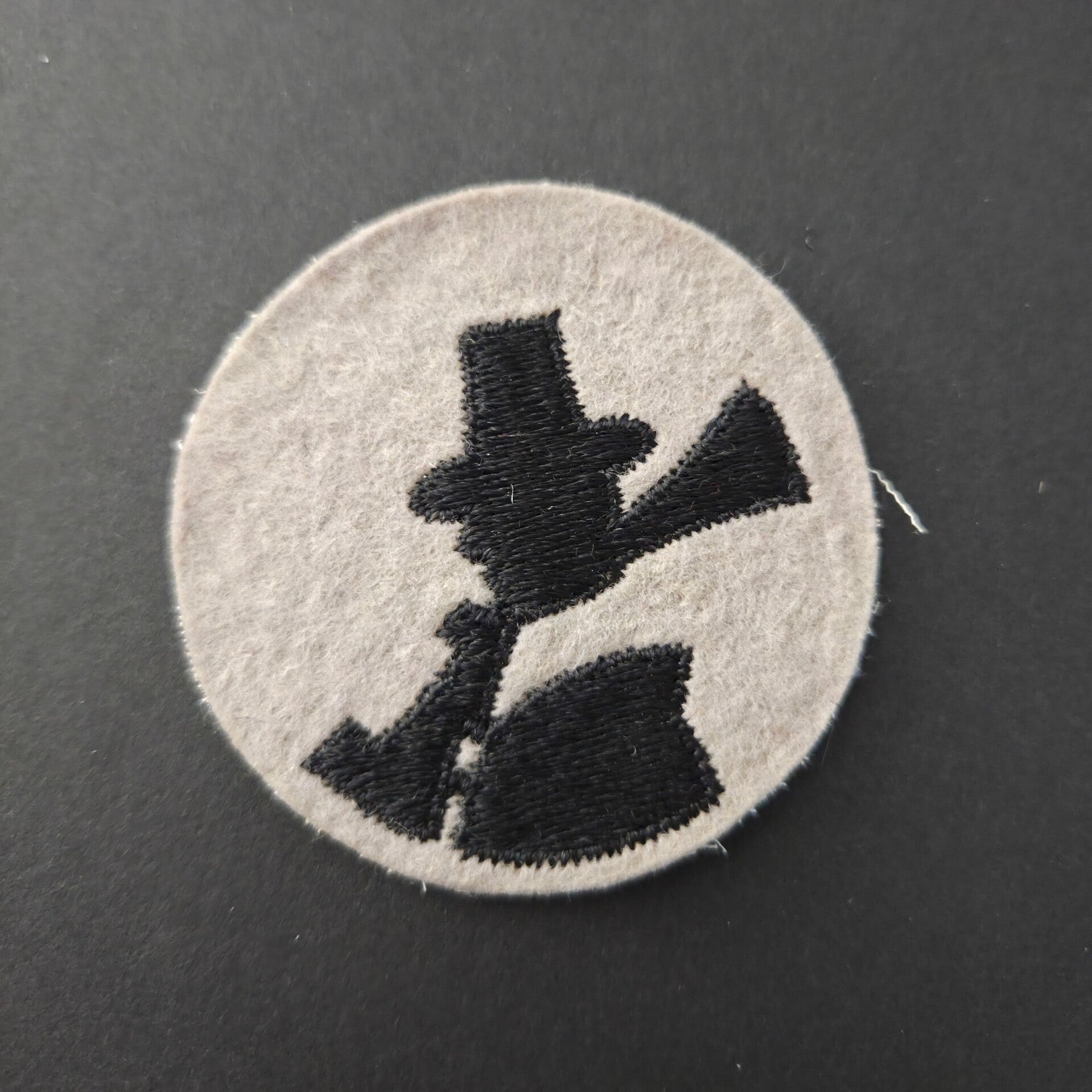
Original embroidered shoulder sleeve insignia representing the United States Army 94th Infantry Division during the Second World War. The design features a black stylized “Pilgrim” or Puritan silhouette embroidered against a white felt circular field.

The emblem reflects the division’s historical ties to the New England region of the United States and became one of the most recognizable infantry division insignia of the WWII era.

This example displays characteristics associated with wartime manufacture, including machine embroidery directly onto felt construction consistent with period military insignia production. Authentic wartime examples commonly utilized felt construction and may feature cheesecloth-style backing materials.

United States Army SSI

Unit:

33rd Infantry Division (Golden Cross Division)

Estimated Date

World War II era
(circa 1941–1945)

Branch

United States Army
Description

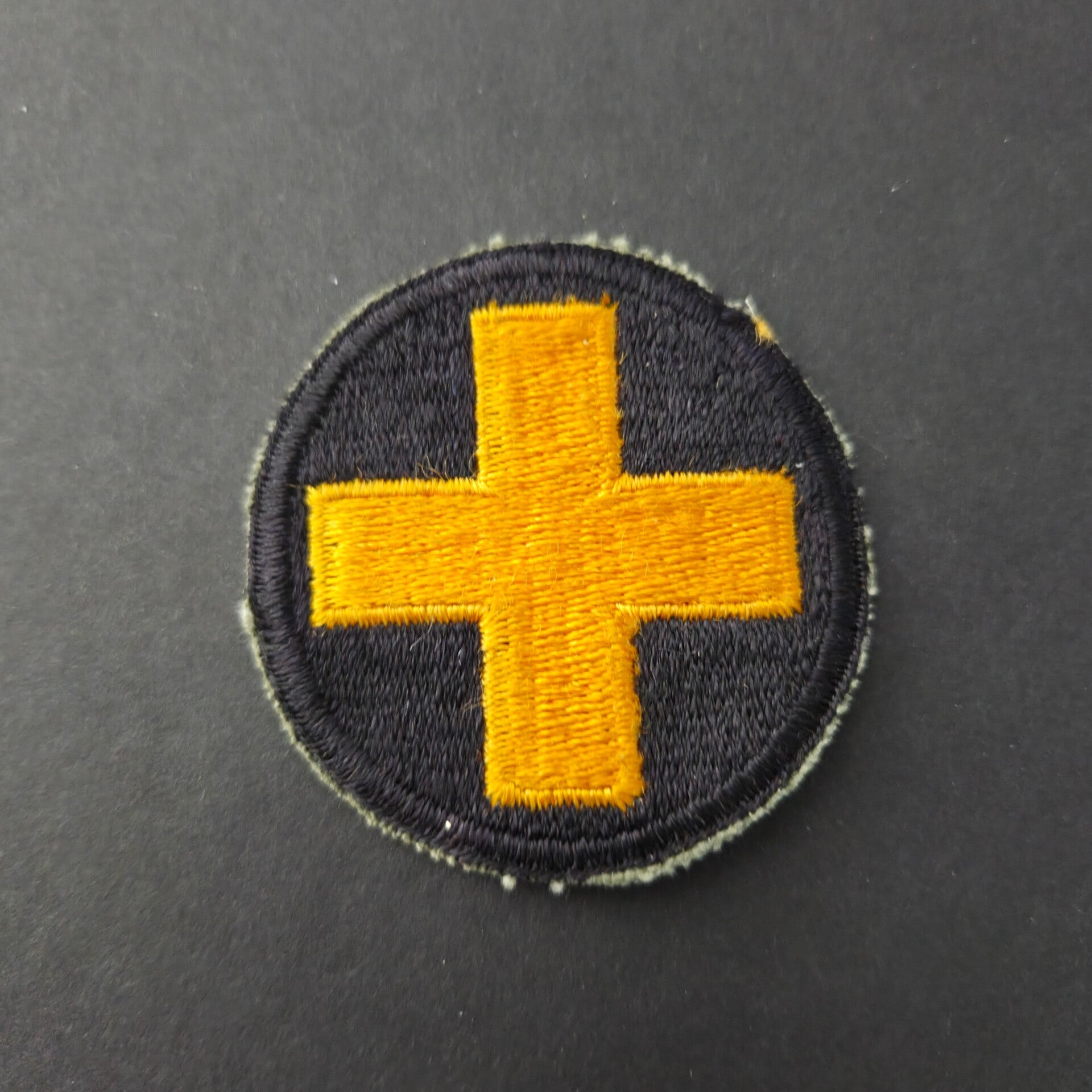
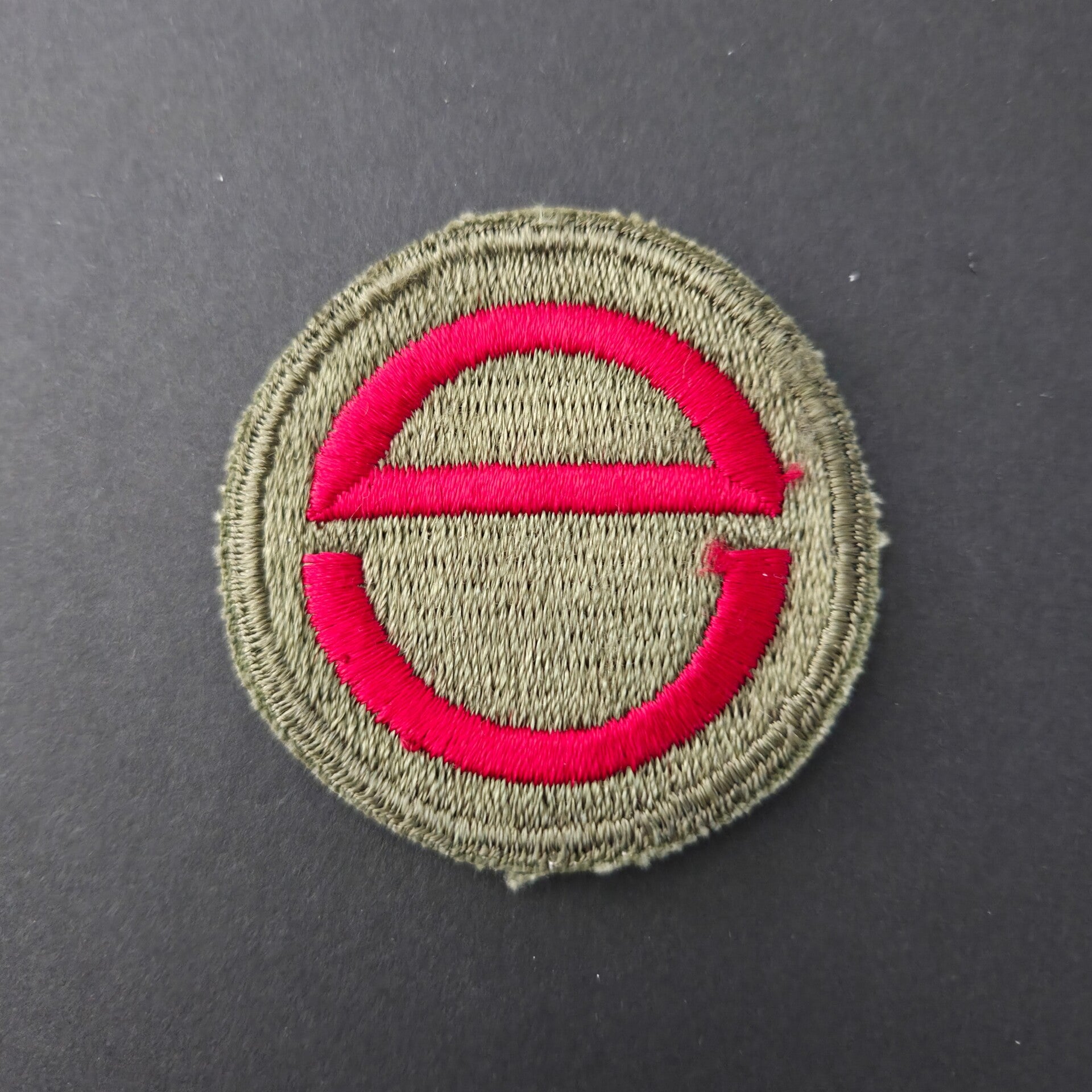
Original embroidered shoulder sleeve insignia representing the United States Army 33rd Infantry Division during the Second World War. The design features a large yellow cross embroidered against a black circular field — the distinctive emblem of the division’s long-established “Golden Cross” identity.

The strong yellow-on-black contrast made the insignia immediately recognizable among American infantry division patches of the WWII period.

This example displays characteristics associated with wartime manufacture, including embroidered cotton construction, period edge finishing, and subdued backing materials typical of WWII-era production. Examples featuring a green cloth reverse backing are commonly associated with wartime manufacture.

United States Army SSI

Unit:

85th Infantry Division (Custer Division)

Estimated Date

Likely World War II era
(circa 1943–1945)

Branch

United States Army
Description

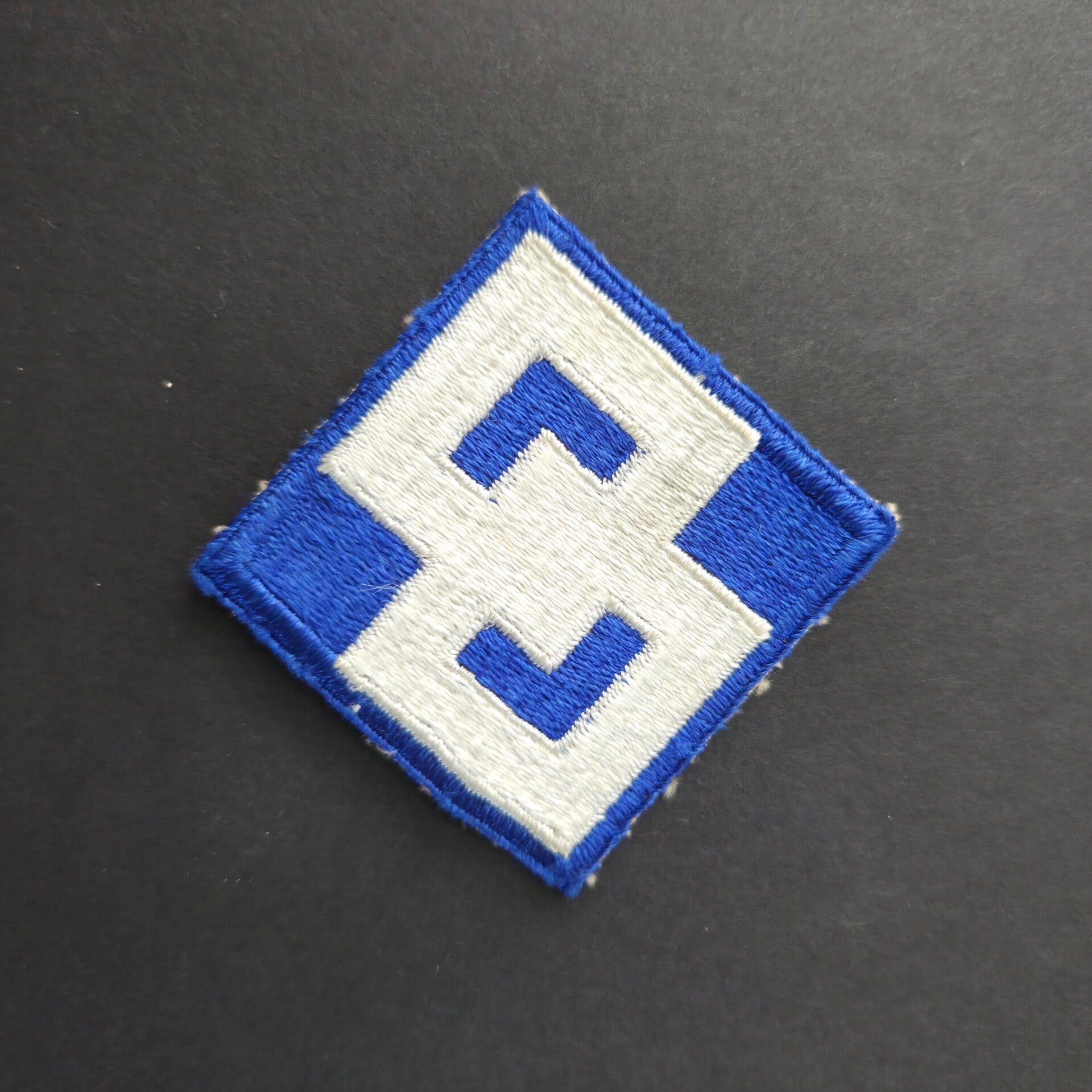
Original embroidered shoulder sleeve insignia representing the United States Army 85th Infantry Division during the Second World War. The design features a stylized red “CD” monogram — representing the division’s “Custer Division” nickname — against an olive drab field with matching border.

The division nickname references George Armstrong Custer and reflects the unit’s historical association with the Michigan and Great Lakes region.

This insignia was intended for wear on the shoulder of Army uniforms and exhibits characteristics associated with wartime manufacture, including embroidered cotton construction, subdued military coloration, and cut-edge finishing typical of WWII-era insignia production.

United States Army SSI

Unit:

Second Service Command

Estimated Date

Circa 1940s

Branch

United States Army
Description

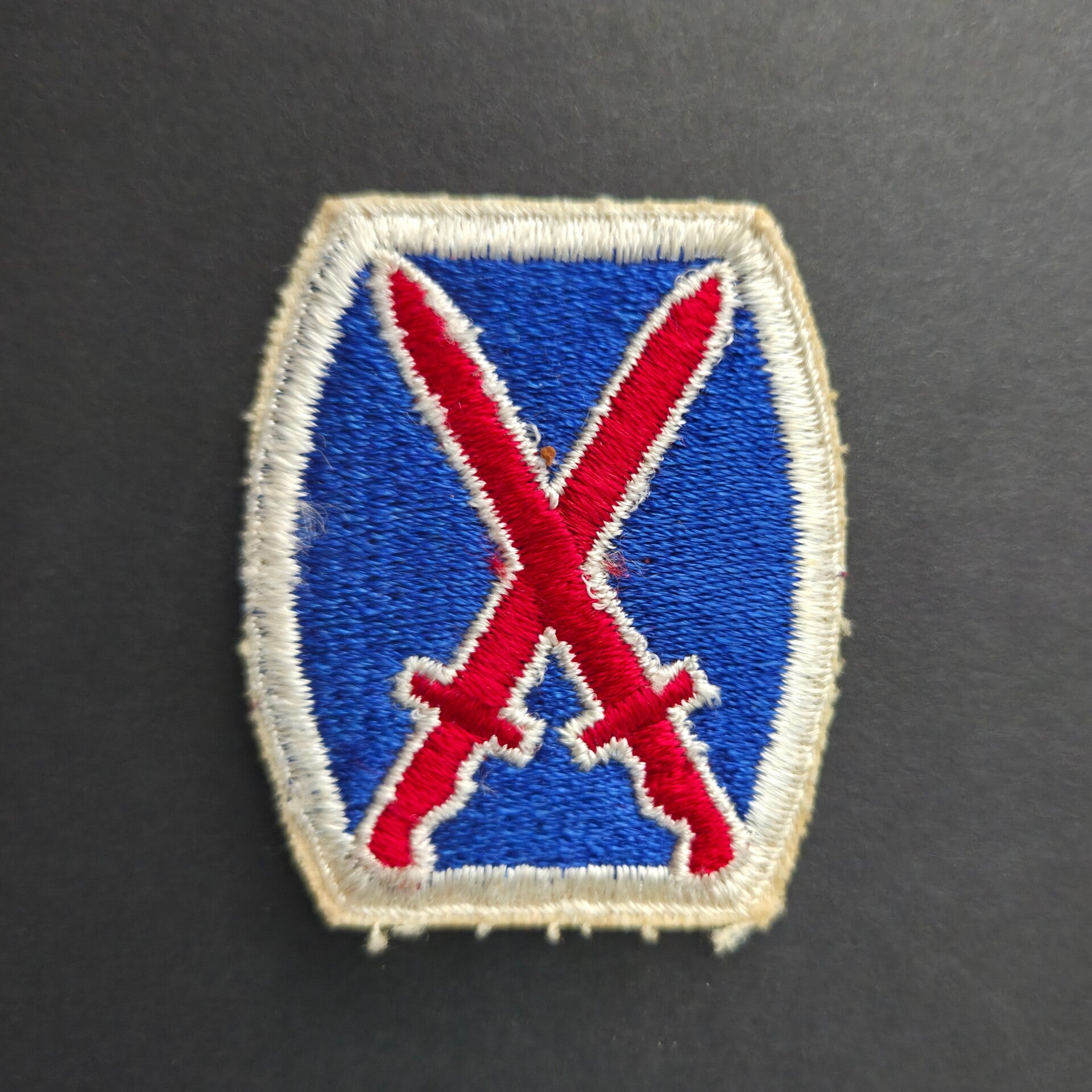
Original embroidered shoulder sleeve insignia representing the United States Army Second Service Command during the Second World War period. The design features a stylized white geometric “2” form within a blue diamond field.

Second Service Command formed part of the Army’s domestic administrative and logistical infrastructure during WWII, overseeing military operations throughout portions of the northeastern United States. Responsibilities included troop induction and processing, transportation coordination, supply administration, medical support, and management of wartime military installations.

This example exhibits characteristics associated with mid-20th century military insignia manufacture, including embroidered cotton construction, period twill materials, and cut-edge finishing typical of WWII-era production.

This example displays characteristics associated with mid-20th century military insignia manufacture, including embroidered cotton construction and finished border edging typical of late WWII and early postwar production.

United States Army SSI

Unit:

10th Mountain Division

Estimated Date

Likely WWII era or immediate postwar
(circa 1943–1945)

Branch

United States Army
Description

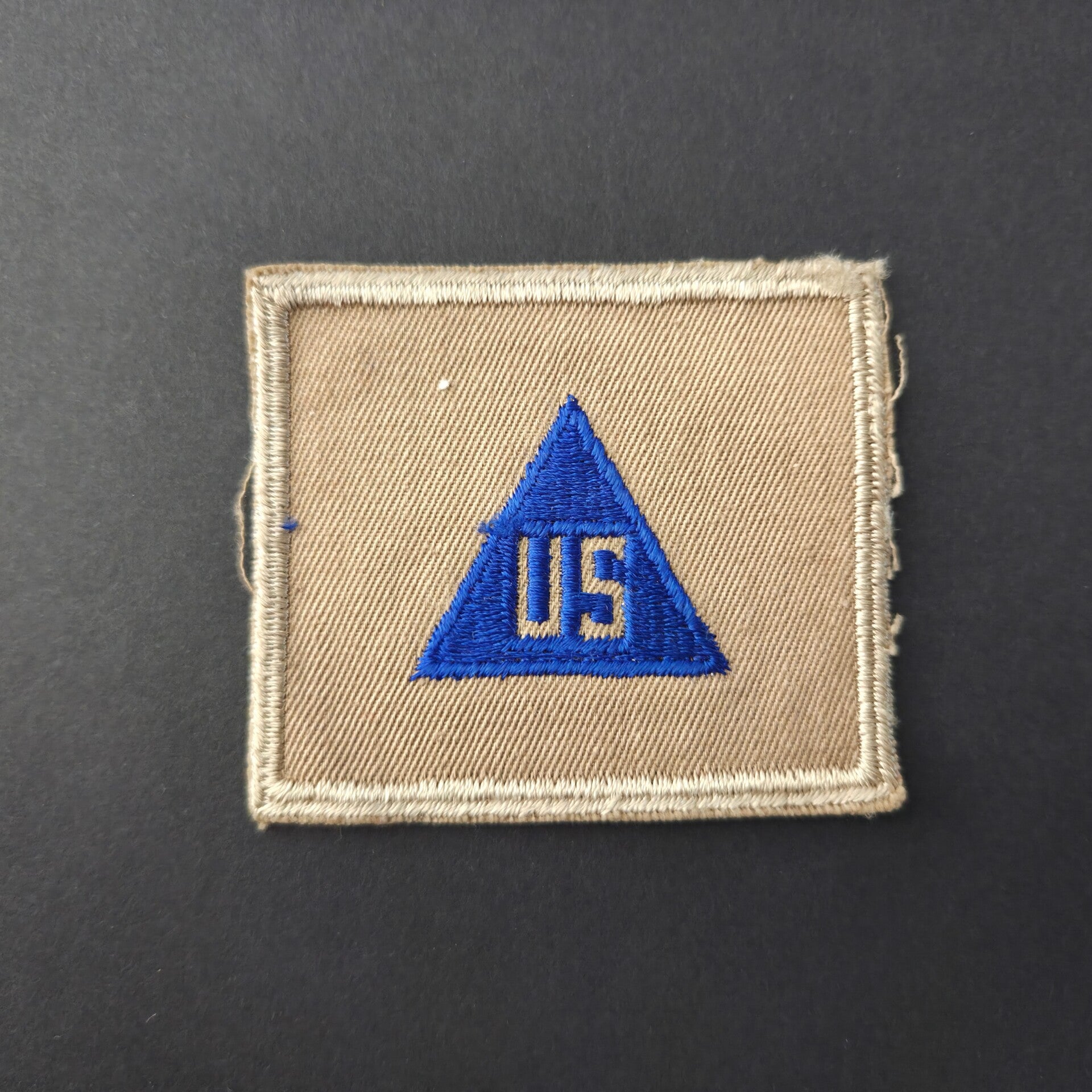
Original embroidered shoulder sleeve insignia representing the United States Army 10th Mountain Division during the Second World War. The design features crossed red weapons against a blue shield field with white border.

The 10th Mountain Division was created as a specialized alpine and winter warfare formation trained for combat in mountainous and cold-weather environments. Division personnel underwent extensive mountain and ski training at Camp Hale, Colorado, prior to deployment to the Italian Campaign during WWII.

This example exhibits characteristics associated with wartime manufacture, including embroidered cotton construction, period twill materials, and cut-edge finishing typical of WWII-era insignia production.

This example displays characteristics associated with mid-20th century military insignia manufacture, including embroidered cotton construction and finished border edging typical of late WWII and early postwar production.

United States Army Civilian Contractor / Non-Combatant SSI 

Designation:

Civilian Contractor / Non-Combatant Personnel Patch

Estimated Date

Circa 1943–1945

Branch Association

United States Army
Description

Original World War II-era United States Army insignia patch associated with civilian contractor or non-combatant personnel attached to Army operations during WWII. The design features a blue triangular emblem containing the letters “U.S.” embroidered against a khaki rectangular field with matching border stitching.

This style of insignia was worn by certain civilian personnel supporting military operations in non-combat roles, helping visually distinguish contractors and authorized civilian workers operating alongside Army forces.

The subdued khaki coloration reflects wartime utility uniform aesthetics common during the WWII period.

Unites States Army Second Corps SSI

Unit:

U.S. Army II Corps (2nd Corps)

Estimated Date

World War II era
(circa 1942–1945)

Branch

United States Army
Description

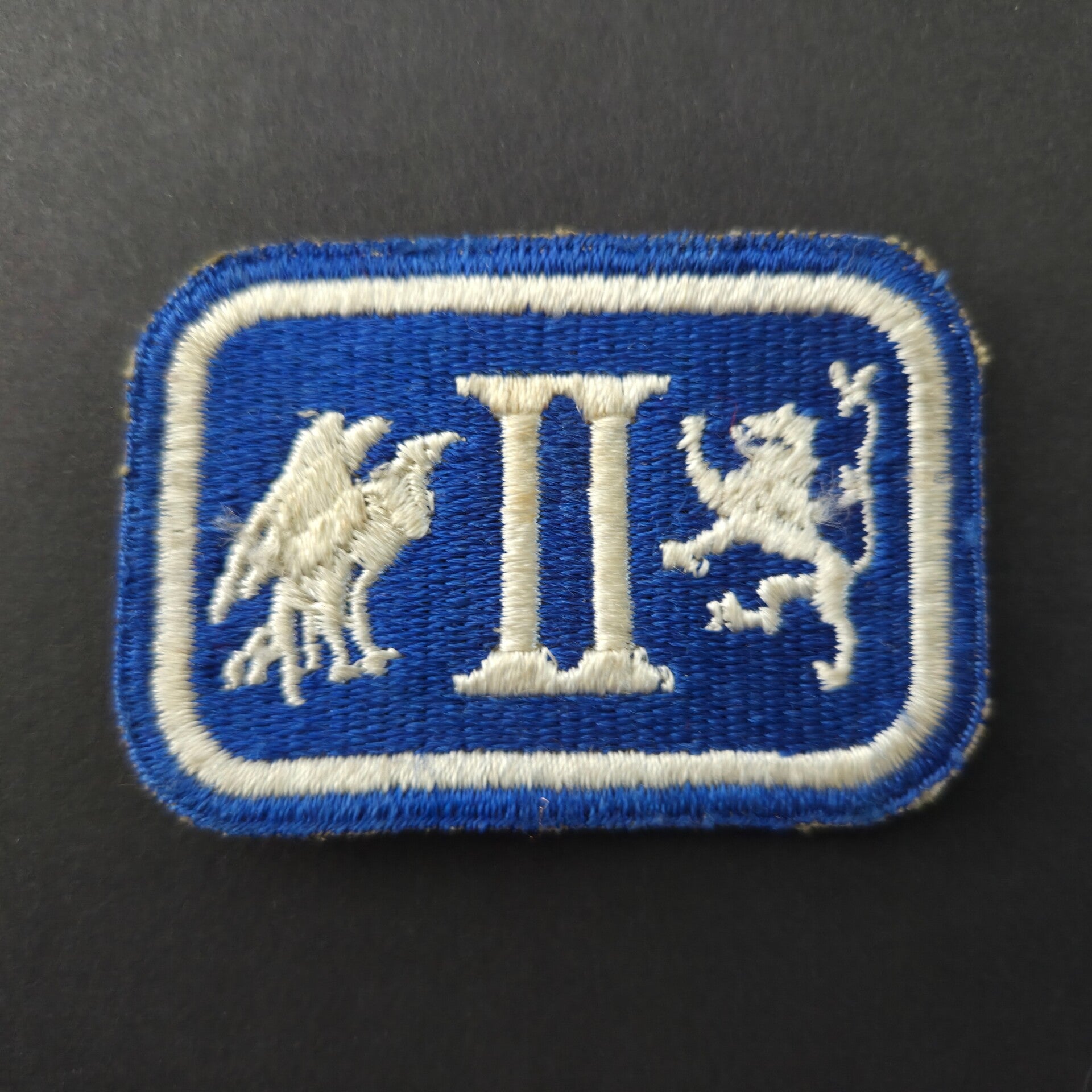
Original World War II-era shoulder sleeve insignia representing the United States Army II Corps. The patch features a deep blue rectangular field bordered in white, centered with a white Roman numeral “II.” Flanking the numeral are a white heraldic eagle and lion motif derived from traditional European heraldry.

The design reflects the multinational operational role of II Corps during WWII, particularly within the European Theater of Operations.

United States Army Third Infantry Division SSI

Unit:

3rd Infantry Division (“The Rock of the Marne”)

Estimated Date

World War II era
(circa 1942–1945)

Branch

United States Army
Description

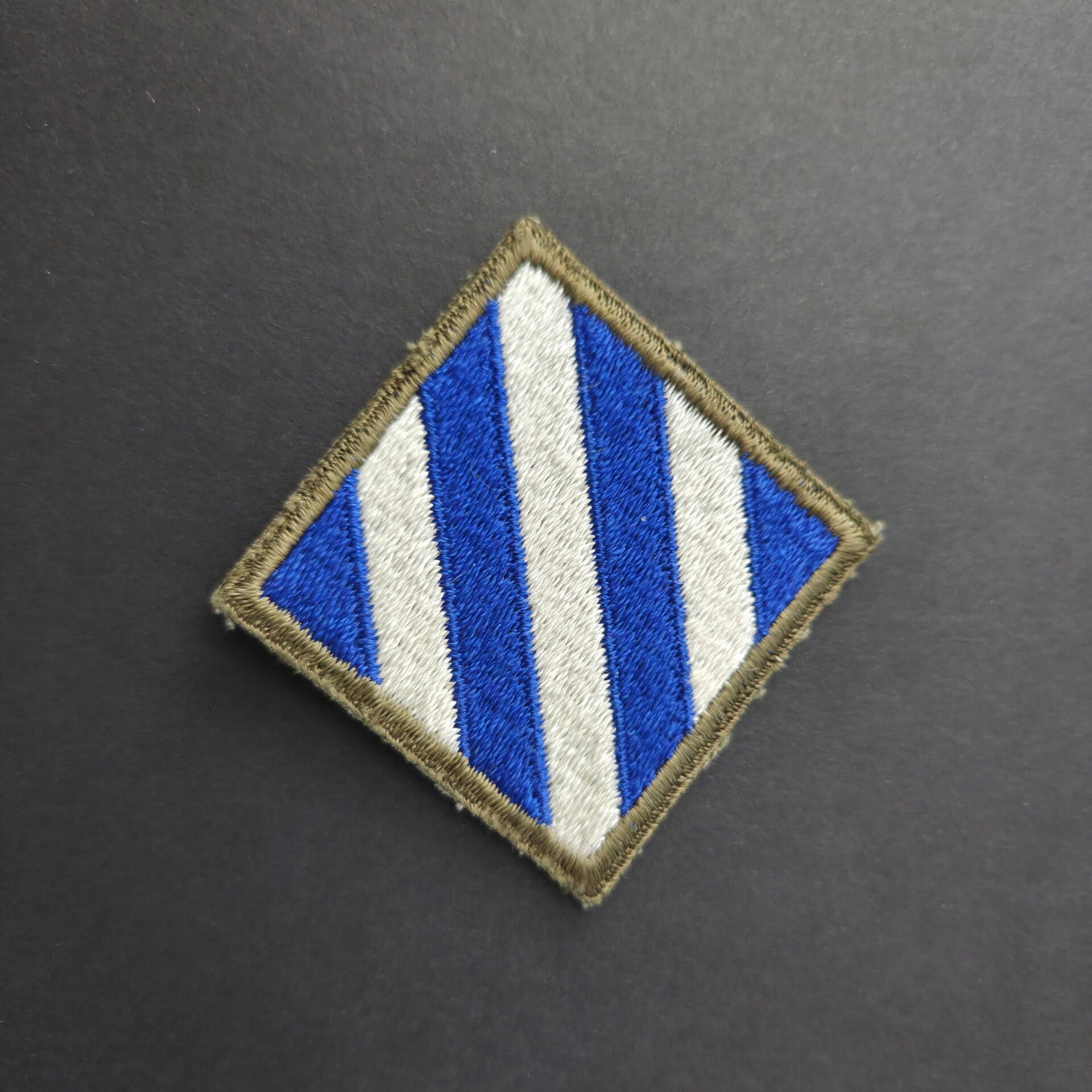
Original embroidered shoulder sleeve insignia representing the United States Army 3rd Infantry Division during the Second World War period. The design features alternating diagonal blue and white stripes contained within a diamond-shaped field bordered in olive drab thread.

The three striped elements symbolize the division’s numerical designation and became one of the most recognizable insignia of the American Army during World War II. The division earned the nickname “Rock of the Marne” following distinguished service during several notable conflicts.

United States Army SSI

Unit:

32nd Infantry Division (“Red Arrow Division”)

Estimated Date

Circa 1920s–1940s

Branch

United States Army
Description

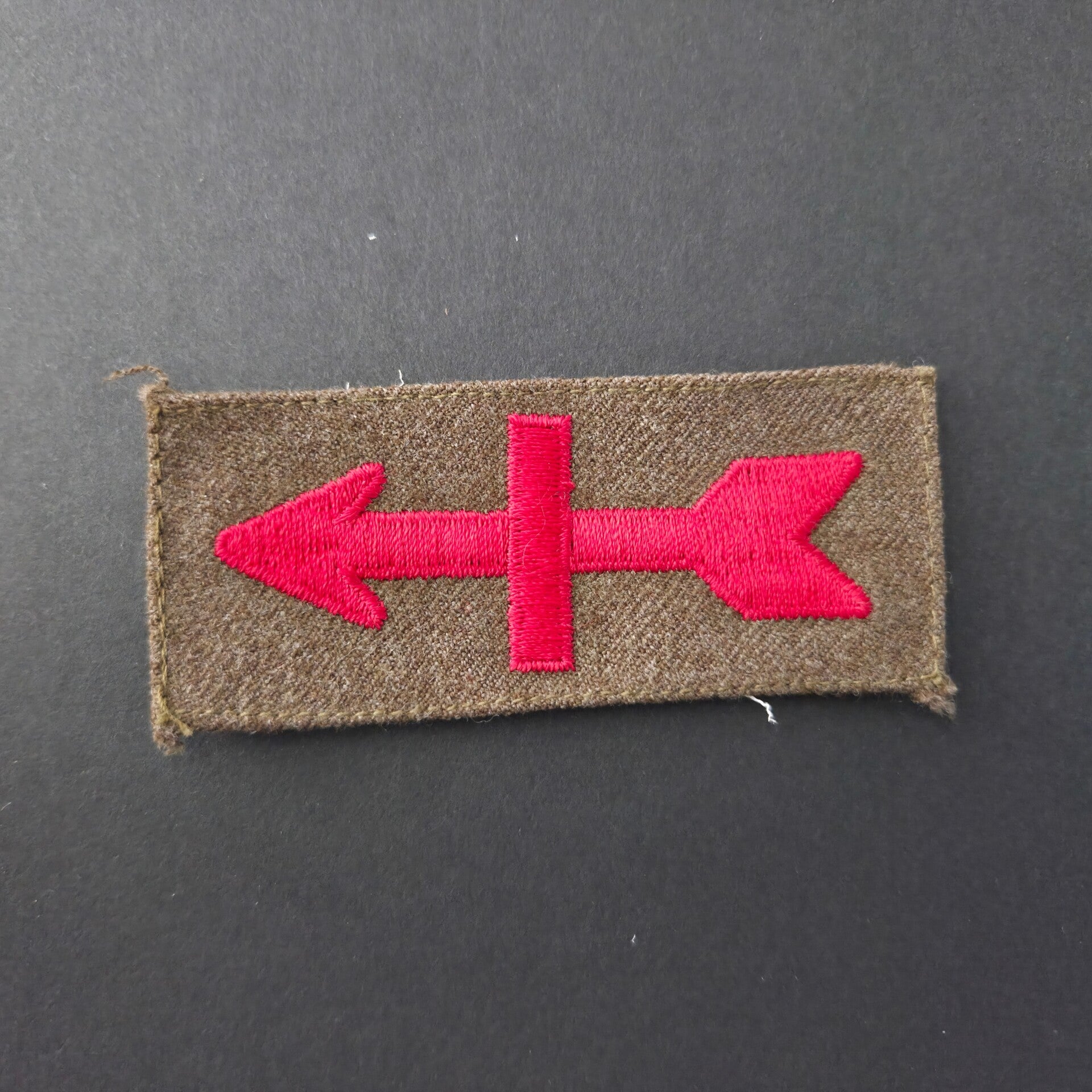
Original embroidered shoulder sleeve insignia representing the United States Army 32nd Infantry Division, commonly known as the “Red Arrow” Division. The design features a bold red arrow piercing a horizontal red line upon an olive drab wool field.

The insignia symbolized the division’s reputation for breaking through enemy defensive lines, with the arrow representing the division’s ability to “shoot through” any obstacle encountered in combat.

United States Army 90th Infantry Division SSI

Unit:

90th Infantry Division (“Tough Ombres”)

Estimated Date

Circa 1940s

Branch

United States Army
Description

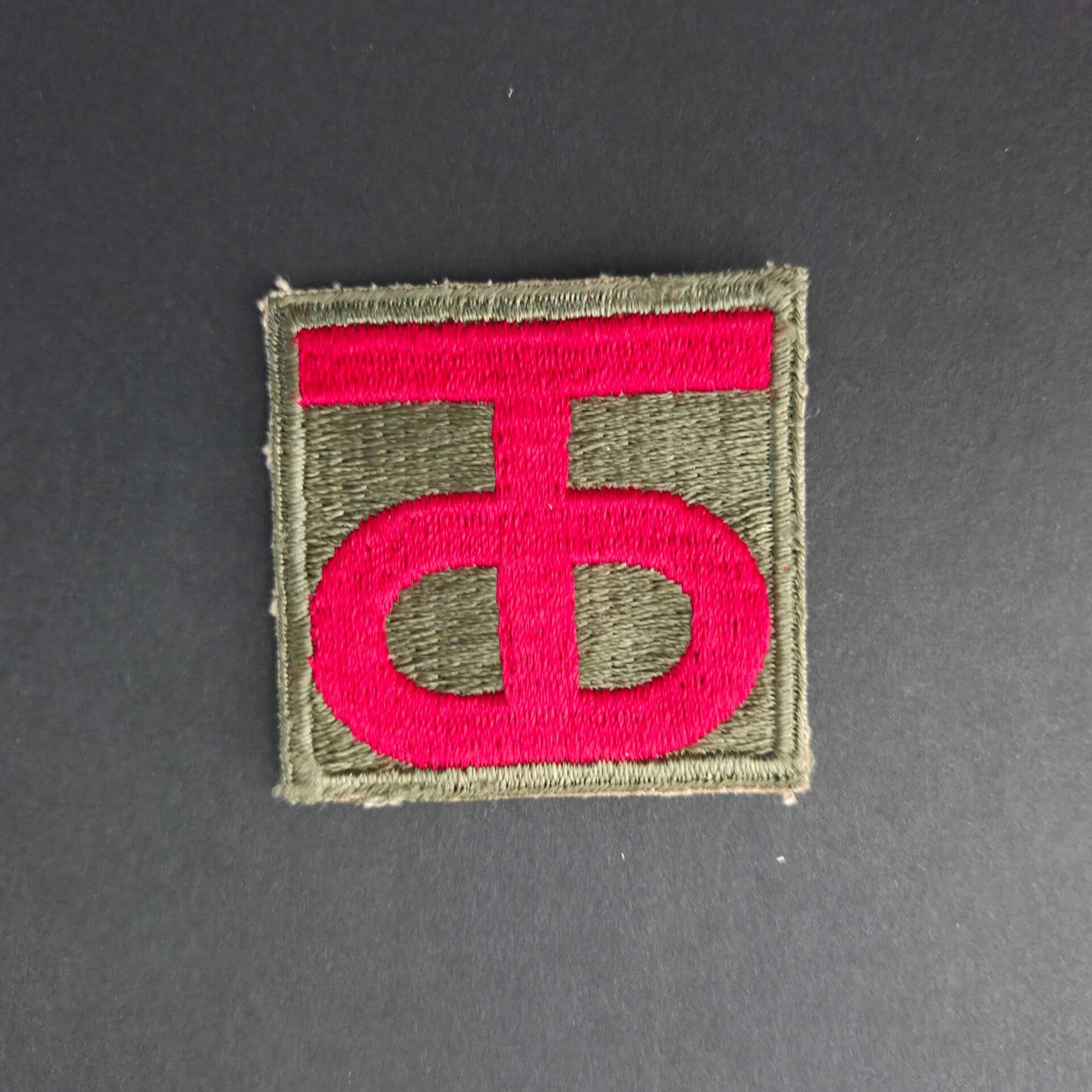
Original embroidered shoulder sleeve insignia representing the United States Army 90th Infantry Division during the Second World War period. The design features a maroon “T” superimposed over a maroon “O” on an olive drab square field, symbolizing the division’s Texas and Oklahoma National Guard origins and giving rise to the division’s well-known nickname, the “Tough Ombres.” The patch is constructed in the fully embroidered, cut-edge style commonly associated with wartime U.S. Army insignia production.

During World War II, the 90th Infantry Division served under General George S. Patton as part of the Third United States Army and saw extensive combat service across Europe. The division participated in the Normandy Campaign following the Allied invasion of France and later fought through France, Luxembourg, and Germany. The 90th eventually developed a strong combat reputation after difficult early operations and became one of the notable American infantry divisions of the European Theater.

United States Army 45th Infantry Division SSI

Unit:

45th Infantry Division (“Thunderbird Division”)

Estimated Date

Circa 1940s–1950s

Branch

United States Army
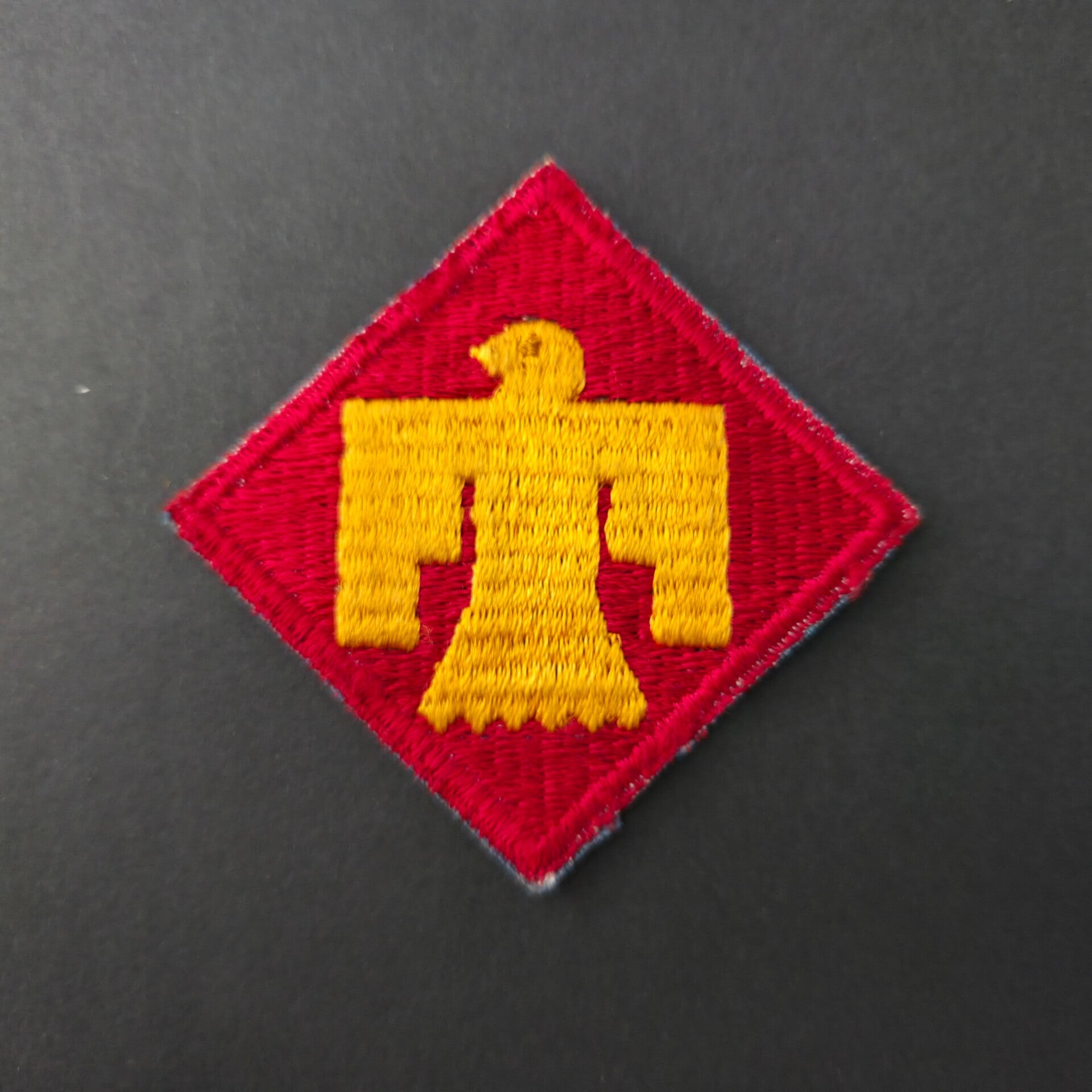
Description

Original embroidered shoulder sleeve insignia representing the United States Army 45th Infantry Division, commonly known as the “Thunderbird Division.” The design features a yellow Thunderbird centered on a red diamond-shaped field, derived from Native American symbolism associated with strength, protection, good fortune, and unlimited success. The division was originally formed from Army National Guard units based primarily in Oklahoma, Colorado, New Mexico, and Arizona.

Prior to adoption of the Thunderbird design in 1939, the division utilized a Native American good-luck symbol resembling a swastika, which was discontinued before World War II due to its association with Nazi Germany. The 45th Infantry Division served extensively during World War II and later the Korean War earning distinction in campaigns across North Africa, Sicily, Italy, France, and Korea.

United States Army Air Forces SSI

Unit:

Second Air Force

Estimated Date

Circa 1941–1945
(World War II era)

Branch

United States Army Air Forces
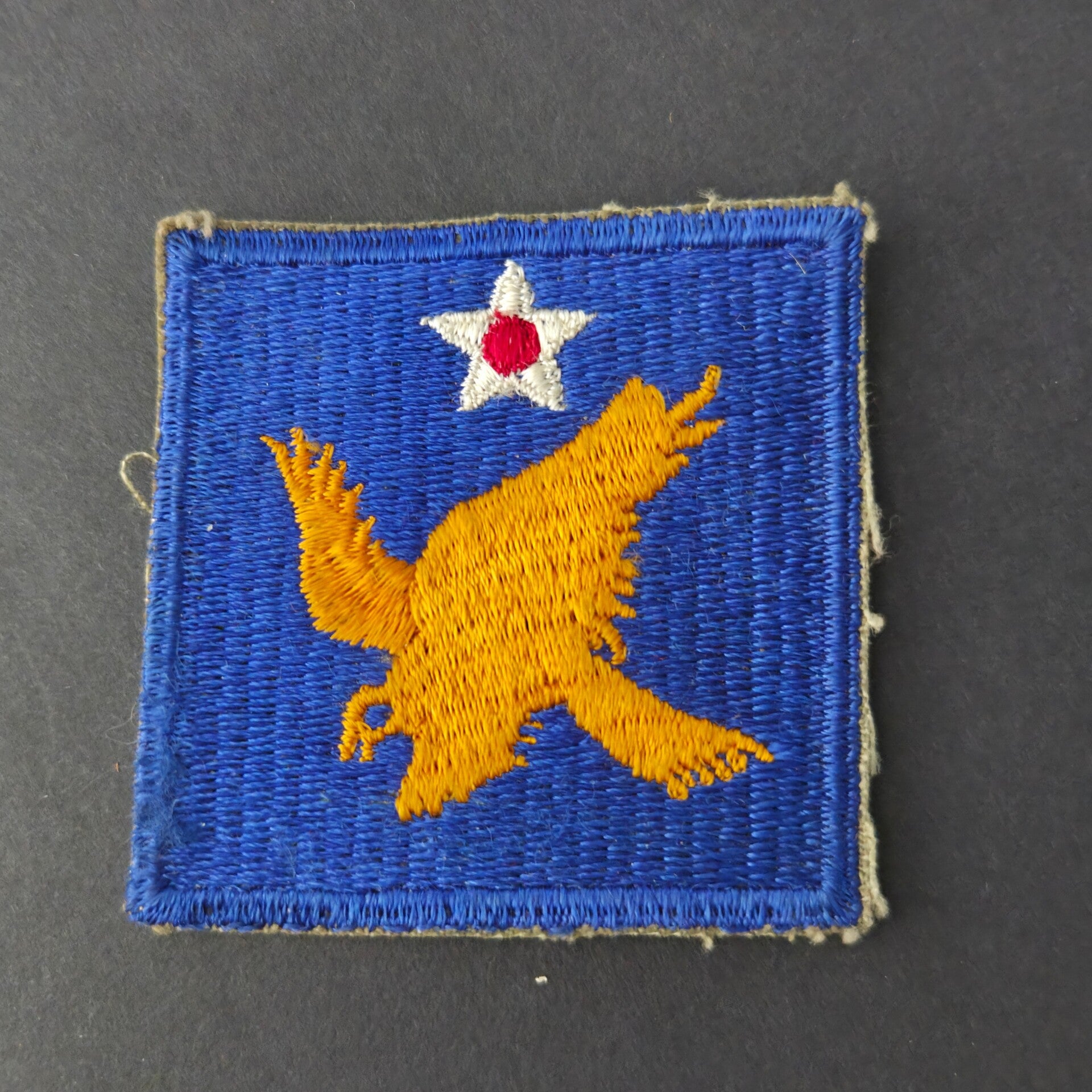
Description

Original embroidered shoulder sleeve insignia representing the United States Army Air Forces Second Air Force during the Second World War period. The design features a stylized yellow eagle in flight on a blue square field beneath a white star with a red center, reflecting the visual style commonly associated with wartime Army Air Forces insignia. This example exhibits cut-edge construction typical of WWII-era military patch production.

The Second Air Force was activated in 1941 and played a major role in training heavy bombardment crews during World War II particularly for B-17 and B-24 bomber operations. Personnel trained under Second Air Force later served extensively in the European and Pacific theaters as part of the rapidly expanding American strategic air campaign.


United States Army SSI

Unit:

1st Coast Artillery District

Estimated Date

Circa 1942–1947
(World War II era)

Branch

United States Army Coast Artillery Corps
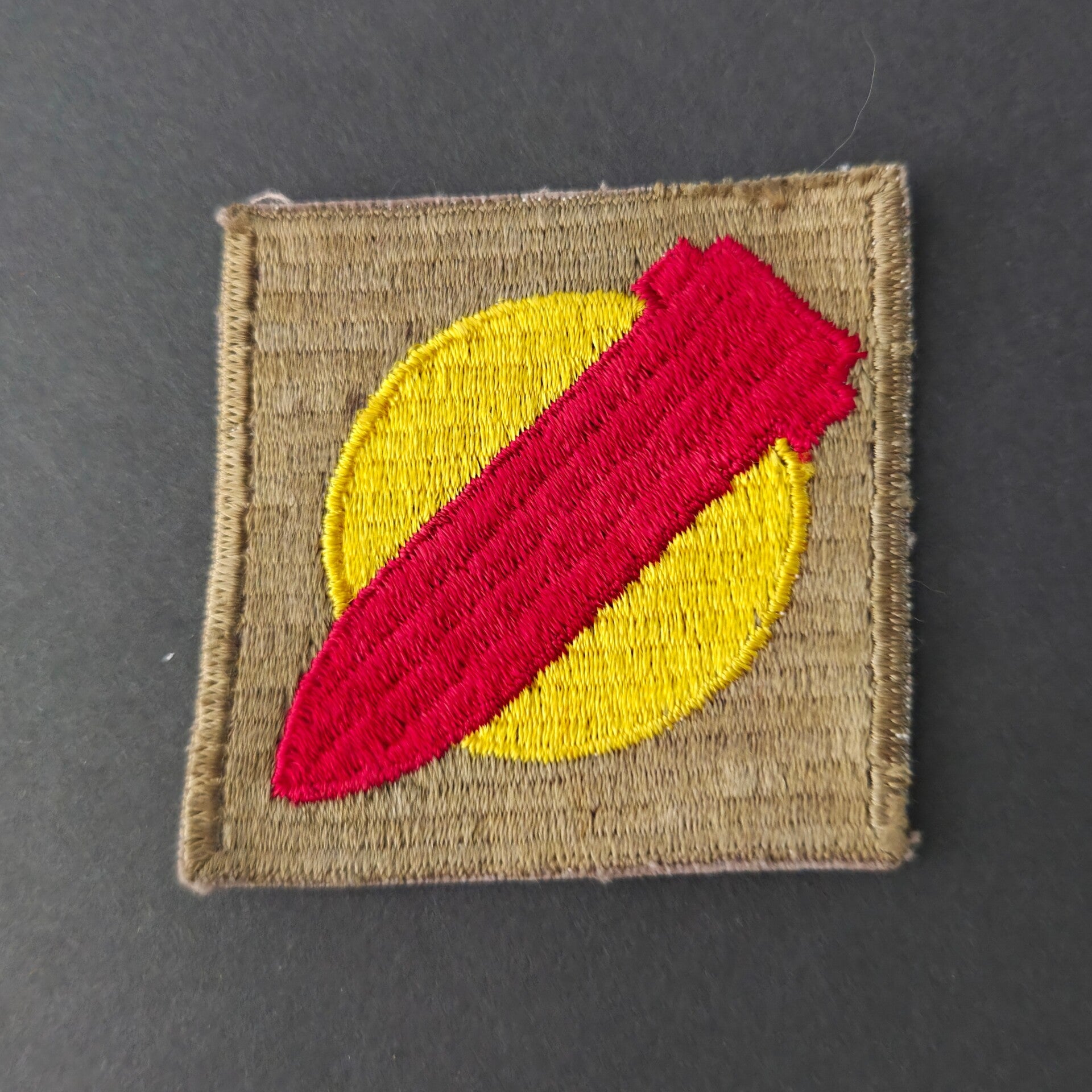
Description

Original embroidered shoulder sleeve insignia representing the 1st Coast Artillery District during the Second World War. The design features a red artillery projectile superimposed over a gold circular disc on an olive drab diamond-shaped field, symbolizing the coastal defense mission of the Army’s Coast Artillery units. This example displays cut-edge wartime construction characteristic of military insignia manufactured during the 1940s.

The First Coast Artillery District was responsible for elements of the coastal defense network protecting strategic American shoreline installations and harbor approaches during World War II. These units operated fixed harbor guns, anti-ship defenses, searchlights, and associated defensive infrastructure intended to guard the eastern seaboard against potential naval attack during the height of wartime mobilization.

United States Army SSI

Unit:

4th Infantry Division

Estimated Date

Circa 1942–1950

Branch

United States Army 
Description

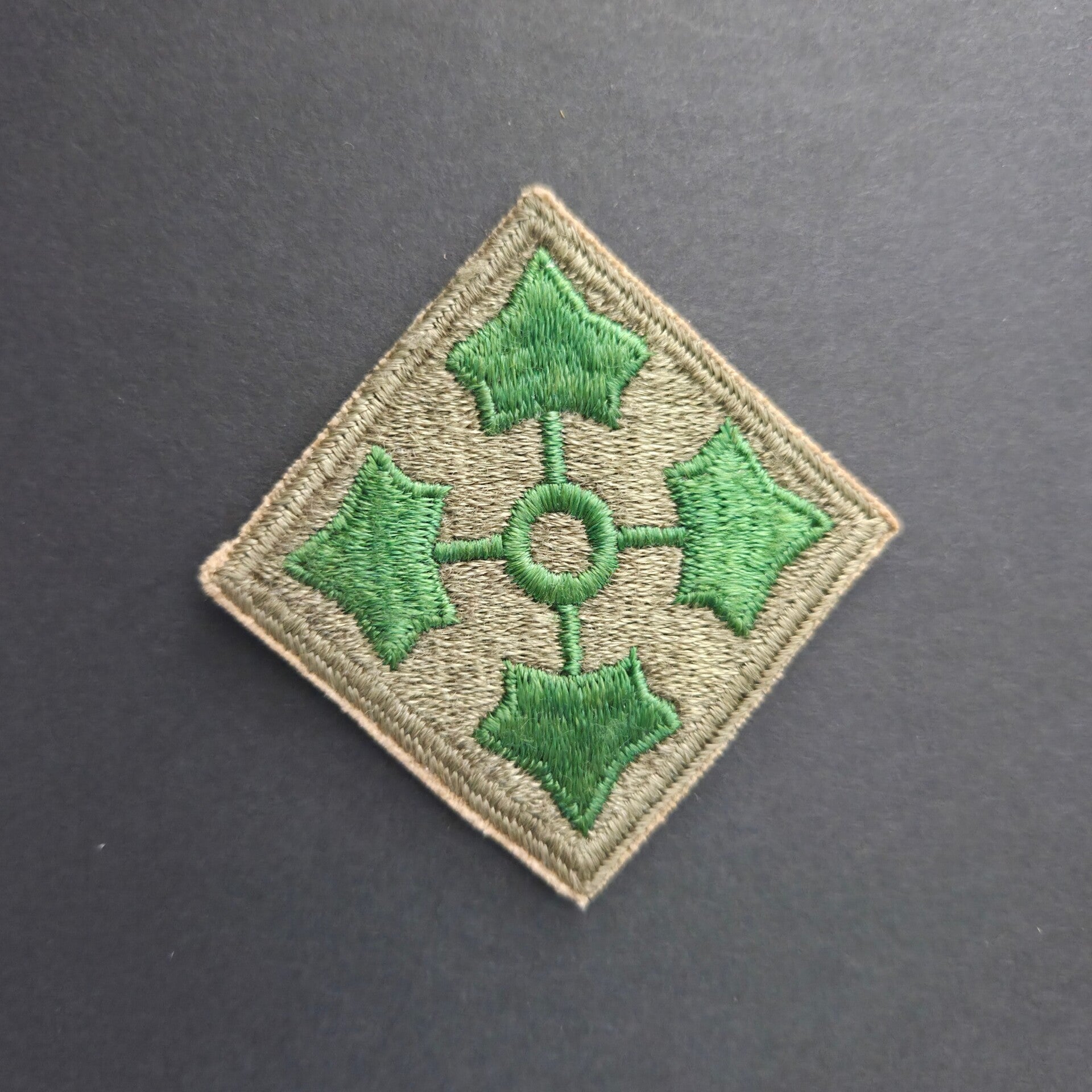
Original embroidered shoulder sleeve insignia representing the 4th Infantry Division, commonly known as the “Ivy Division.” The design features four green ivy leaves arranged in a cross pattern upon a khaki diamond-shaped field, symbolizing the Roman numeral IV for the Fourth Infantry Division. The subdued khaki and green coloration reflects traditional Army field uniform aesthetics while maintaining the division’s longstanding heraldic identity.

The Fourth Infantry Division holds a prominent place in American military history and was among the first Allied formations to land on Utah Beach during Normandy landings during World War II. The division continued distinguished combat service throughout the European campaign and remains an active Army unit today. Variations of this full-color insignia continue to be authorized for wear on modern dress uniforms, including the contemporary Army “Pinks and Greens” service uniform.

United States Army SSI

Unit:

18th Airborne Corps

Estimated Date

Circa 1942–1950

Branch

United States Army 
Description

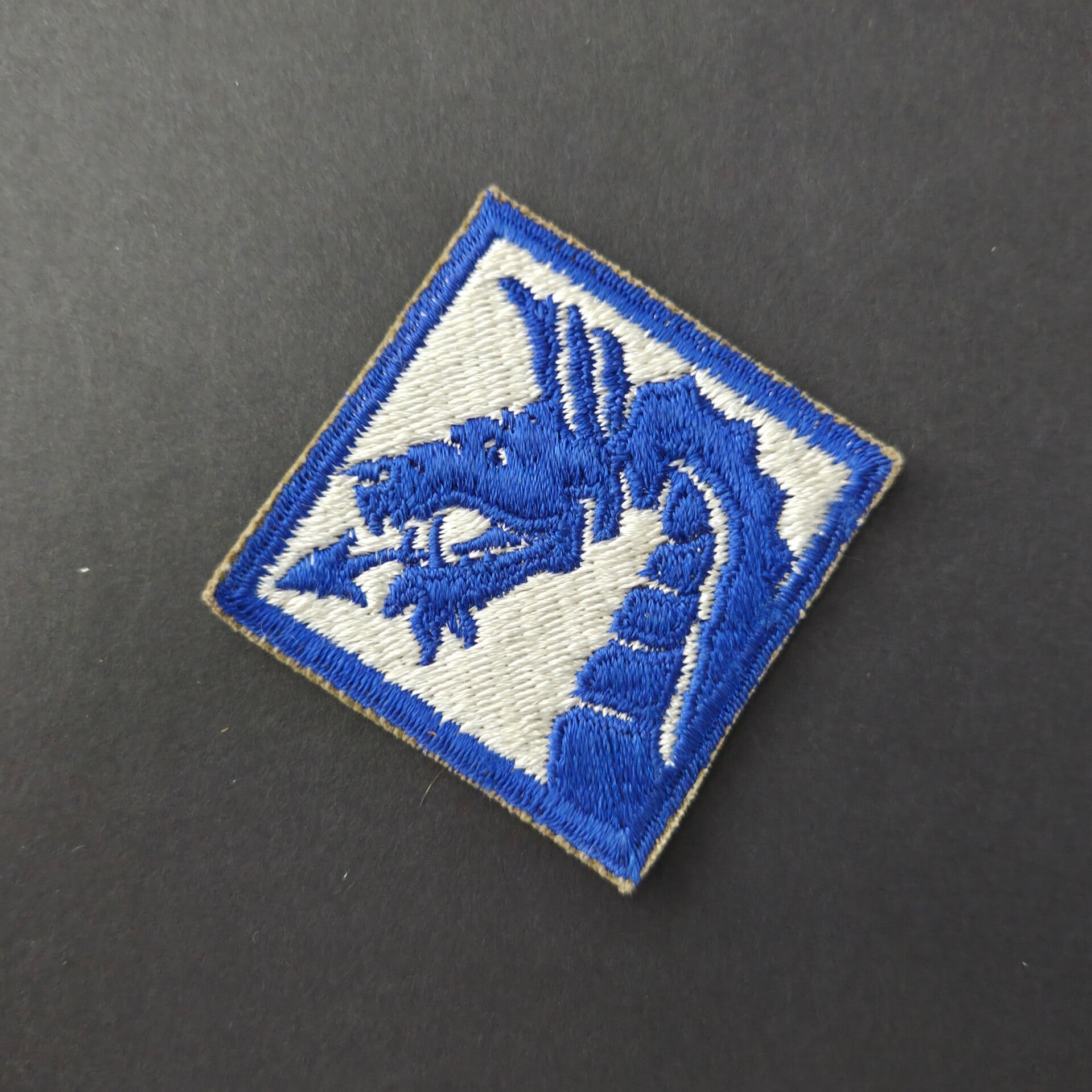
Original embroidered shoulder sleeve insignia representing the XVIII Airborne Corps of the United States Army. The design features a stylized blue dragon displayed upon a white diamond-shaped field bordered in blue, symbolizing speed, aggression, and airborne striking capability. The dragon emblem became closely associated with elite rapid-response and airborne formations during the Second World War period and remains one of the most recognizable insignia used by the United States Army.

The XVIII Airborne Corps was established during World War II and served as a major operational command overseeing airborne and fast-deployment units throughout the European theater. Corps elements participated in numerous campaigns during the war and later continued service through the Cold War and into modern military operations. This example displays characteristics associated with traditional mid-20th century Army insignia production, including embroidered construction and olive drab backing coloration.

United States Army SSI

Unit:

1st Service Command

Estimated Date

Circa 1942–1945
(World War II era)

Branch

United States Army 
Description

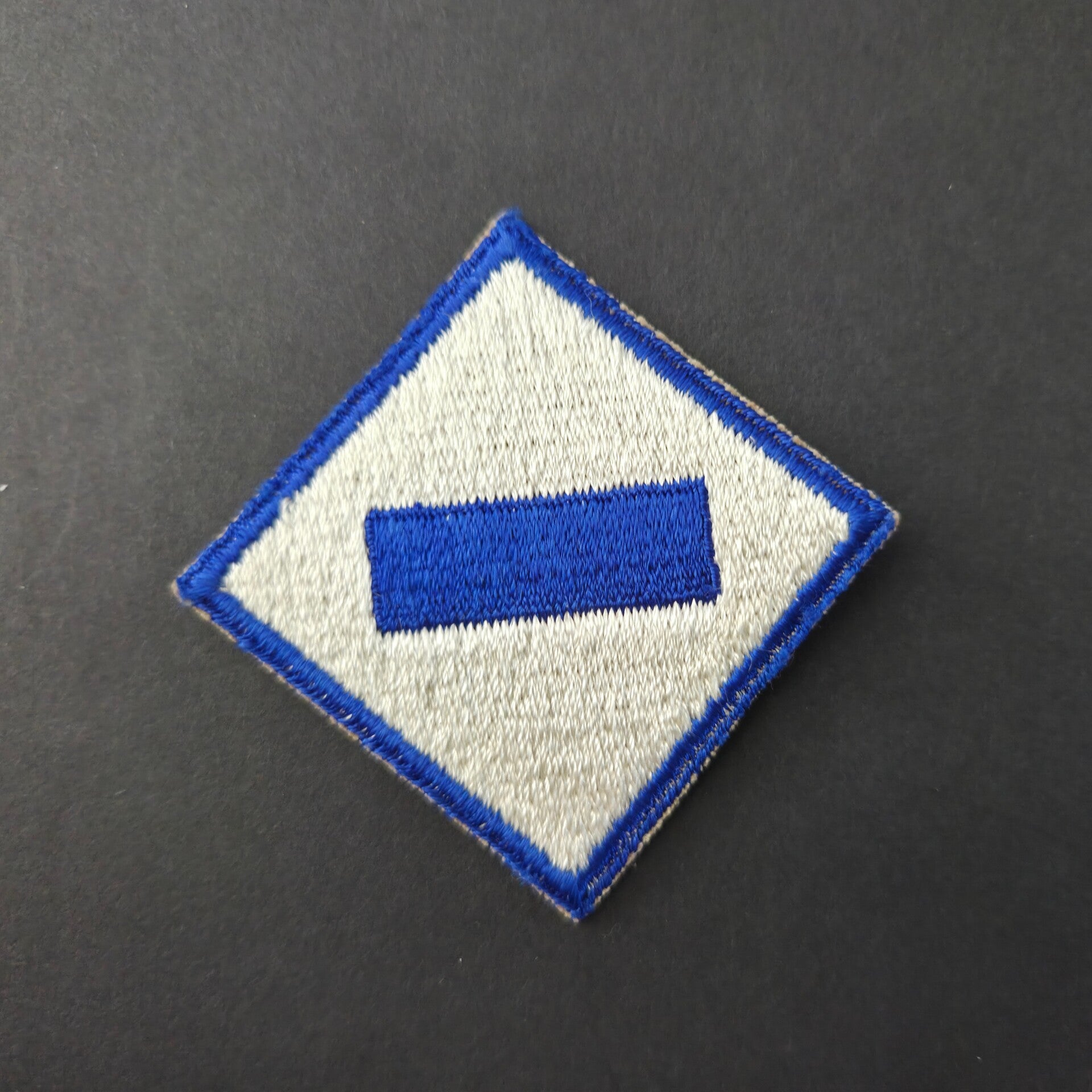
Original embroidered shoulder sleeve insignia representing the First Service Command of the United States Army during the Second World War period. The design features a blue horizontal bar centered upon a white diamond-shaped field bordered in blue, creating a simple but highly recognizable administrative command insignia associated with wartime domestic operations and logistical organization.

The First Service Command functioned as part of the Army’s regional command structure responsible for troop administration, transportation coordination, supply management, medical support, and military installation oversight throughout the northeastern United States during World War II.

This example exhibits characteristics consistent with wartime insignia manufacture, including embroidered construction and cut-edge finishing, while similar contemporary variants were produced with alternate border configurations by manufacturers such as Gemsco.

Reproduction United States military specialty insignia

Unit:

13th Engineer Regiment

Estimated Date

Circa 1940s reproduction of a World War I era insignia

Manufacturer

Likely Patch King
Description

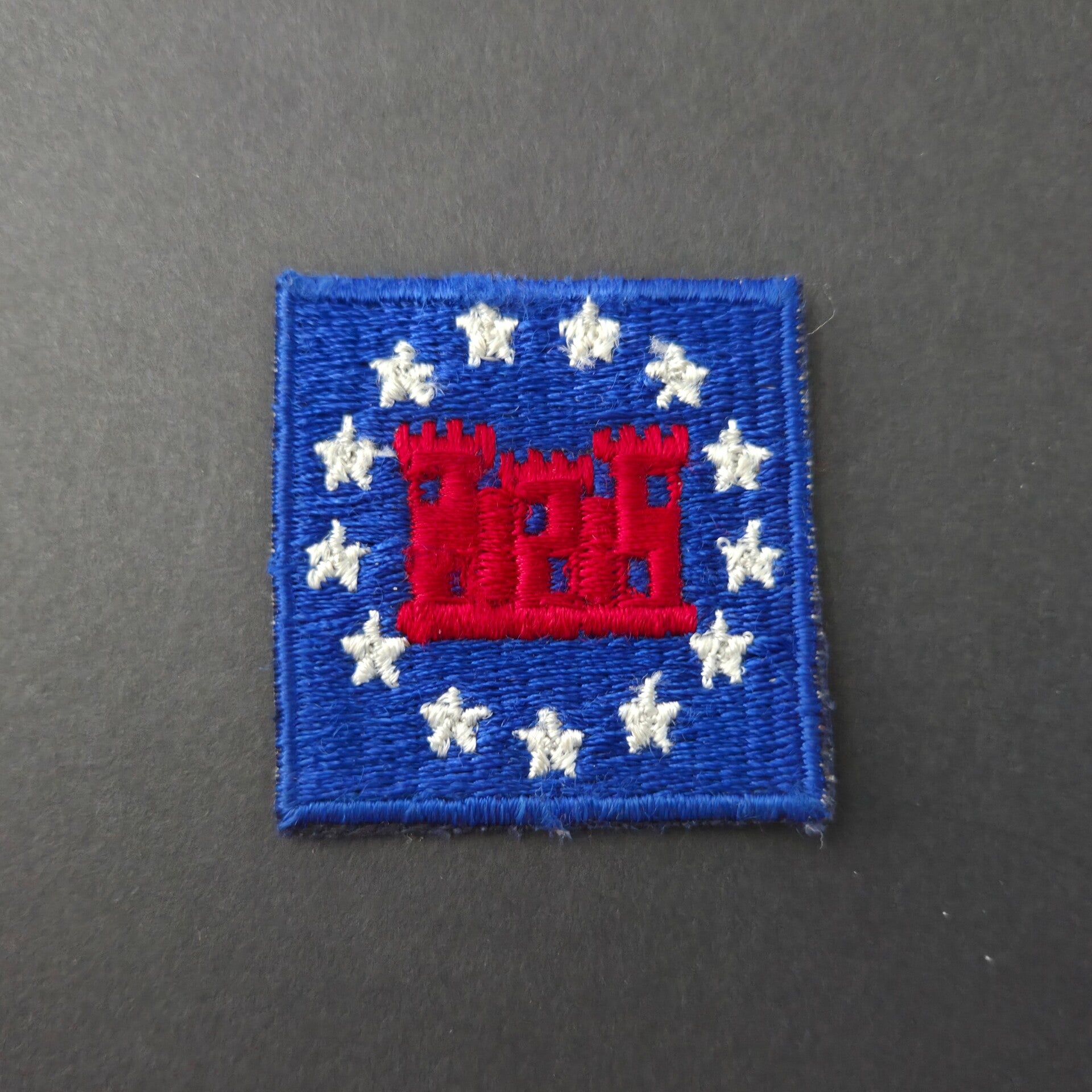
Reproduction embroidered shoulder sleeve insignia representing the 13th Engineer Regiment of the United States Army. The design features a red castle centered upon a blue square field surrounded by white stars, with the castle serving as the traditional symbol of the United States Army Corps of Engineers.

The 13th Engineer Regiment was active during World War I and became particularly associated with military railroad construction and operation, supporting transportation and logistical movement critical to wartime operations.

This particular example is believed to be a collector-produced reproduction manufactured during the mid-20th century, likely by Patch King, a company well known for producing historical military insignia reproductions for collectors and veterans.

Reproduction examples such as this became increasingly popular during the 1930s and 1940s as interest in military memorabilia and unit history expanded among veterans and collectors. This patch displays embroidered construction and styling consistent with period collector-manufactured insignia of that era.

United States Army SSI

Unit:

17th Infantry Division

Estimated Date

Circa 1940s
(World War II era)

Branch

United States Army 
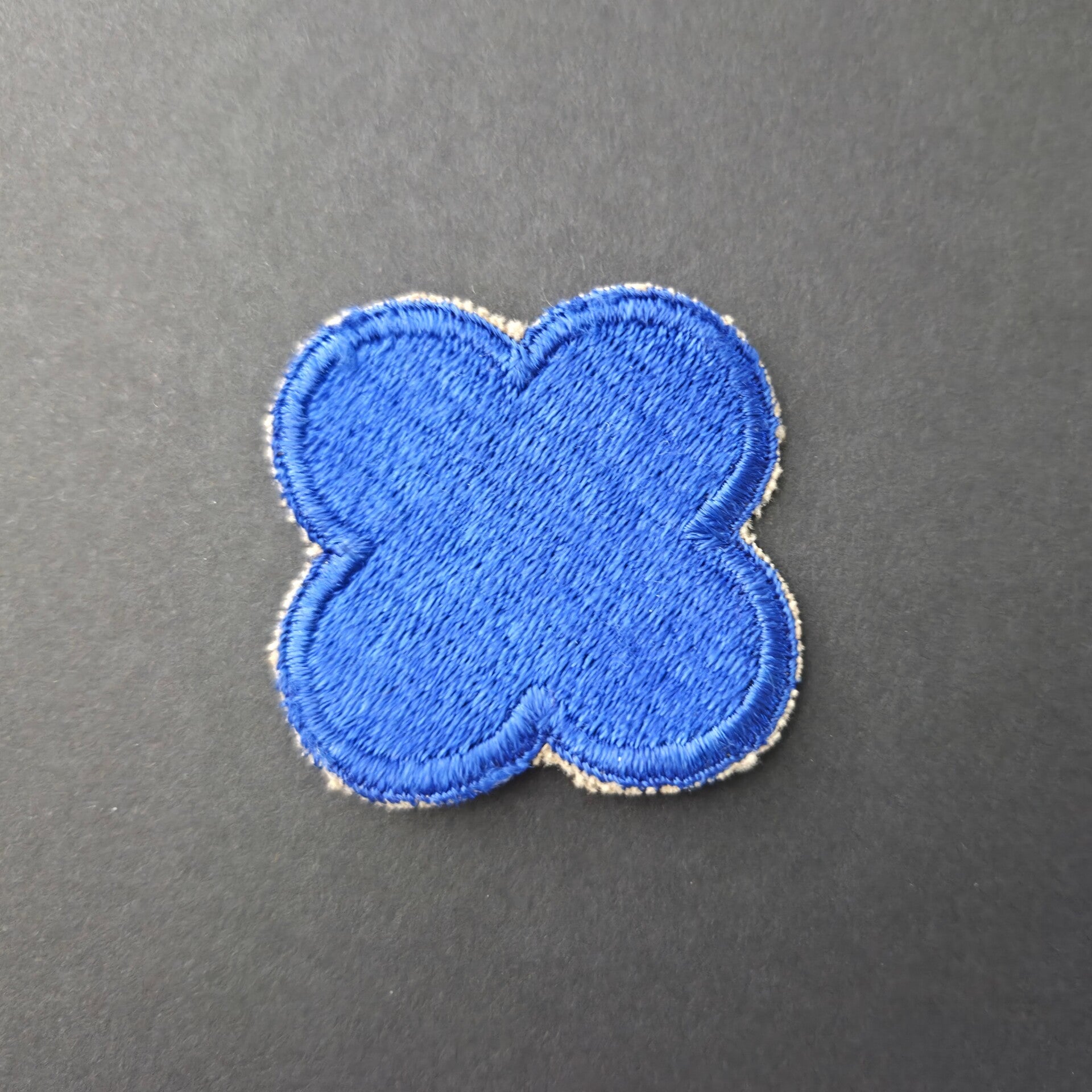
Description

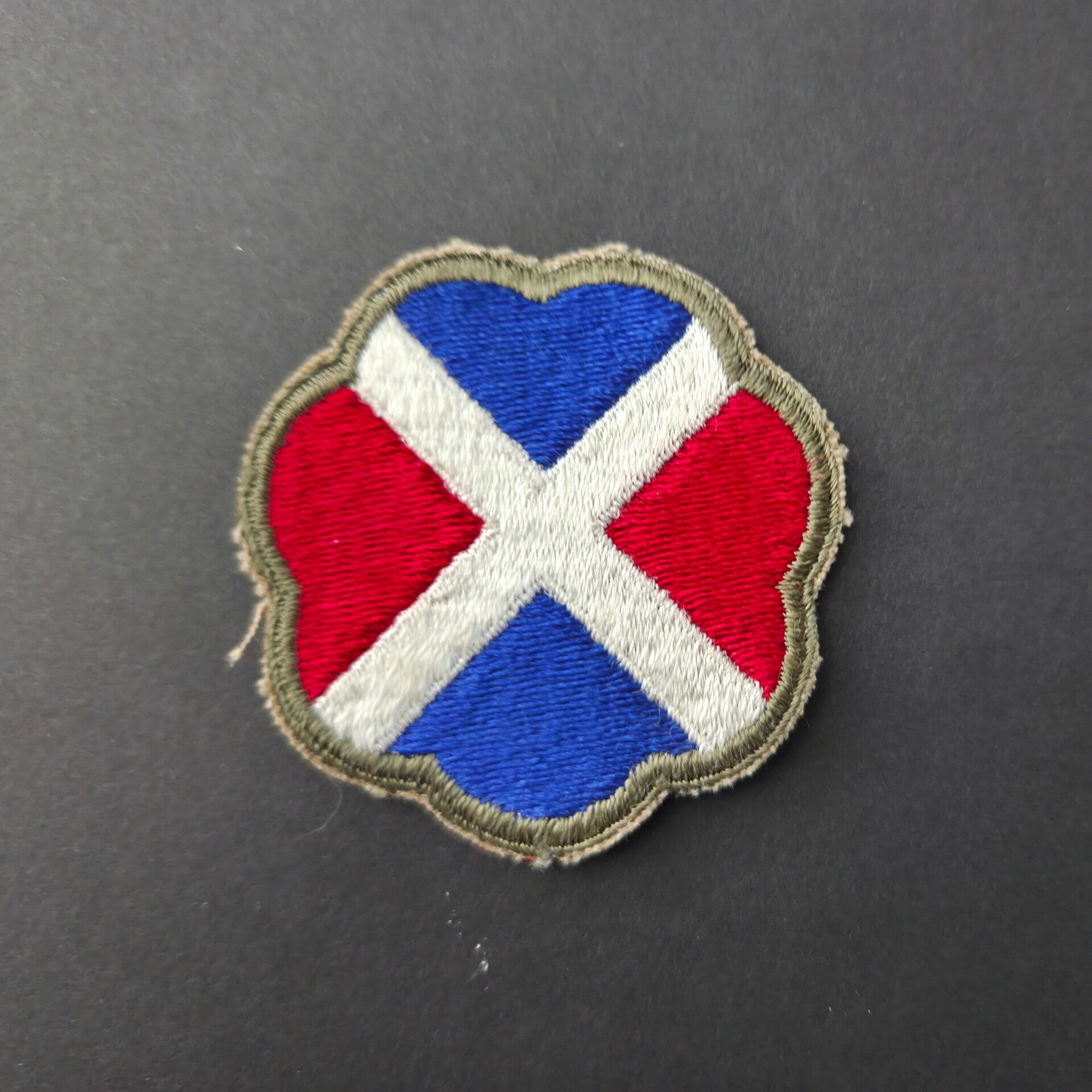
Original embroidered shoulder sleeve insignia representing the 17th Infantry Division of the United States Army. The design features a cloverleaf-shaped field divided by a white Saint Andrew’s Cross separating red and blue quadrants, all bordered in olive drab thread. The distinctive heraldic arrangement reflects traditional Army divisional insignia styling used during the Second World War period and is associated with one of the lesser-seen division patches of the era.

The 17th Infantry Division insignia is notably connected with wartime deception activities associated with the so-called “Ghost Army” operations conducted around the Normandy campaign during World War II. Units connected to these deception efforts utilized visual misdirection, false radio traffic, dummy equipment, and fabricated troop movements intended to confuse German intelligence regarding Allied force concentrations and operational intentions.

This particular example carries additional collector interest due to its documented presence within a family-held military patch collection assembled during the late 1940s, a provenance detail that may lend additional credibility and period authenticity to the piece.

United States Army SSI

Unit:

88th Infantry Division

Estimated Date

Circa 1940s
(World War II era)

Branch

United States Army 
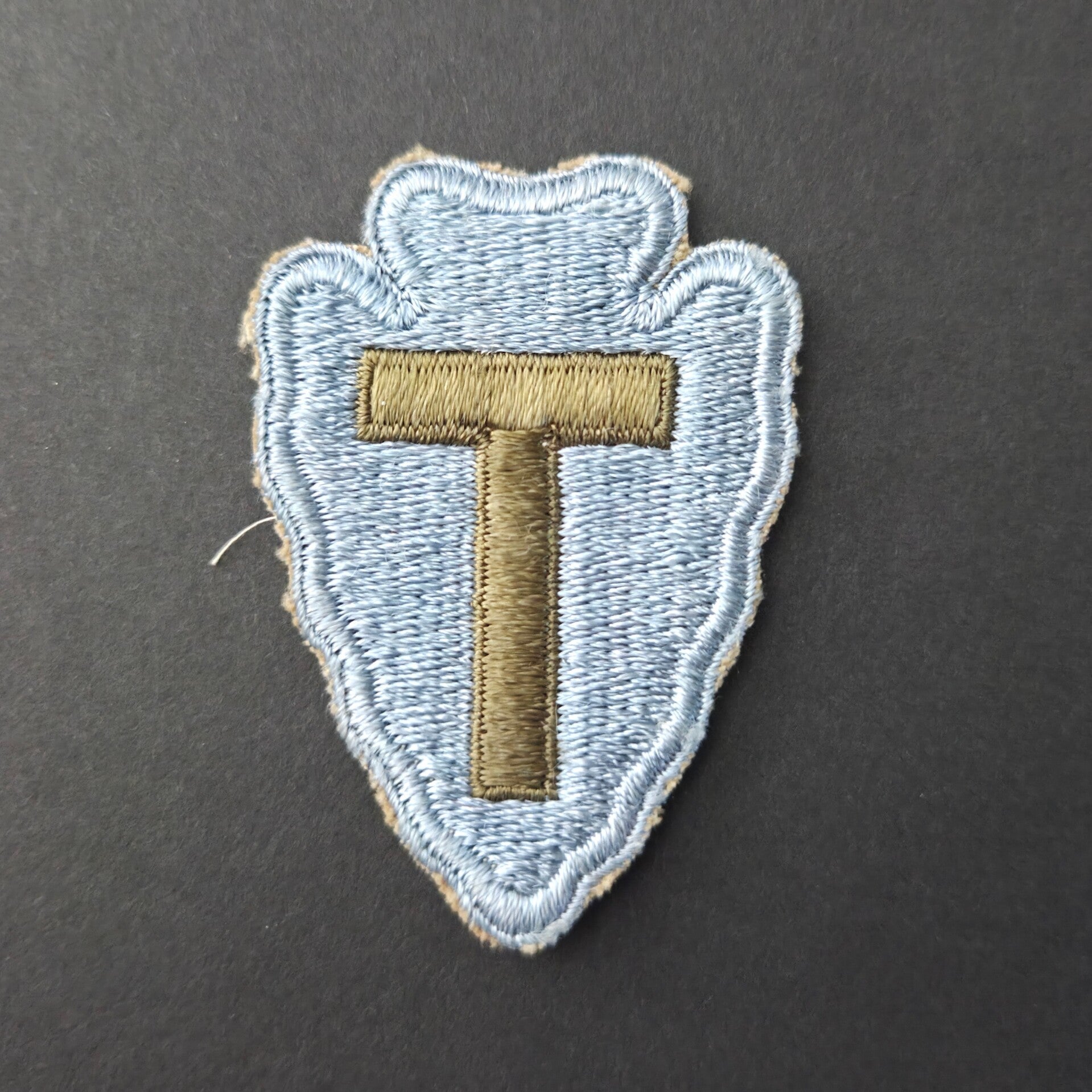
Description

Original embroidered shoulder sleeve insignia representing the 88th Infantry Division of the United States Army, commonly known as the “Cloverleaf” Division. The design consists of two numeral “8” figures crossed at right angles to form a four-leaf clover shape rendered in blue embroidery. The emblem symbolized the four Midwestern states from which the division originally drew personnel during the First World War: Iowa, Illinois, Minnesota, and North Dakota. The blue coloration reflects the traditional branch color of the United States Army Infantry.

The 88th Infantry Division earned the nickname “Blue Devils” during the Italian Campaign of World War II due to its aggressive combat performance in difficult mountain warfare against Axis forces. Enemy troops reportedly referred to the division as the “Blue Devils” out of respect for their tenacity and effectiveness in combat, leading the unit to later officially adopt the title.

This example exhibits characteristics associated with authentic wartime manufacture, including cut-edge construction with visible khaki backing material along the edges and tightly uniform machine embroidery typical of American-produced World War II insignia.

United States Army SSI

Unit:

36th Infantry Division

Estimated Date

Circa 1940s
(World War II era)

Branch

United States Army 
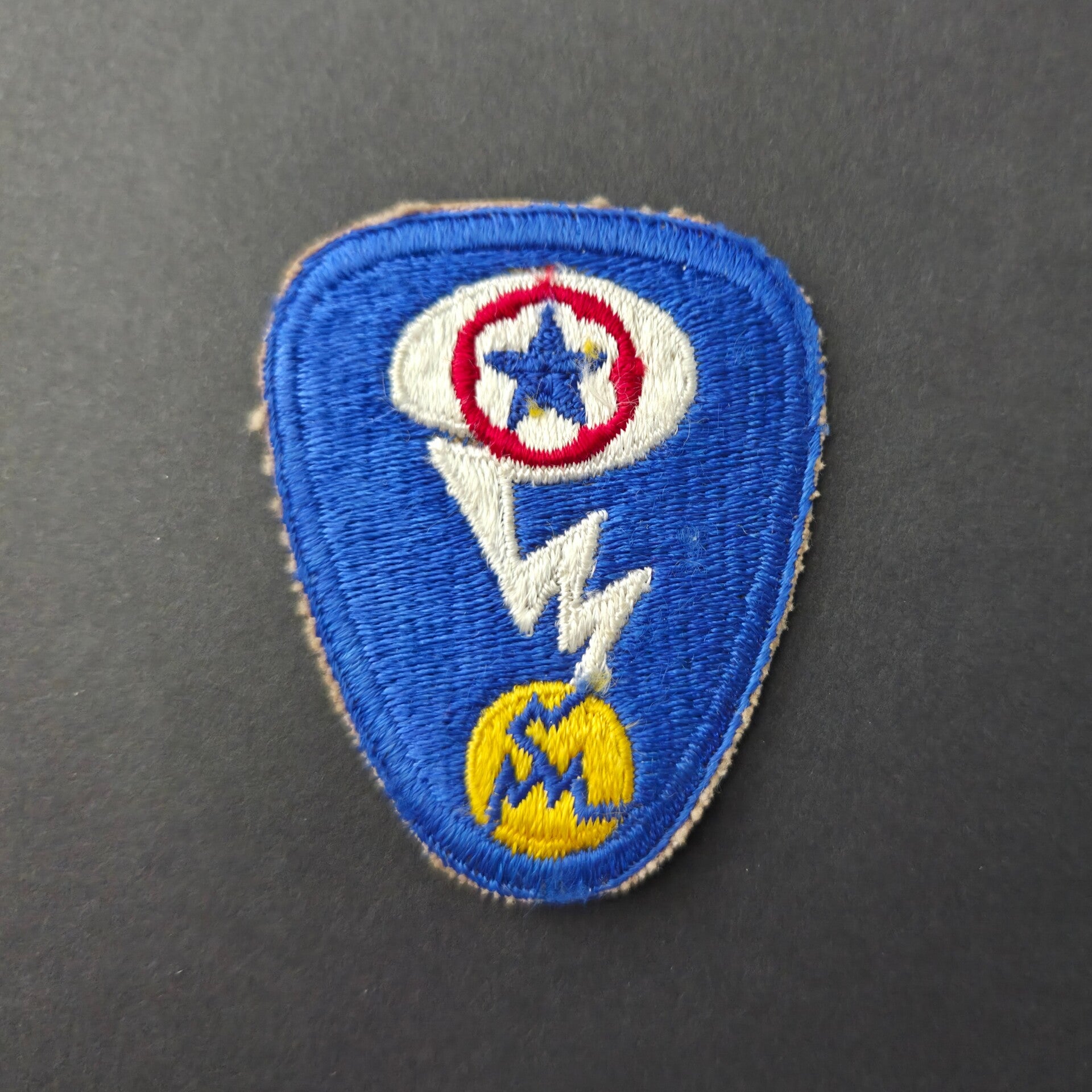
Description

Original embroidered shoulder sleeve insignia representing the 36th Infantry Division of the United States Army, commonly known as the “T-Patch” or “Texas Division.” The design features an olive-drab capital letter “T” centered upon a light blue flint arrowhead. The arrowhead symbolized Oklahoma, formerly Indian Territory, while the “T” represented Texas, reflecting the division’s origins within Texas and Oklahoma National Guard formations. The light blue coloration denotes the traditional branch color of the United States Infantry.

The 36th Infantry Division earned a distinguished combat reputation during World War II and became the first American forces to engage Axis troops on the European mainland during the Salerno landings in Italy in September 1943. The division later participated in major campaigns throughout Italy, France, and Germany.

This example exhibits characteristics associated with authentic wartime manufacture, including classic cut-edge construction and visible tan khaki backing material around the perimeter, features commonly seen on original American-produced 1940s Army insignia.

United States Army SSI

Unit:

Manhattan Engineer District (The Manhattan Project)

Estimated Date

Circa June 1945 – 1946 (World War II Era)

Branch

United States Army 
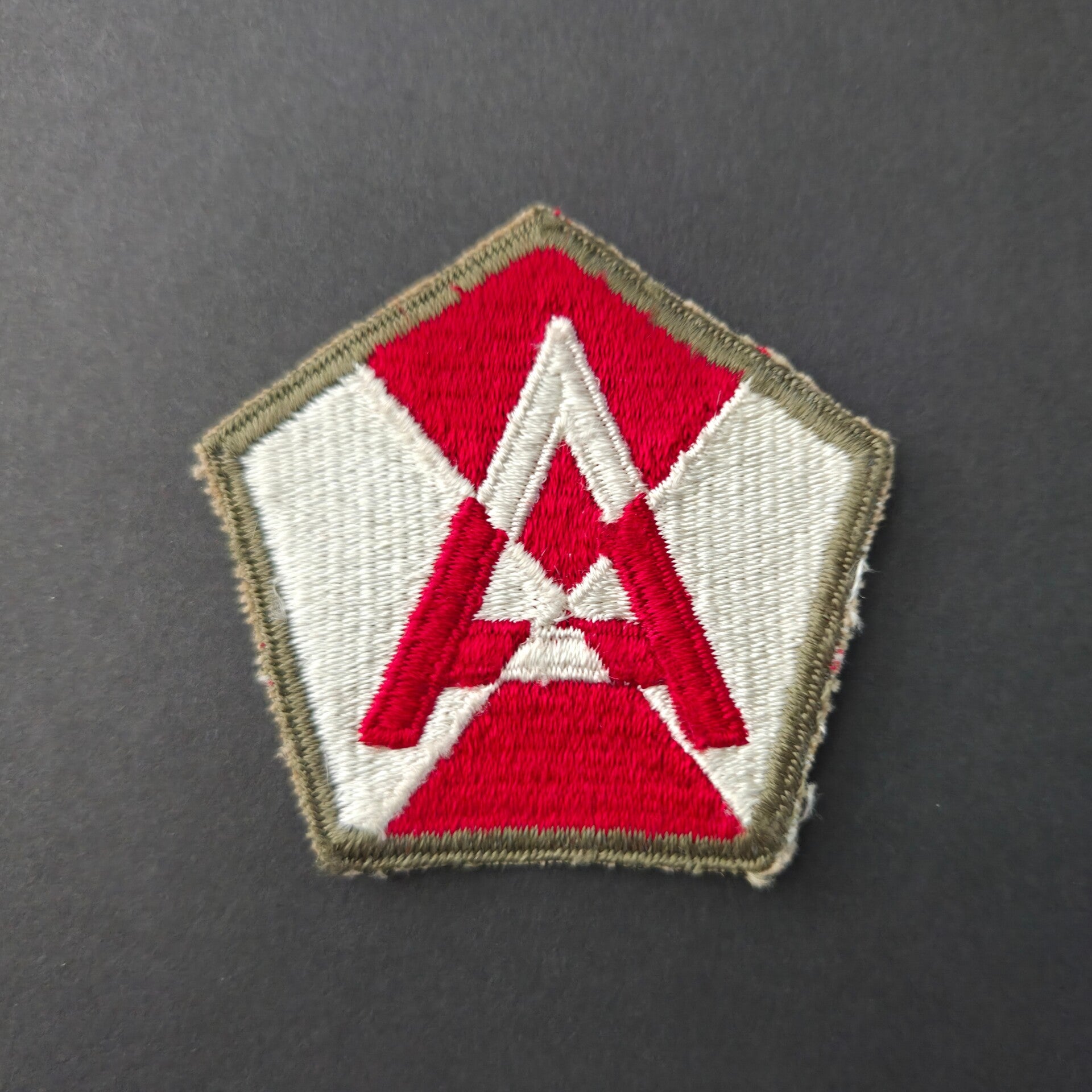
Description

Physical Characteristics & Authentication Notes

  • Border Style: Vintage Cut-Edge (raw canvas backing visible along the perimeter).
  • Reverse Stitching: Textbook "Snowy Back" locking pattern utilizing a heavy white cotton bobbin thread.
  • Thread Composition: Period-correct natural cotton/early rayon threads.
  • UV/Blacklight Testing: 100% UV-Negative (No fluorescence detected on front or reverse stitching).
  • Graphic Markers: Correct blue "M" configuration formed by background embroidery within the split of the yellow fission globe.


Historical Background & Symbolism

Authorized on June 25, 1945, this patch represents the ultra-secret army district responsible for creating the world's first atomic weapons. Due to strict operational security, it was not publicly worn or widely distributed until the very final months of World War II.

The design contains deep symbolism directly related to the atomic mission: the white cloud and lightning bolt are arranged to form a question mark to denote the unknown, hidden nature of the program. The lightning bolt strikes down to split a yellow globe, symbolizing the successful achievement of atomic fission. The red, white, and blue star at the crest references the Army Service Forces command structure overseeing the district.

United States Army SSI

Unit:

Fifteenth United States Army (15th Army)

Estimated Date

Circa October 1944 – January 1946 (World War II Era)

Branch

United States Army 
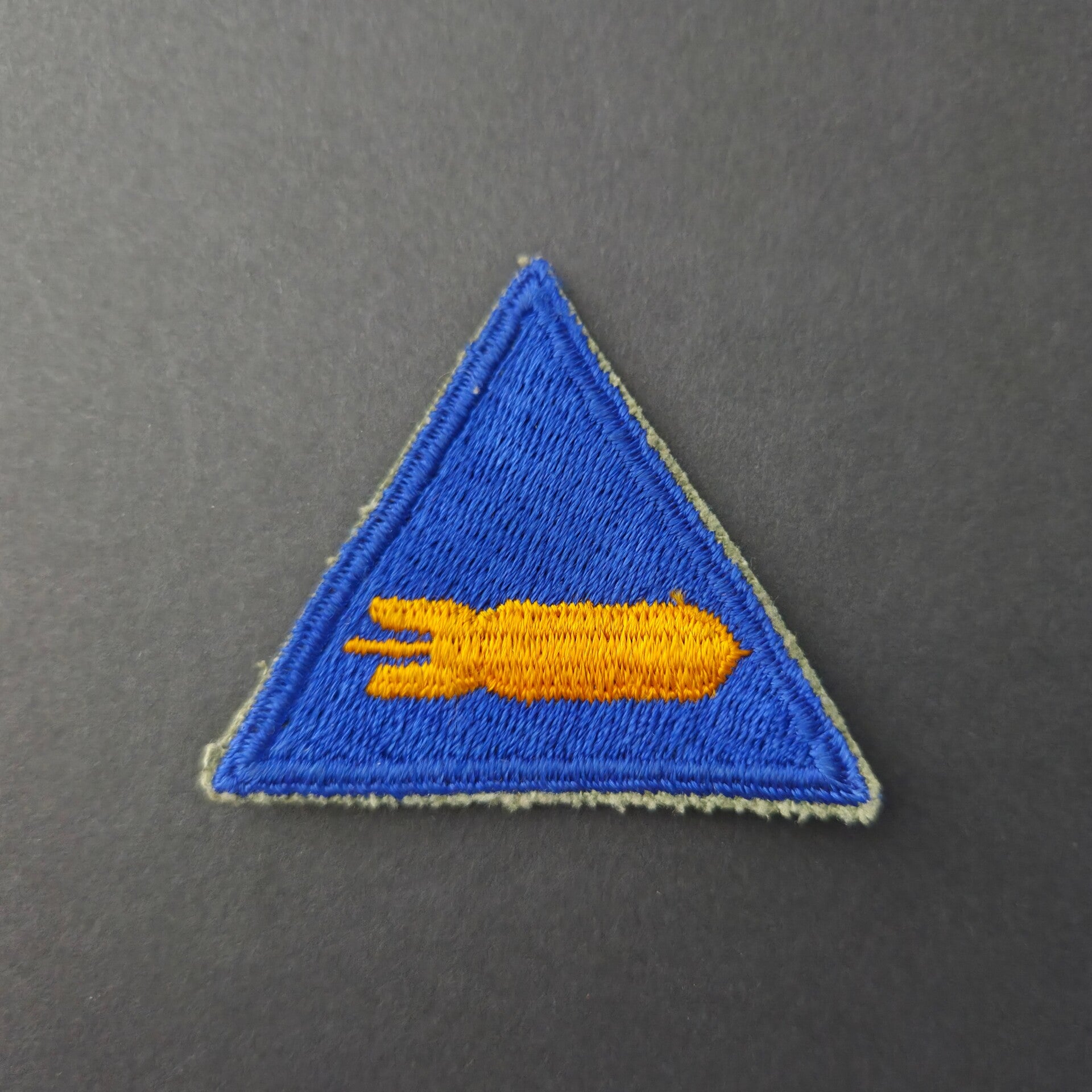
Description

The 15th Army patch features a stylized letter "A" set against a five-sided pentagon. The five sides of the shield multiplied by the three red triangles forming the design structurally indicate the unit's numerical designation of 15.

Activated in August 1944, the 15th Army served as the last field army to be deployed into the European Theater under General Dwight D. Eisenhower. It oversaw containment operations against trapped German garrisons in coastal France and served as a vital administrative headquarters during the transition into the Allied occupation of Germany.

United States Army Specialist Sleeve Qualification Badge

Unit:

Technical Training Command, Armament Specialist (Aircraft Armorer)

Estimated Date

Circa 1943 – 1945 (World War II Era)

Branch

United States Army Air Forces
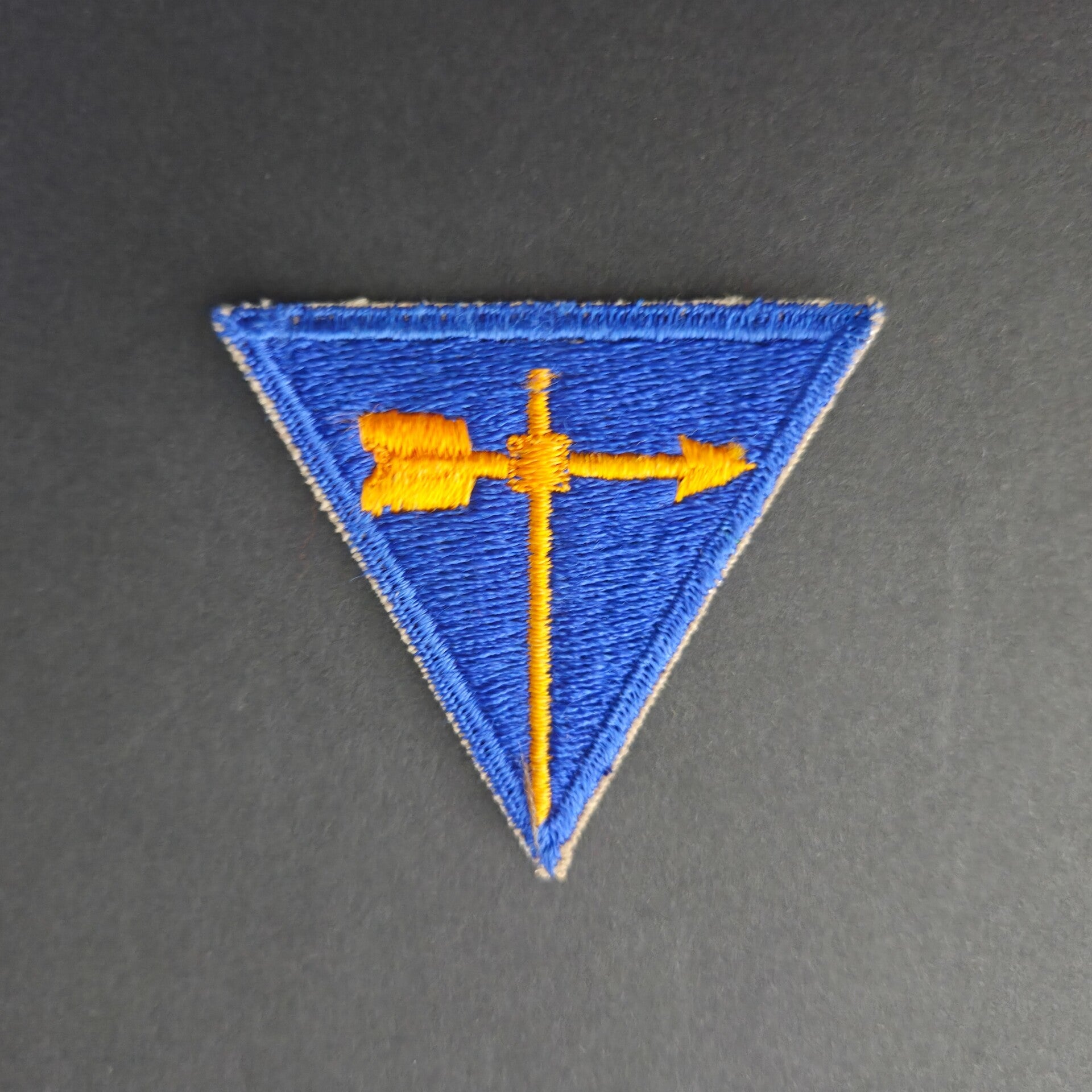
Description

Introduced in 1943 to recognize specialized technical skills among enlisted personnel, the Armament Specialist badge was awarded to soldiers trained to handle the complex weapons systems of WWII combat aircraft.

The golden bomb symbolizes proficiency in aircraft armament, including machine guns, bomb racks, intervalometers, and bomb fusing procedures. These specialists were vital to the daily operation of bombardment groups across all theaters of war, ensuring combat aircraft were safely and efficiently loaded for tactical missions. The sleeve specialist patch program was officially retired in 1947 during the postwar restructuring of the military branches.

United States Army Specialist Sleeve Qualification Badge

Unit:

Technical Training Command, Weather Specialist (Weatherman)

Estimated Date

Circa 1943 – 1945 (World War II Era)

Branch

United States Army Air Forces
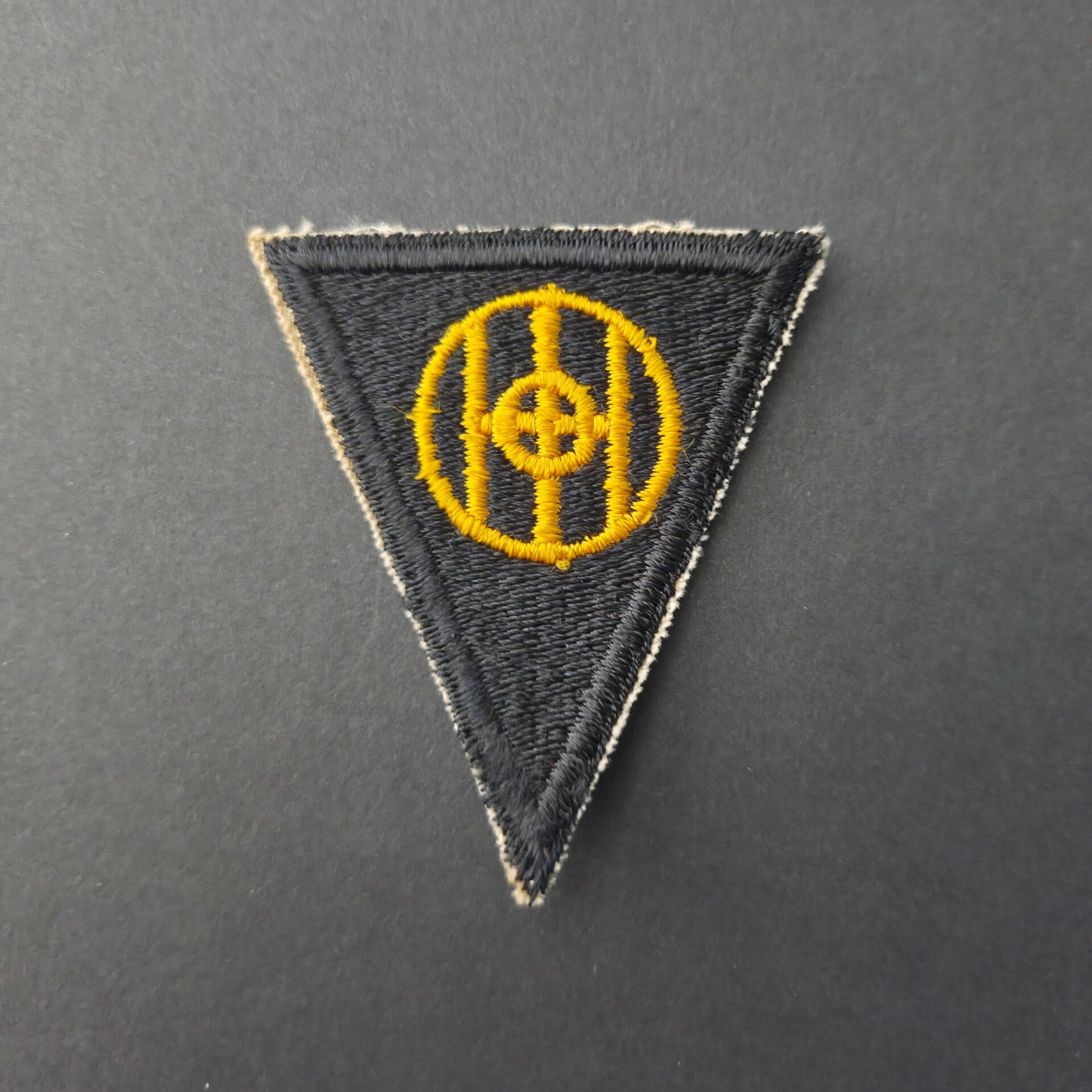
Description

Introduced by the War Department in 1943, this patch recognized the highly critical, technical role of USAAF weathermen. The golden weathervane signifies technical proficiency in predicting weather patterns, preparing forecasts, and relaying vital atmospheric safety updates to aircrews and tactical commanders. [1, 2, 3]

Because meteorological data dictated whether massive bombing raids over Europe or the Pacific could safely take off, these specialists were indispensable to operational planning. The badge system was retired in 1947 during the post-war transition into the modern USAF.

United States Army SSI

Unit:

83rd Infantry Division ("Thunderbolt Division" / "Ohio Division")

Estimated Date

Circa 1942 – 1945 (World War II Era)

Branch

United States Army 
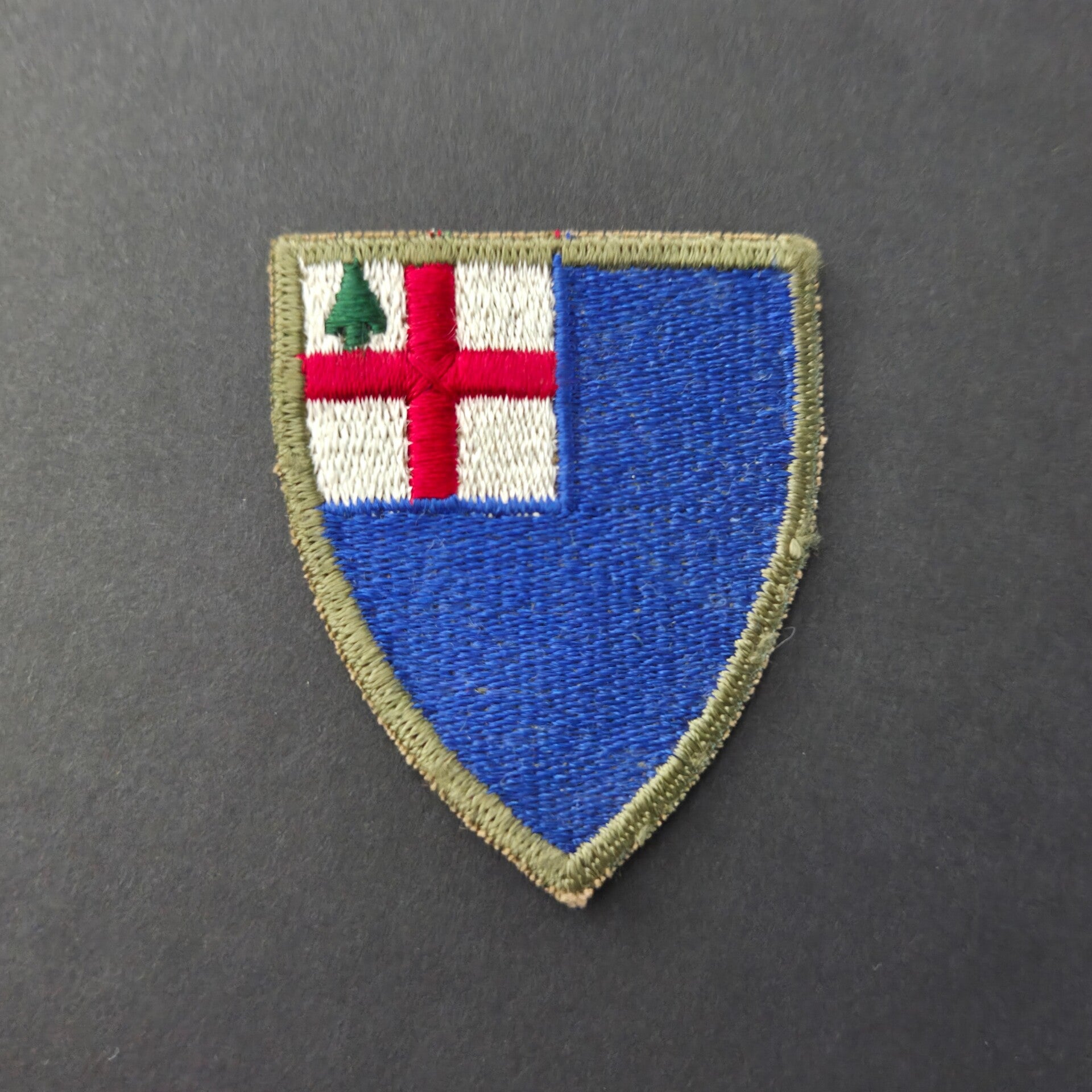
Description

First authorized in December 1918, the 83rd Division patch utilizes a monogram layout to represent the home state of its original WWI personnel. The vertical and horizontal lines inside the golden circle spell out "OHIO." 

Reactivated for World War II in 1942, the division served 244 days in continuous combat operations across Europe. They played crucial roles in liberating towns through France, holding vital positions during the Ardennes Offensive, and ultimately breaking through to the heart of Germany.

United States Army SSI

Unit:

New England Sector, Eastern Defense Command

Estimated Date

Circa June 1943 – 1945 (World War II Era)

Branch

United States Army 
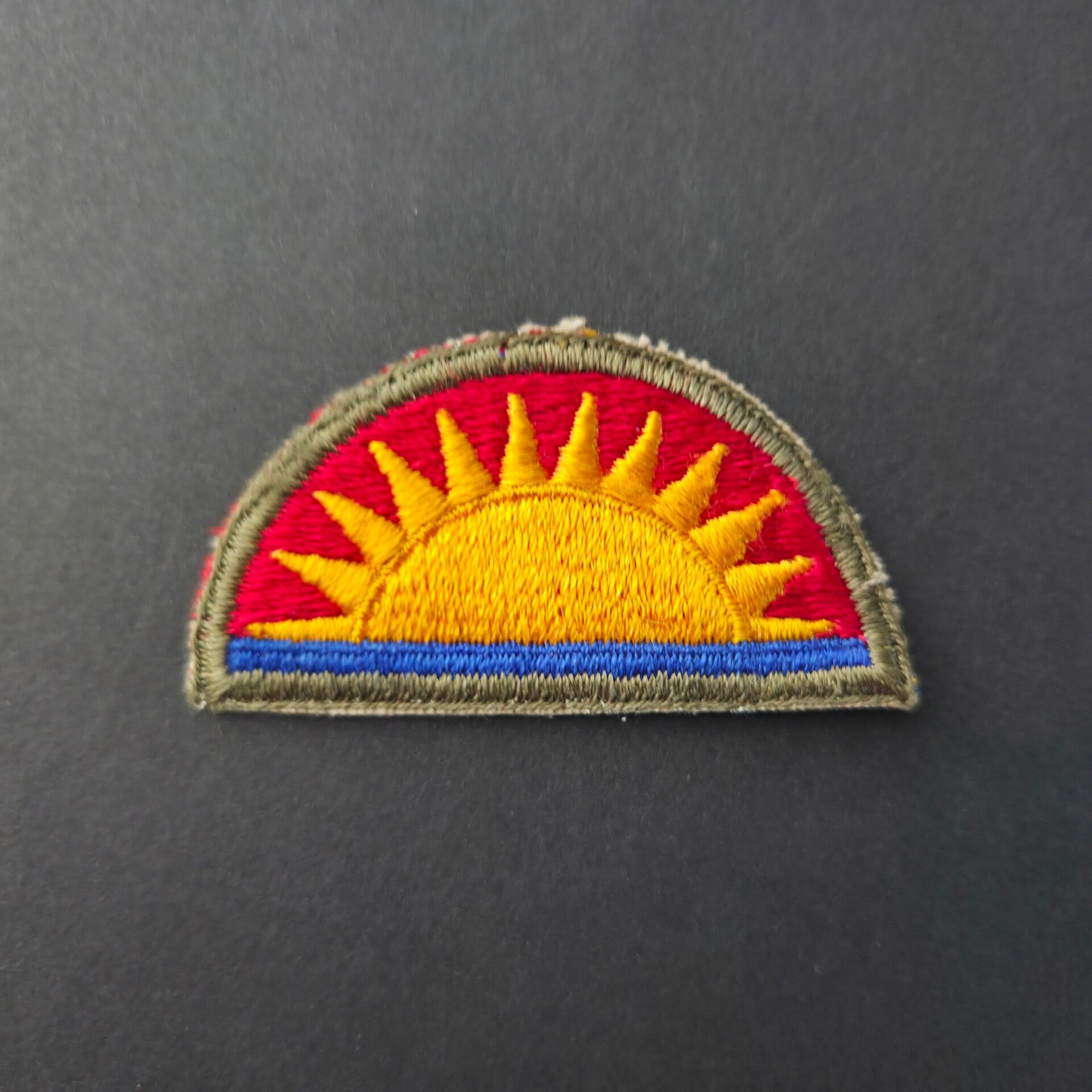
Description

First authorized in June 1943, this patch draws directly from early American revolutionary heraldry to reinforce its regional defense identity. The Bunker Hill flag layout honors New England's historic role as a bastion of American defense and freedom.

During World War II, the New England Sector coordinated vital anti-sabotage operations, coastal watch networks, and air defense corridors. Because it was a localized defense command rather than an overseas combat division, original cut-edge patches of this sector are scarcer on the collector market today than standard infantry pieces, reflecting a lower initial manufacturing run.


United States Army SSI

Unit:

43rd Infantry Division ("Winged Victory Division")

Estimated Date

Circa 1941 – 1945 (World War II Era)

Branch

United States Army 
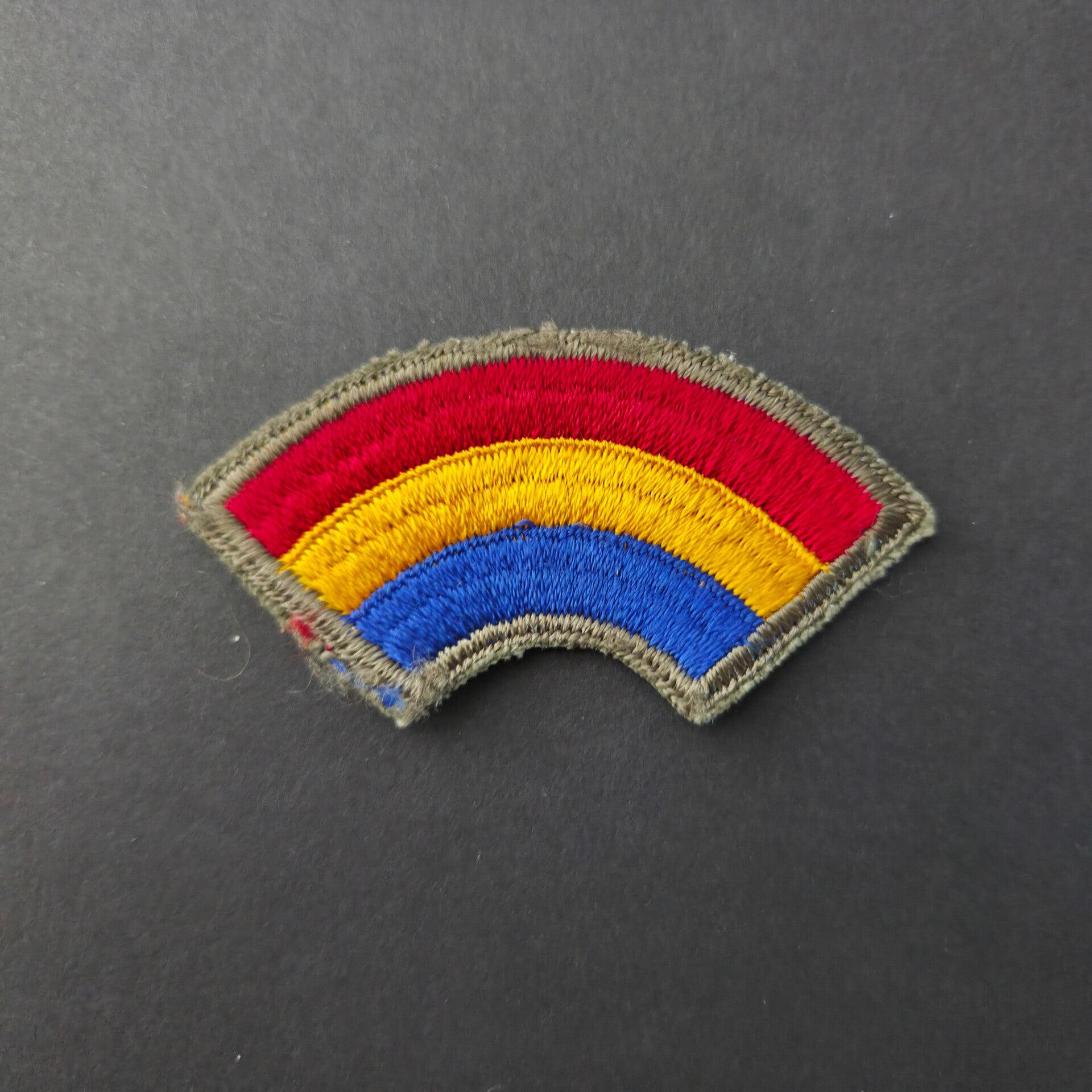
Description

First authorized in March 1923, the 43rd Division patch reflects the historic geography and lineage of New England. The four lobes represent the four founding states of Connecticut, Maine, Rhode Island, and Vermont, while the black grape leaf honors Leif Erikson's historical classification of the territory as "Vinland".

During World War II, the division served as a premier frontline combat unit in the Pacific Theater. They logged hundreds of days in active combat across the dense jungles of the Solomons and the Philippines. Following the cessation of hostilities, the division participated in the initial occupational forces deployed to Japan before returning home to deactivate in late 1945. 

United States Army SSI

Unit:

42nd Infantry Division ("Rainbow Division")

Estimated Date

Circa 1943 – 1945 (World War II Era)

Branch

United States Army 
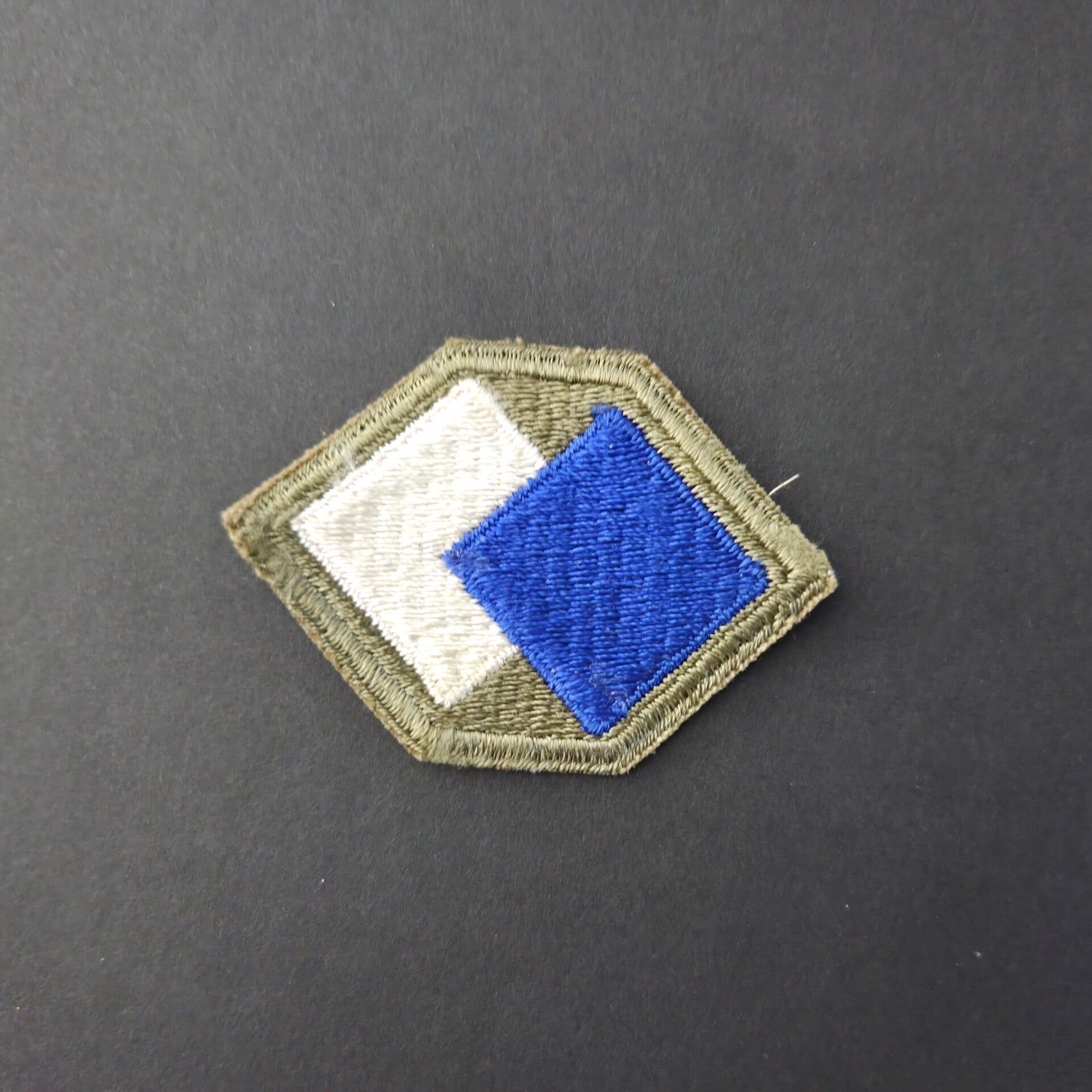
Description

First conceived by Douglas MacArthur in 1917, the "Rainbow" name and motif symbolized a unit that stretched across the United States like a rainbow, combining National Guard units from 26 states. The World War II modification cut the rainbow in half to honor the division's WWI casualties.

During World War II, the 42nd fought with distinction in Central Europe. After containing German counter-attacks in the Ardennes, they pushed deep into the Rhineland and Bavaria. The division entered history as a liberating unit when its advanced elements discovered and secured the Dachau concentration camp complex, before serving out the remainder of the war on occupation duty in Austria.

United States Army SSI

Unit:

96th Infantry Division ("Deadeye Division")

Estimated Date

Circa 1942 – 1945 (World War II Era)

Branch

United States Army 
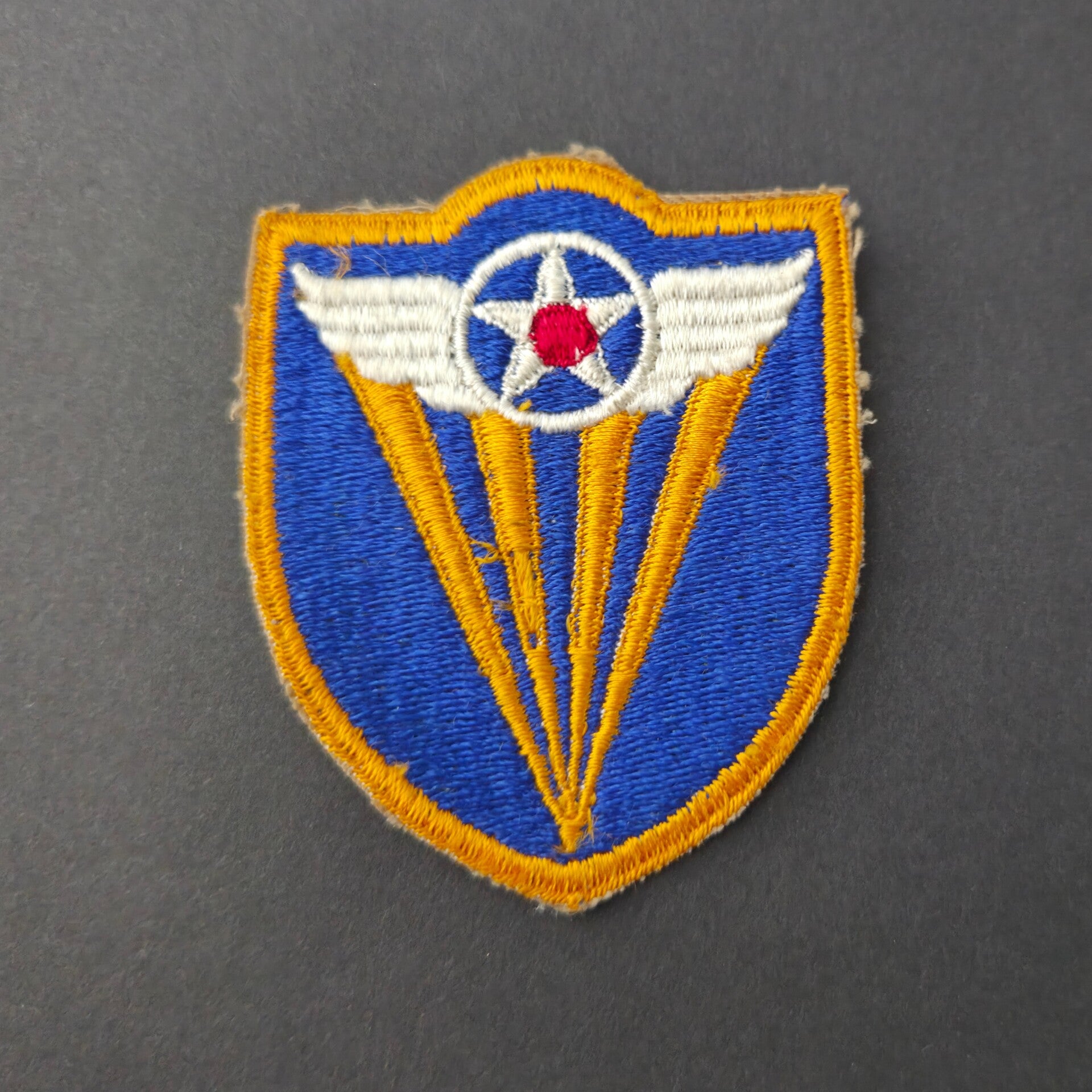
Description

First approved in 1927, the 96th Division patch utilizes two overlapping squares to represent Washington and Oregon. These are the only two states in the contiguous United States that were never under the rule of a European dominion prior to American territory expansion.

During World War II, the "Deadeyes" served as an elite frontline infantry division spearheading amphibious assaults across the Pacific Theater. They logged extensive combat hours cracking heavily fortified Japanese defenses in the muddy terrain of Leyte and the jagged ridges of Okinawa, making their insignia a highly respected combat symbol of the Pacific war.

United States Army Air Forces SSI

Unit:

Fourth Air Force (4th Air Force)

Estimated Date

Circa 1943 – 1945 (World War II Era)

Branch

United States Army Air Forces
Description

First authorized in September 1943, the 4th Air Force patch uses a blue shield field to signify the sky. The three converging gold rays symbolize the strategic unity of its foundational components working to protect the mainland. 

During World War II, the unit patrolled the vast western coastline of the United States to detect and prevent potential axis attacks. Its core operational legacy rests on its status as a premier training command powerhouse, processing thousands of frontline pilots, navigators, and gunners for active service over the European and Pacific combat zones.

United States Army SSI

Unit:

8th Infantry Division ("Golden Arrow Division")

Estimated Date

Circa 1942 – 1945 (World War II Era)

Branch

United States Army 
Description

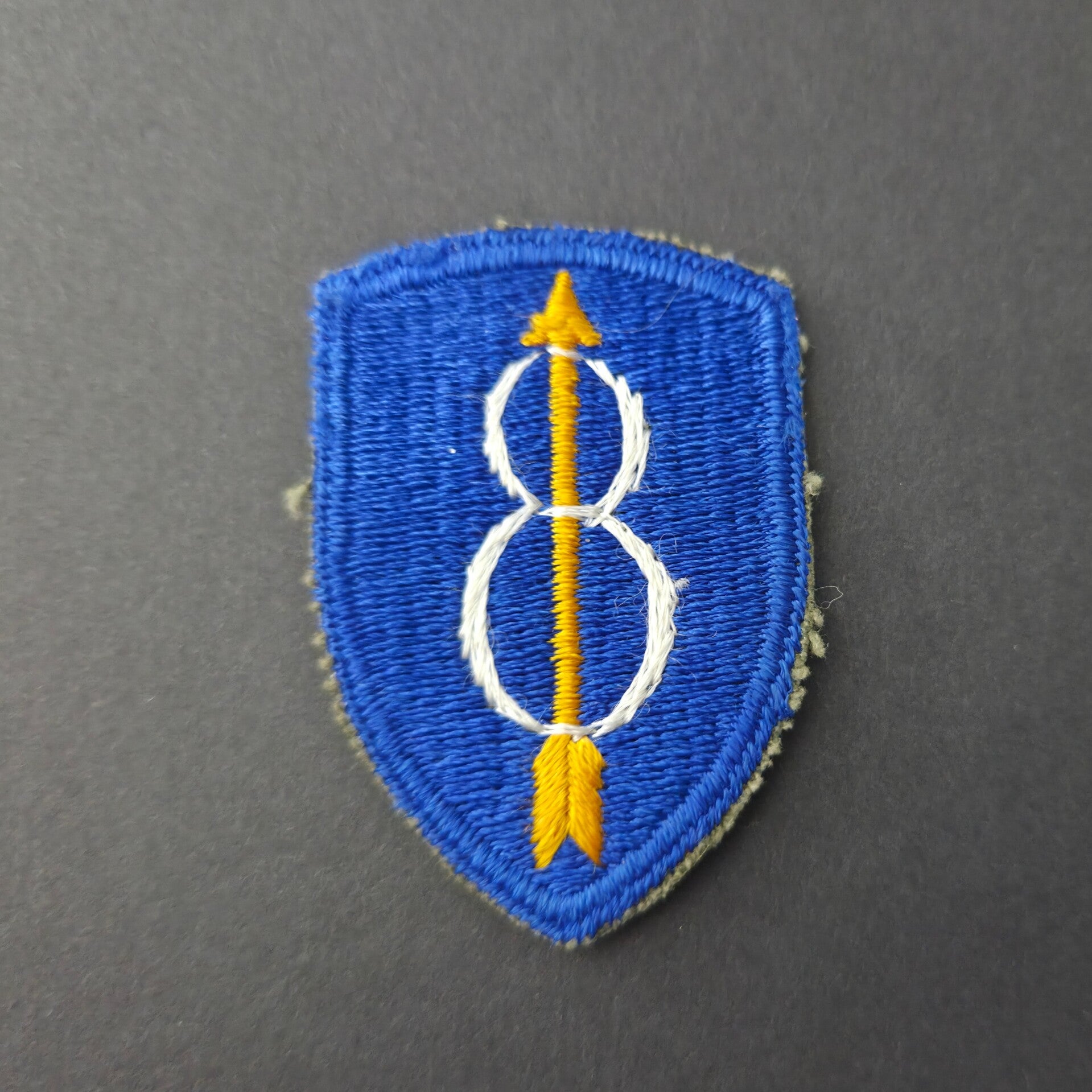
First authorized in April 1918, the 8th Division patch utilizes simple, direct geometric heraldry. The white numeral denotes the division number, while the golden arrow signifies the unit's aggressive combat posture.

During World War II, the "Golden Arrow" division engaged in 266 days of combat across the European Theater of Operations (ETO). They spearheaded critical breakthroughs from Northern France into the heart of Germany, capturing tens of thousands of enemy combatants. The division entered history as a liberating unit when its advanced elements discovered and secured the Wöbbelin concentration camp complex, before serving out the remainder of the war on occupation duty.

United States Army SSI

Unit:

99th Infantry Division ("Checkerboard Division")

Estimated Date

Circa 1942 – 1945 (World War II Era)

Branch

United States Army 
Description

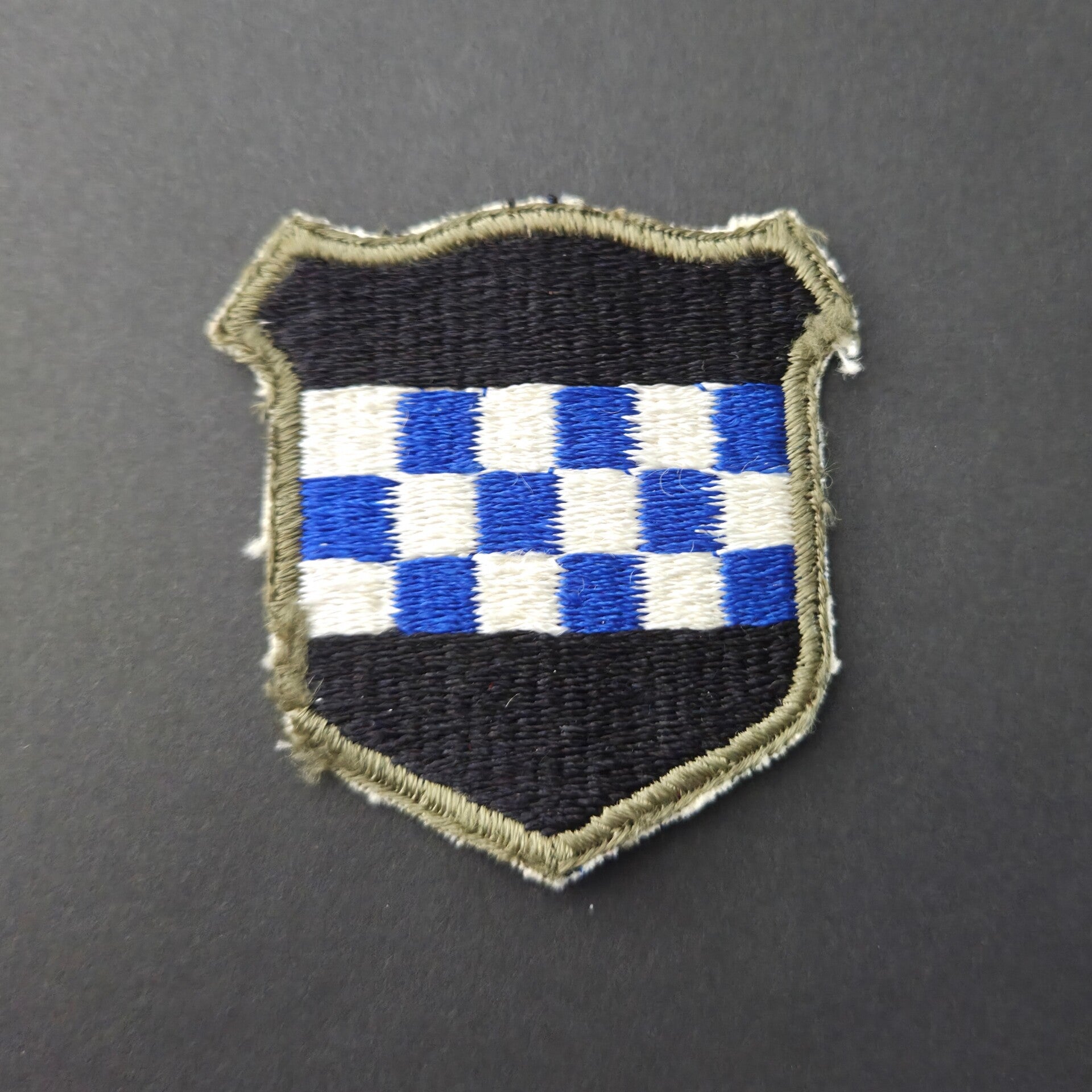
First authorized in October 1942, the 99th Division patch borrows the historic checkerboard heraldry of the William Pitt family to honor its activation roots in western Pennsylvania.

During World War II, the division entered combat in November 1944. Weeks later, they bore the brunt of the opening German assault on the northern shoulder of the Ardennes. Despite facing elite, heavily armored enemy forces, the raw division stood firm on the Elsenborn Ridge. Their grim defense fundamentally altered the course of the Battle of the Bulge, cementing the "Checkerboard" patch as one of the most respected combat insignias of the European Theater

United States Army SSI

Unit:

11th Airborne Division ("The Angels")

Estimated Date

Circa 1943 – 1945 (World War II Era)

Branch

United States Army 
Description

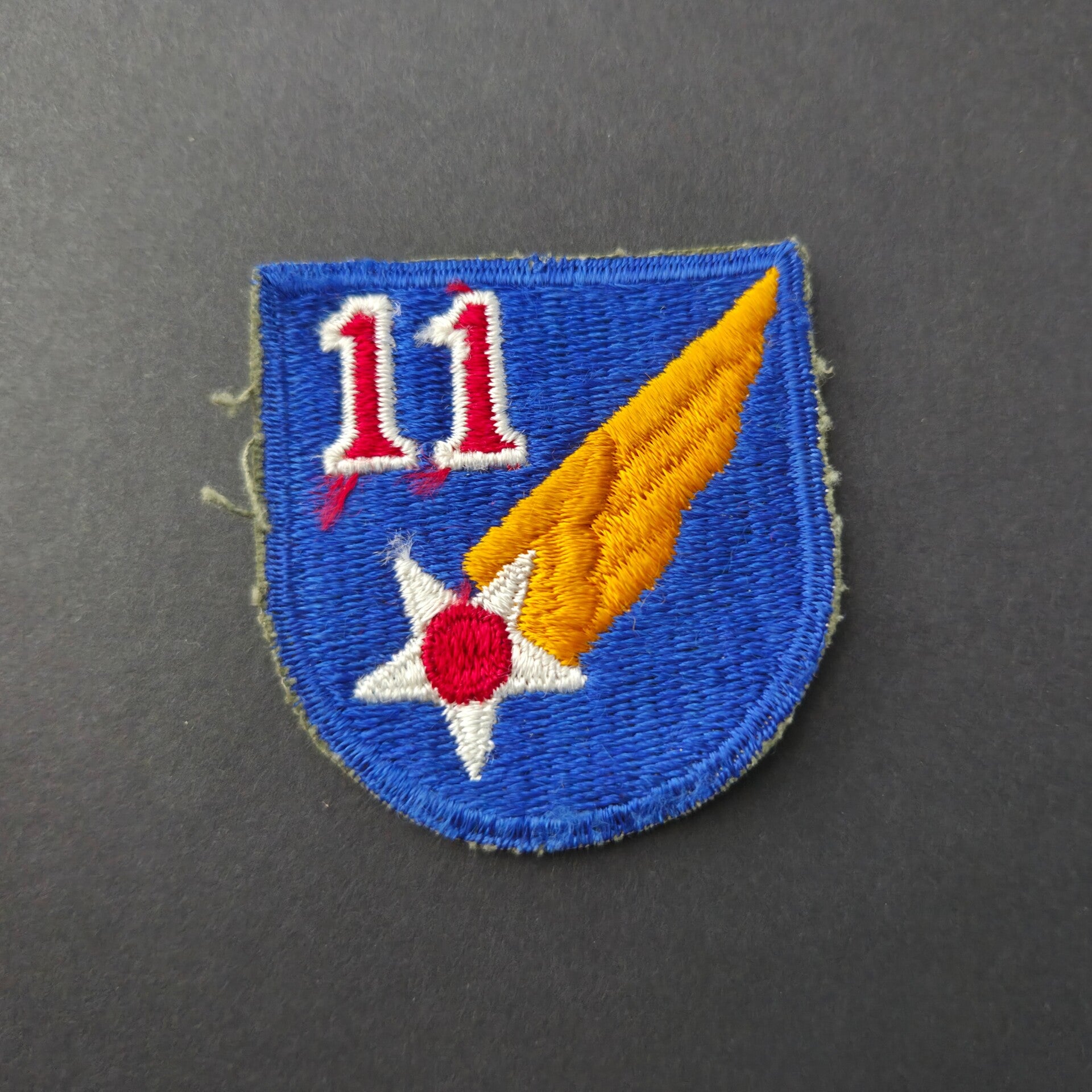
First authorized in December 1942, the 11th Airborne insignia utilizes a classic winged configuration to denote tactical air-delivery capabilities. The light blue color selection is the traditional branch color of the Infantry command structure.

During World War II, the division served with immense distinction in the Southwest Pacific Area (SWPA). They specialized in hazardous glider and parachute deployments behind enemy lines, routing entrenched forces through the dense mountain passes of Leyte and Luzon. Following the atomic bombings, the division was assigned the historic duty of guarding General Douglas MacArthur during the initial Allied occupation phases in Tokyo.

United States Army SSI

Unit:

83rd Infantry Division ("Thunderbolt Division" / "Ohio Division")

Estimated Date

Circa 1918 – 1942 (World War I to Early World War II Transition)

Branch

United States Army 
Description

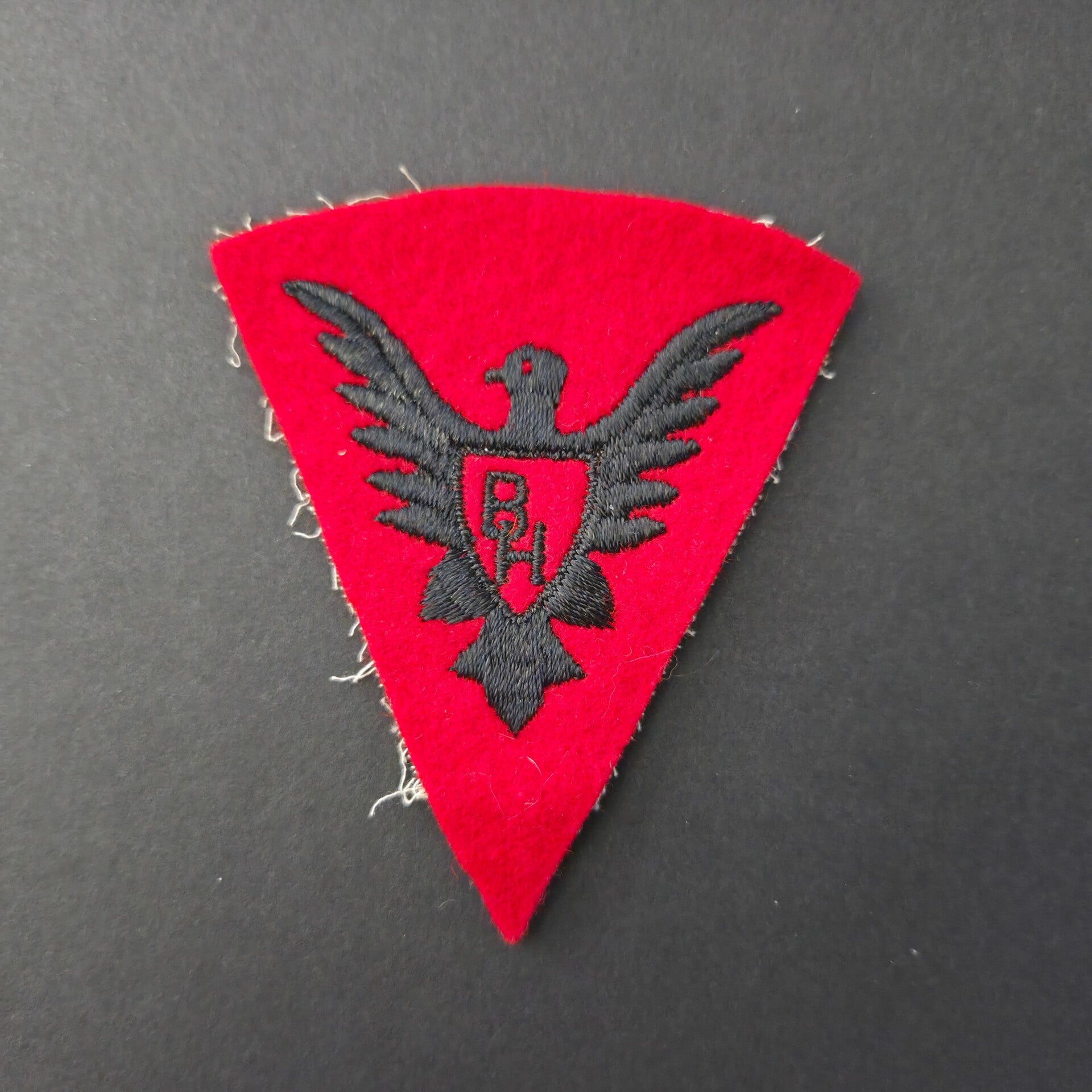
First authorized in November 1918, the 86th Division insignia features the Black Hawk eagle named after the famous historical Native leader of Illinois. The interlocking "BH" letters stamped inside the interior chest shield reference the division's official combat designation. 

During its service evolution, the division underwent rapid shifts. After serving as a depot organization during the First World War, the unit spent decades in the reserve ranks before reactivating for heavy deployments in the final Allied maneuvers across Central Europe during WWII. Following the German surrender, the unit was instantly processed for transit across the globe to the Pacific Area, making it a unique multi-theater operational asset at the close of global operations.


United States Army Brigade-Level SSI

Unit:

55th Infantry Brigade (Subordinate to the 28th Infantry Division)

Estimated Date

Circa 1918 – 1921 (World War I to Early Post-War Era)

Branch

United States Army (National Guard)
Description

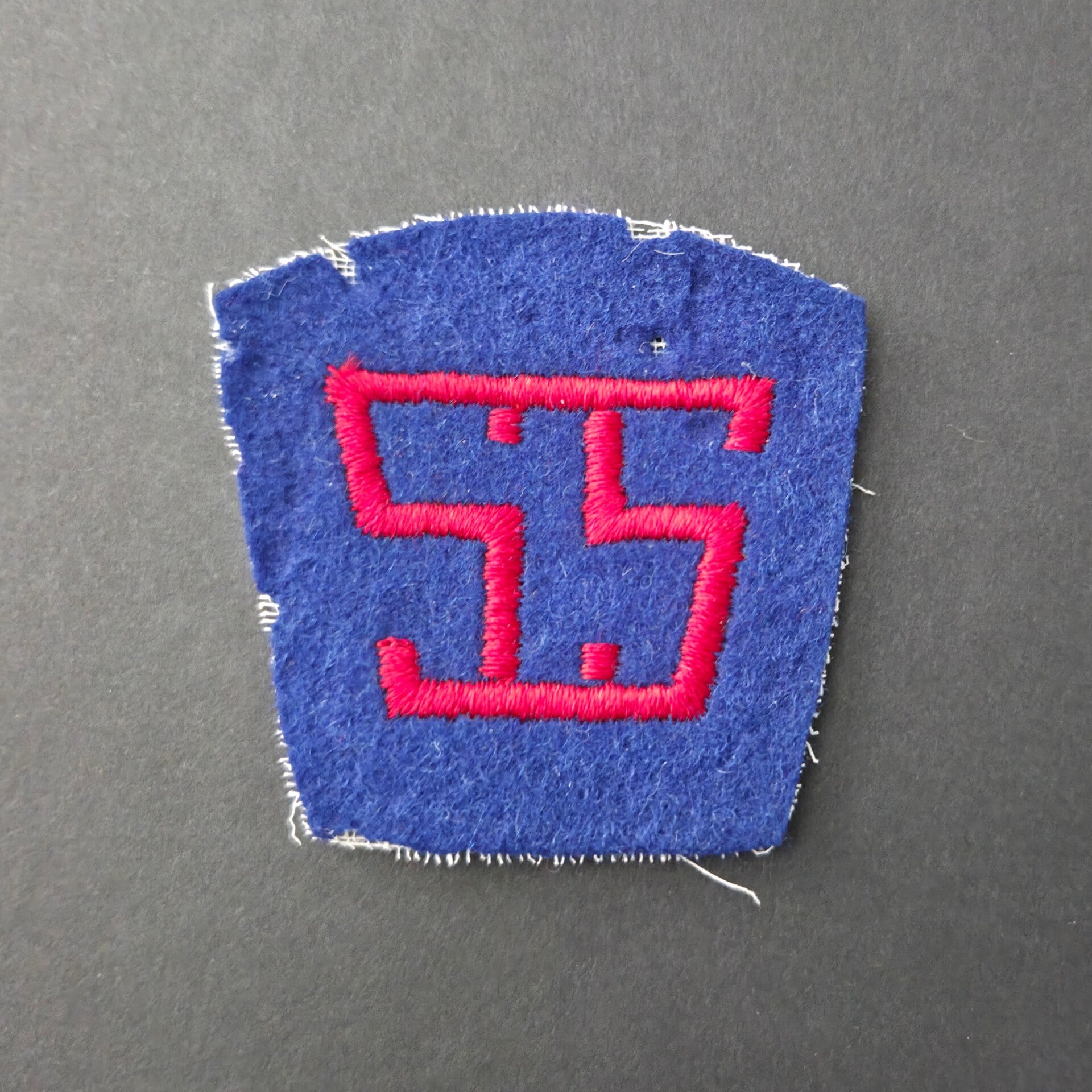
First adopted in the fields of France in 1918, this insignia utilizes the Pennsylvania Keystone background to designate its parent organization (the 28th Division), while using the internal red monogram to explicitly identify the 55th Brigade Headquarters and its constituent regiments.

During the heavy fighting of 1918, the 55th Brigade was thrust into critical defensive actions along the Marne River, successfully checking major German advances at a tremendous cost of casualties. Because the U.S. Army restructured its divisions from "square" formations (two brigades) to "triangular" formations (three direct regiments) leading up to WWII, independent brigade patches like this were entirely phased out of combat wear, making this a pure relic of the Great War.

Reproduction United States Army SSI

Unit:

Allied Tank Corps (Heavy Tank Battalions / 301st, 302nd, 303rd Battalion)

Estimated Date

Circa 1940 – 1945 (World War II Era Manufacturing)

Manufacturer

Likely Patch King
Description

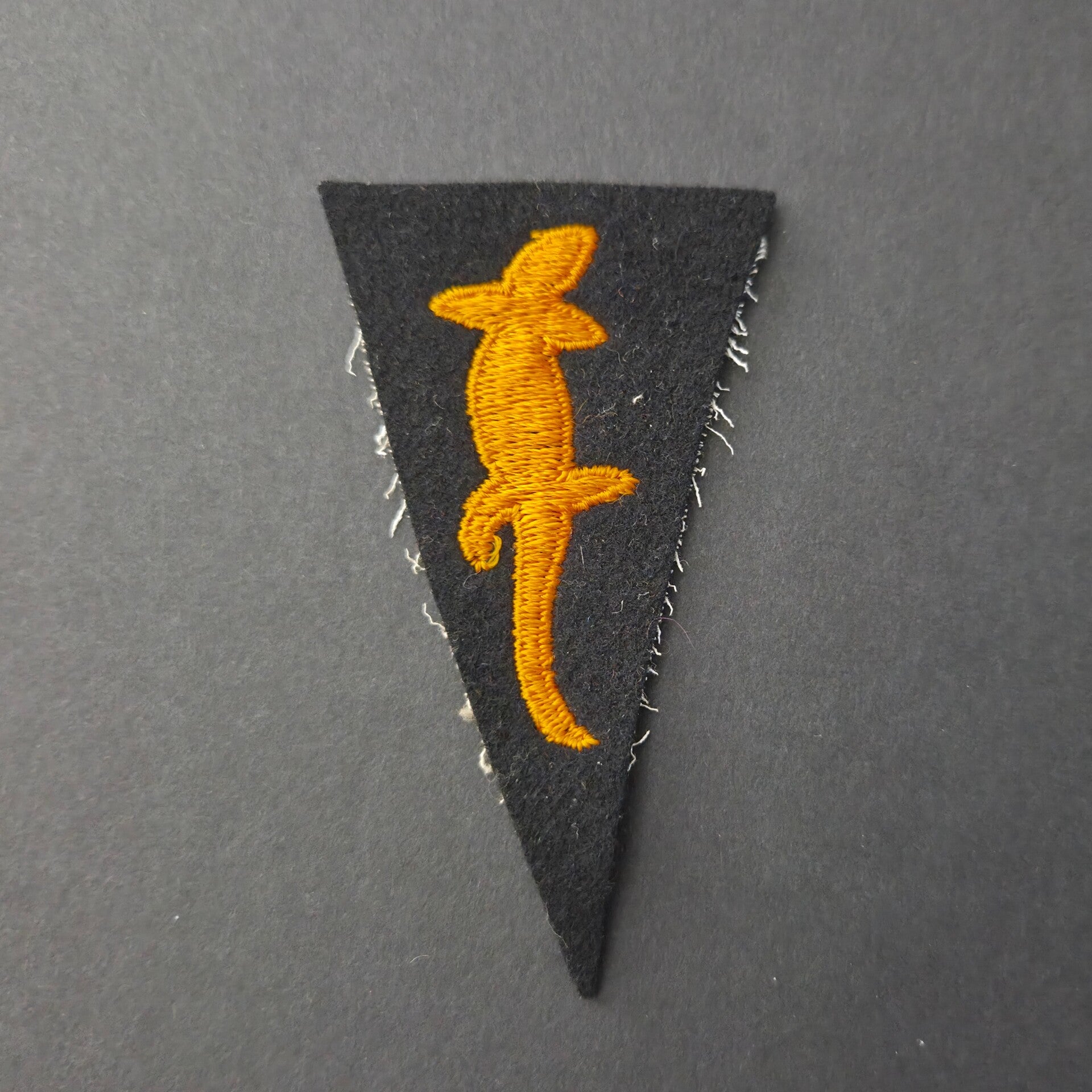
The Allied Tank Corps insignia features the mythical salamander, chosen by early armored crews to symbolize enduring resilience under fire. The black background color represents the heavy steel hulls of the early British-supplied tanks used on the Western Front during World War I.

Because the independent Tank Corps was completely dissolved by the National Defense Act of 1920, original 1918 patches became instantly unobtainable for collectors by the dawn of WWII. Companies like The Patch King stepped in during the 1940s to manufacture high-quality, wool-felt replicas using the machinery of the era. This patch stands as a fascinating historical bridge, documenting the exact birth of organized militaria collecting in the United States during the World War II years.

Regimental Shoulder Sleeve Insignia (SSI Variation)

Unit:

9th Infantry Regiment (Attached to the 2nd Infantry Division)

Estimated Date

Circa 1918 – 1919 (World War I Era)

Branch

United States Army 
Description

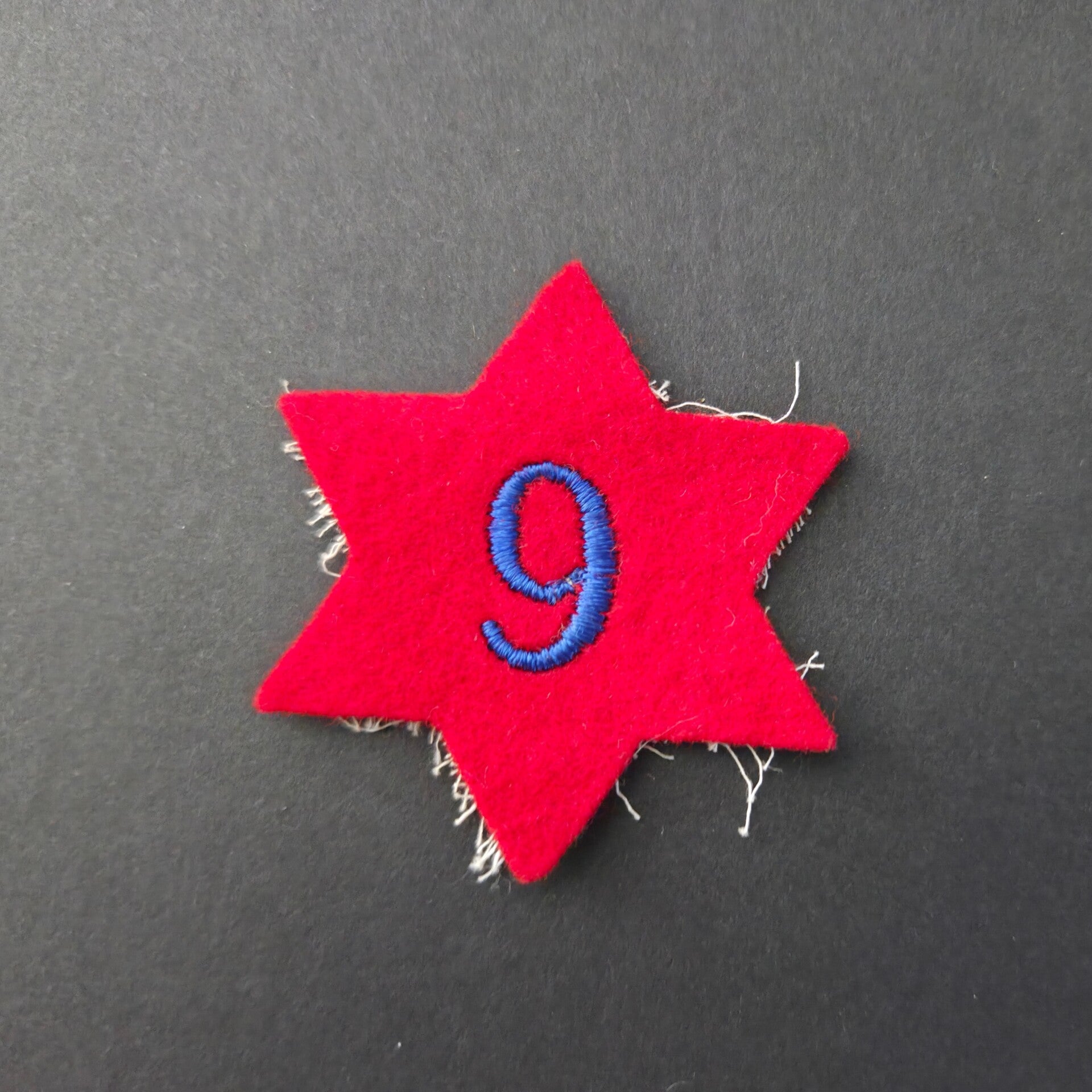
Adopted in the field during the First World War, this patch utilizes a color-coded and shape-coded system to identify the 9th Infantry Regiment within the larger command structure of the 2nd Infantry Division. The six-pointed red star acts as the base heraldic symbol for the regiment.

During WWI, the 9th Infantry Regiment earned massive acclaim for its combat tenacity on the Western Front, suffering heavy casualties while capturing vital German positions. This specific felt variation represents the genesis era of US military heraldry before the War Department fully standardized all insignia designs into mass-produced embroidered canvas patches in the late 1930s.

Reproduction United States military specialty insignia

Unit:

9th Airborne Division

Estimated Date

Circa 1940s reproduction of a World War II era insignia

Manufacturer

Likely Patch King
Description

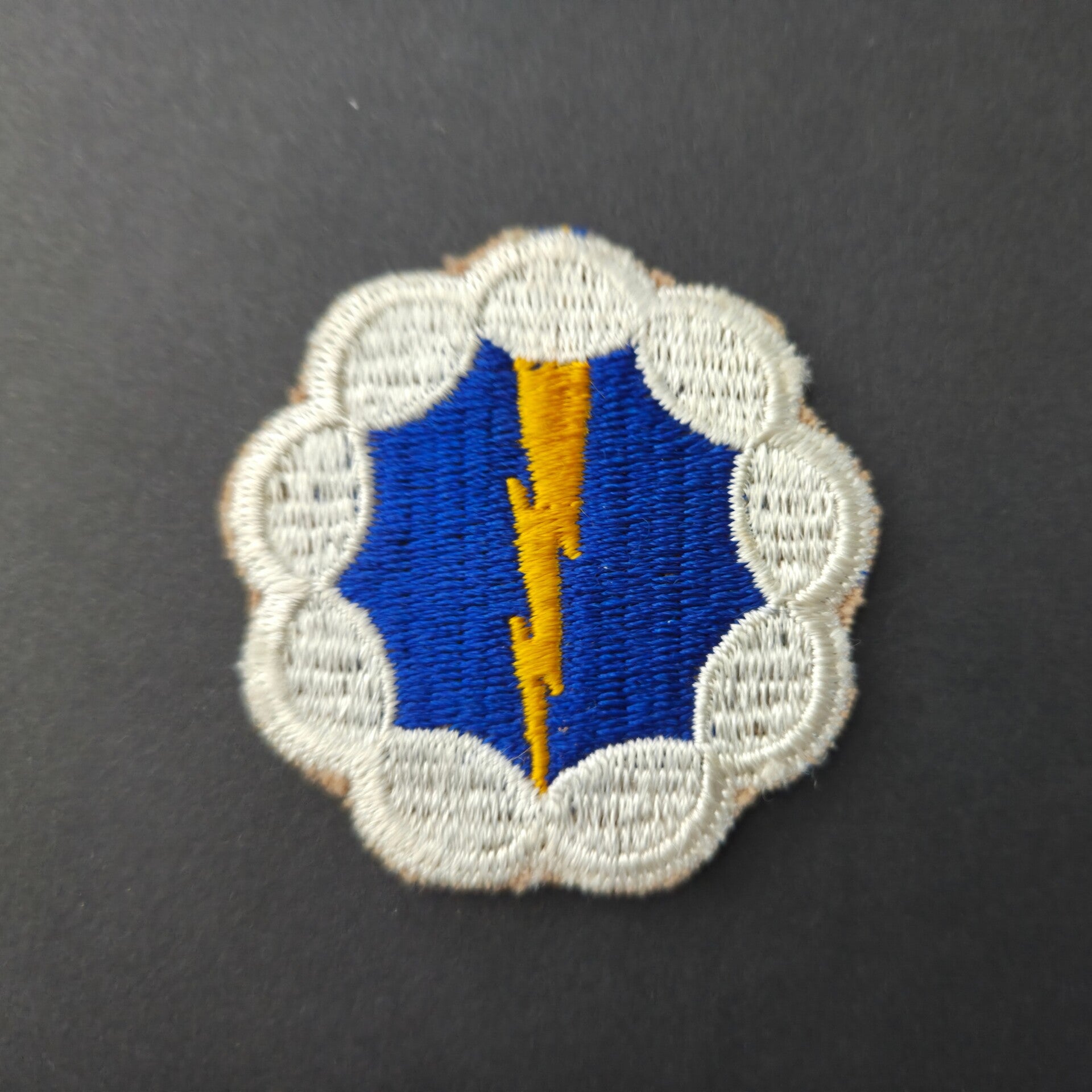
Reproduction embroidered shoulder sleeve insignia representing the proposed 9th Airborne Division of the United States Army during World War II. The design features a yellow lightning bolt centered upon a blue shield-like field surrounded by a white cloud border. The lightning imagery symbolized airborne assault power and rapid strike capability, while the cloud motif reflected the division’s airborne identity.

The 9th Airborne Division was not an active combat division, but rather part of a sophisticated Allied deception effort intended to convince German intelligence that the United States possessed additional airborne formations prior to the Normandy invasion and broader European operations. These so-called “ghost” or “phantom” units formed part of larger wartime deception programs designed to misdirect enemy troop deployments and strategic planning. 

This particular example is believed to be a collector-produced reproduction manufactured during the mid-20th century, likely by Patch King, a company well known for producing historical military insignia reproductions for collectors and veterans.

Reproduction examples such as this became increasingly popular during the 1930s and 1940s as interest in military memorabilia and unit history expanded among veterans and collectors. This patch displays embroidered construction and styling consistent with period collector-manufactured insignia of that era.

Reproduction United States military specialty insignia

Unit:

205th or 206th Infantry Regiment

Estimated Date

Circa 1940s

Manufacturer

Likely Patch King
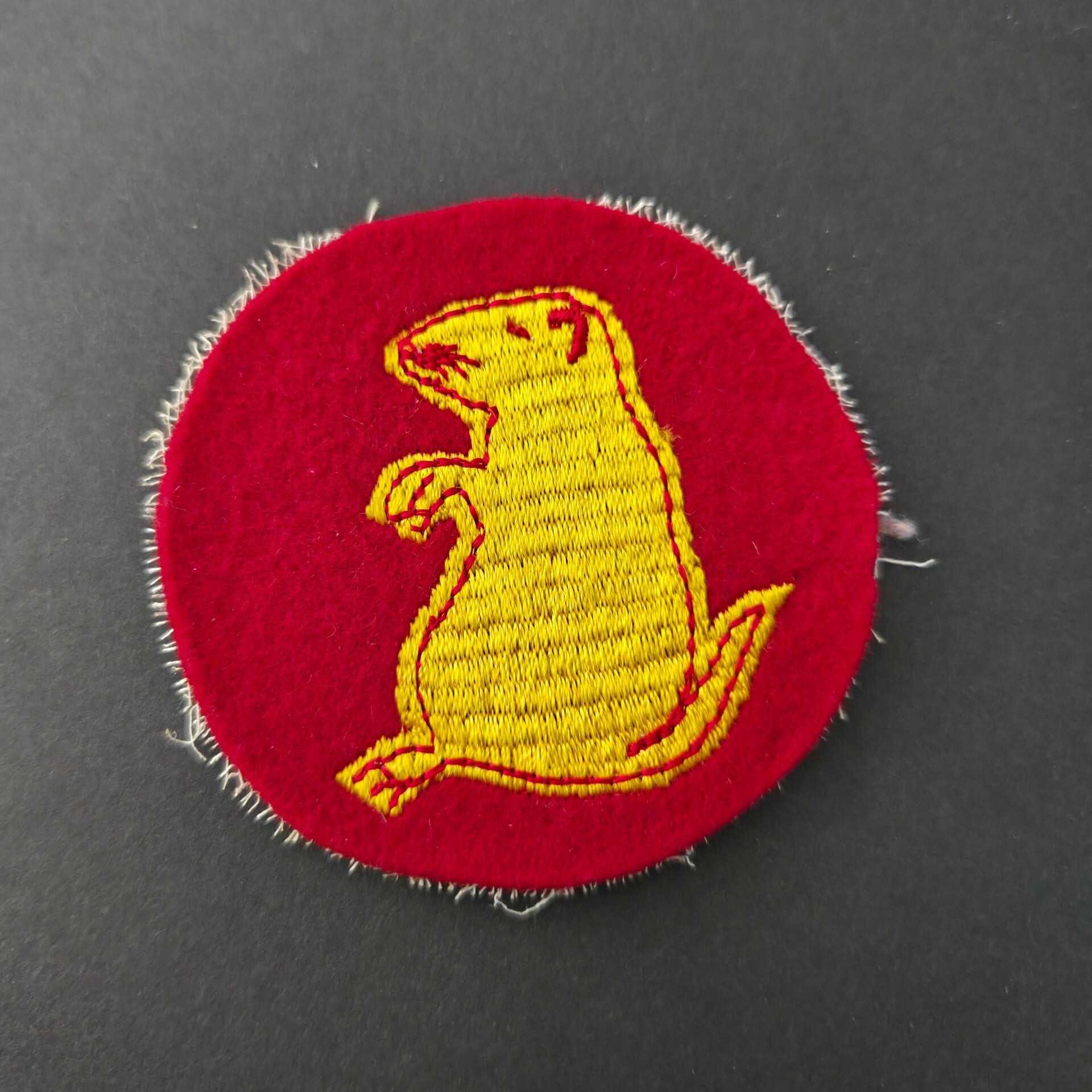
Description

Embroidered collector patch representing the 205th or 206th Infantry Regiment, military formations historically associated with Minnesota personnel during the early-to-mid 20th century. The design features a stylized yellow gopher embroidered against a red wool felt circular field.

The gopher motif references Minnesota’s well-known state symbol and reflects the regional identity commonly incorporated into military insignia and morale imagery of the period.

This example is believed to be a period collector reproduction rather than a regulation-issued uniform insignia. Similar patches were manufactured by “Patch King,” a prominent producer of military collector patches beginning in the 1930s and continuing through the WWII era and afterward. These patches were created primarily for collectors, veterans, trading, and display purposes rather than official military wear.

Construction characteristics—including embroidered wool felt composition and mesh-style backing—are consistent with known Patch King production methods of the period.

Reproduction United States Army SSI

Unit:

2nd Infantry Division ("Indianhead Division")

Estimated Date

Circa 1940s

Manufacturer

Likely Patch King
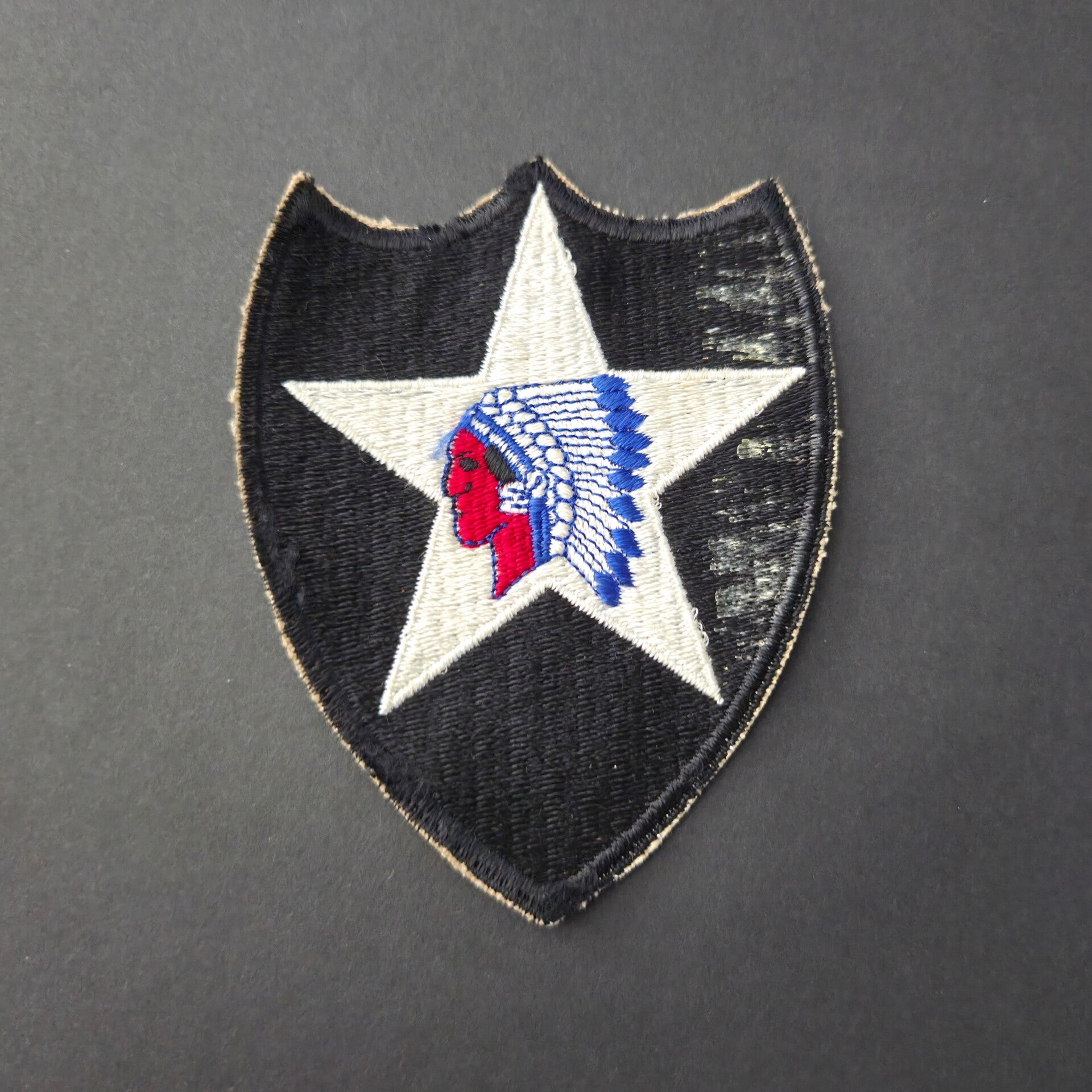
Description

First authorized in November 1918, the 2nd Infantry Division patch is one of the most recognizable symbols in American military history. The Native American chief's profile symbolizes warrior heritage, courage, and traditional American strength, set over a white star to denote national pride.

During World War II, the "Indianhead" division was a premier spearhead formation in the European Theater of Operations (ETO). They broke through entrenched German lines from the beaches of Normandy deep into Czechoslovakia. Their stubborn defense during the opening days of the Ardennes Offensive successfully choked key German armored columns, altering the strategic outcome of the Battle of the Bulge.

This example is believed to be a period collector reproduction rather than a regulation-issued uniform insignia. Similar patches were manufactured by “Patch King,” a prominent producer of military collector patches beginning in the 1930s and continuing through the WWII era and afterward. These patches were created primarily for collectors, veterans, trading, and display purposes rather than official military wear.

Construction characteristics—including embroidered wool felt composition and mesh-style backing—are consistent with known Patch King production methods of the period.

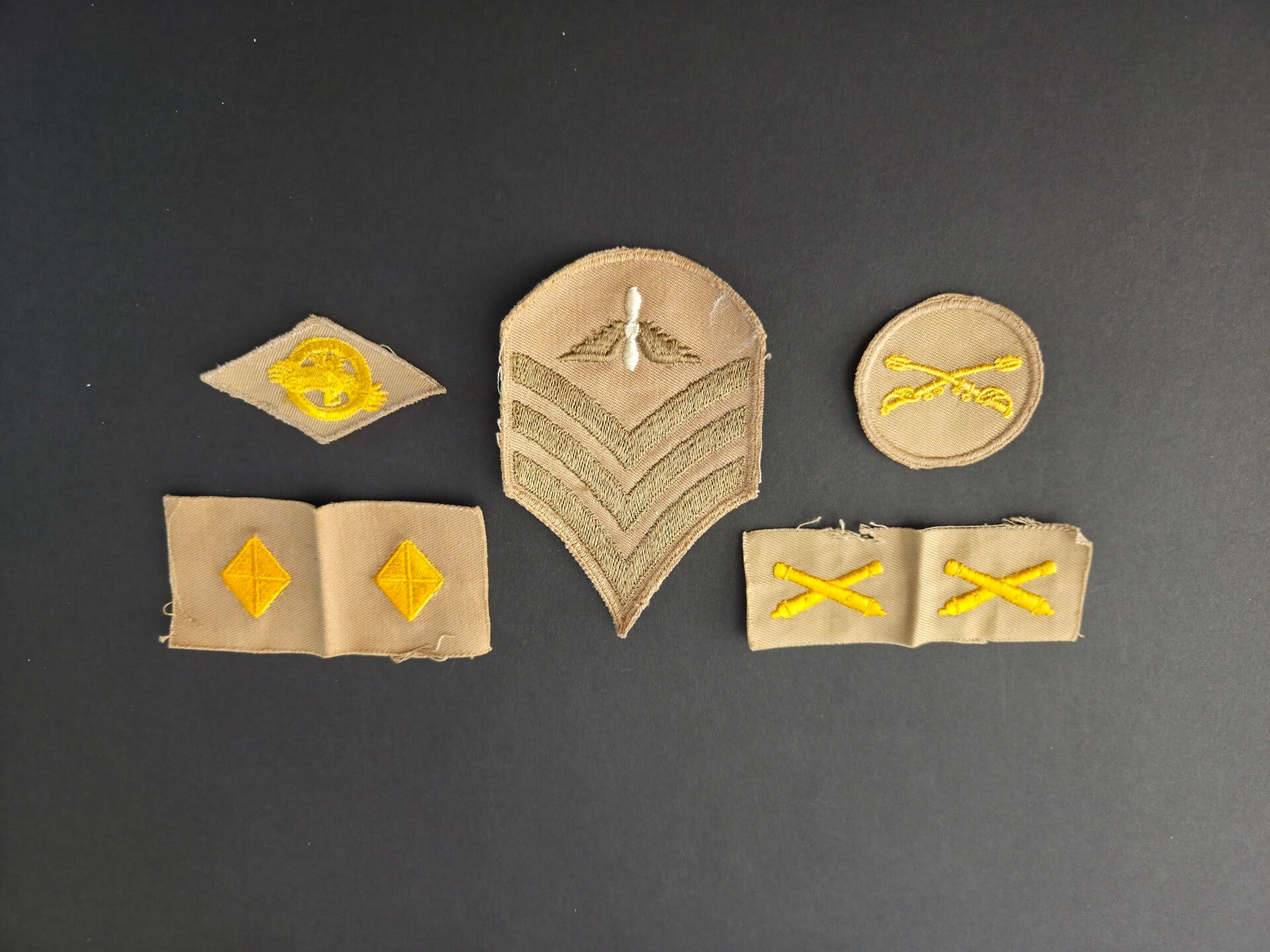
KHAKI SUMMER UNIFORM COMPONENT INDEX

Unit:

Caribbean Air Command (Historically the Sixth Air Force / 6th AF)

Estimated Date

Circa 1942 – 1945 (World War II Era)

Branch

United States Army / United States Army Air Forces

Description


  • Top Left (Diamond Patch): Ruptured Duck (Honorable Discharge Insignia)
    • Description: A golden-yellow embroidered eagle inside a circle, set on a khaki diamond.
    • Context: Universally known as the "Ruptured Duck," this was sewn onto the right breast pocket of a service coat or shirt. It proved that the veteran was honorably discharged and authorized to wear their uniform home after returning from overseas.
  • Top Center (Large Chevron): Technical Sergeant Rank Insignia (USAAF Variant)
    • Description: Three downward-pointing chevrons topped by a small white aircraft propeller flanked by two golden wings.
    • Context: This unique design indicates the rank of Technical Sergeant within an aviation-specific technical specialty role, such as a flight engineer or master crew chief, prior to the standardization of the standard corporate USAAF rank designs later in the war.
  • Top Right (Circular Patch): Cavalry Branch Insignia
    • Description: A circular khaki patch featuring two crossed golden-yellow traditional cavalry sabers.
    • Context: Worn as a collar disk style insignia overlay on service shirts to denote the wearer's assignment to a Cavalry unit (which, by WWII, included mechanized reconnaissance units).
  • Bottom Left (Rectangular Tabs): Overseas Service Bars
    • Description: Two separate khaki rectangles, each featuring a single golden-yellow horizontal diamond stripe.
    • Context: Each bar signifies six months of active duty service overseas in a theater of operations. Finding two indicates the original veteran logged roughly a year of continuous service abroad.
  • Bottom Right (Rectangular Tabs): Crossed Sabers Collar Tabs
    • Description: Two matching rectangular tabs embroidered with crossed yellow cavalry sabers.
    • Context: Designed to be sewn directly onto the lapels or collars of the tropical khaki service shirt to preserve branch identification without using heavy metal pins.