Time. Preservation. Discovery.
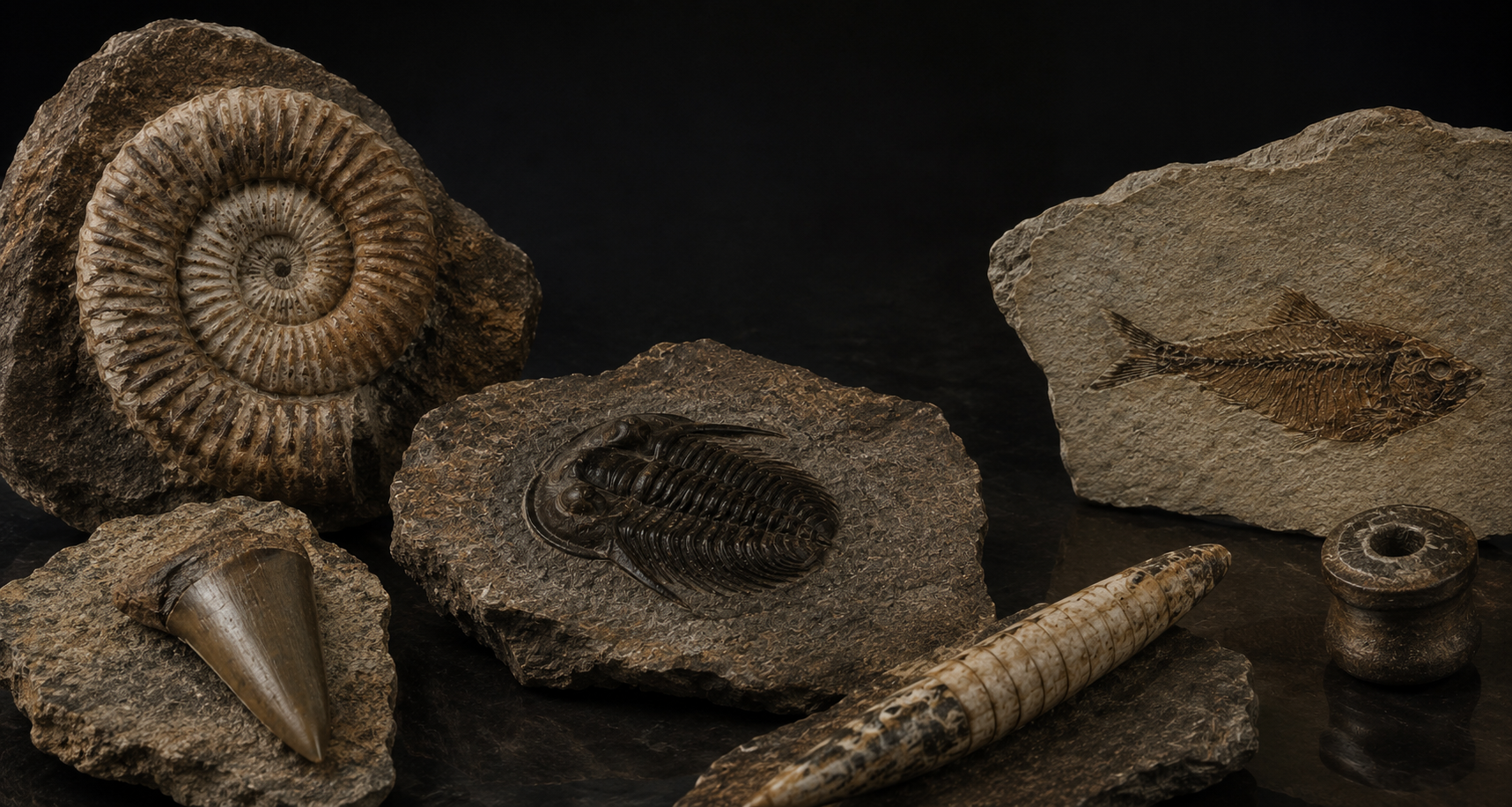
A growing collection of fossils, artifacts, and historical objects documenting ancient life, natural processes, and human craftsmanship. Each specimen is individually photographed and cataloged to preserve its geological, paleontological, or historical significance.
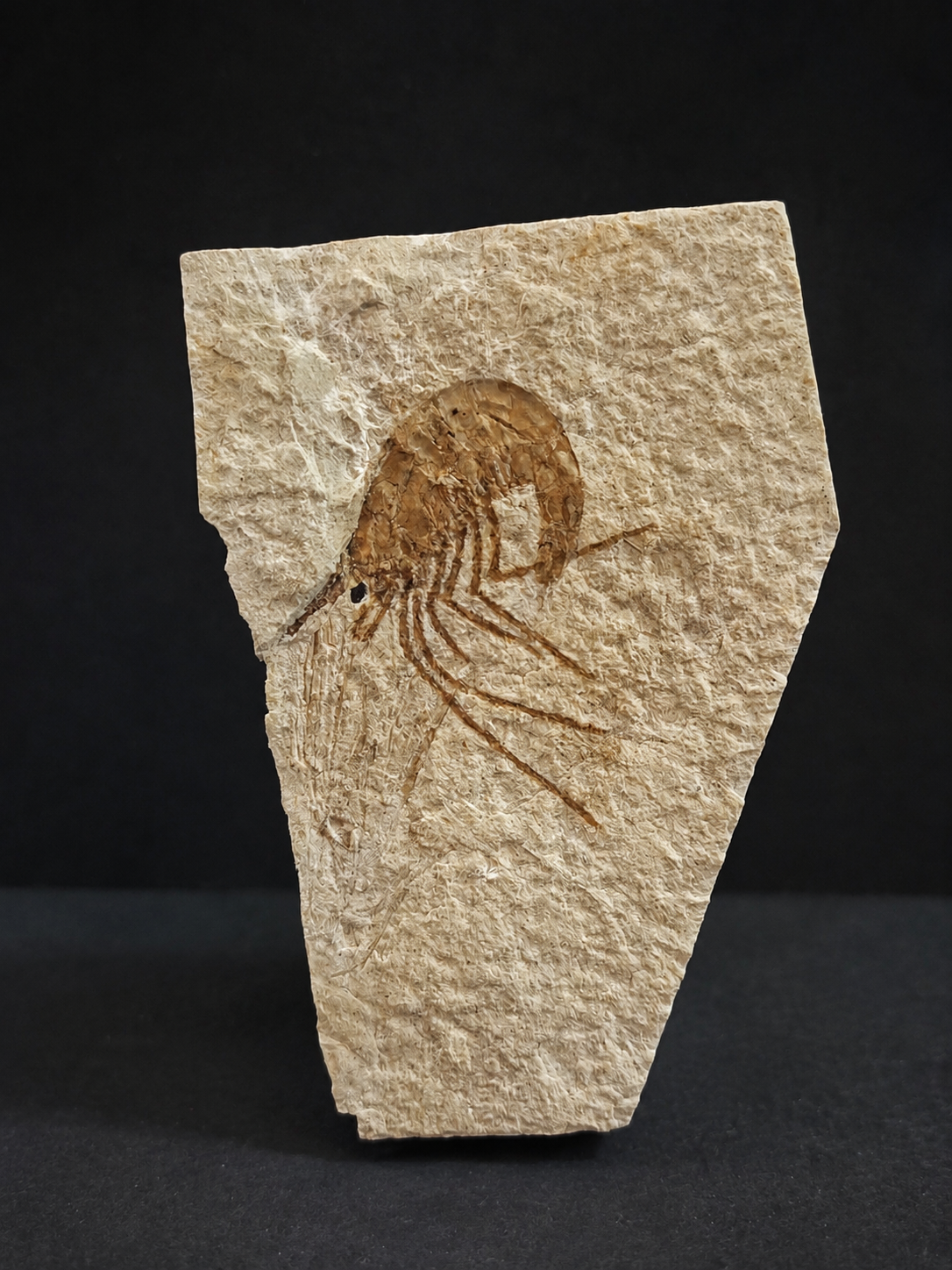
Shrimp Fossil
A fossil shrimp, Carpopenaeus Callirostris, preserved in fine-grained limestone matrix from the Cenomanian-age deposits of Lebanon (95–100 million years ago). The specimen retains exceptional anatomical detail, including the rounded carapace, segmented abdomen, walking legs, and antennae. Crustacean fossils of this quality are uncommon, as their delicate exoskeletons are rarely preserved in the fossil record.
The Lebanese Cenomanian beds — known localities include Haqel and Hajoula — are among the most significant marine Lagerstätten of the Cretaceous Period, yielding diverse and well-preserved fauna including fish, reptiles, cephalopods, and crustaceans. This specimen is presented in its natural state with no restoration or artificial enhancement.
Locality -
Lebanon
Age -
Approximately 95–100 million years old
- Era: Mesozoic Era
- Period: Cretaceous Period
Size -
Approximately 25 mm across
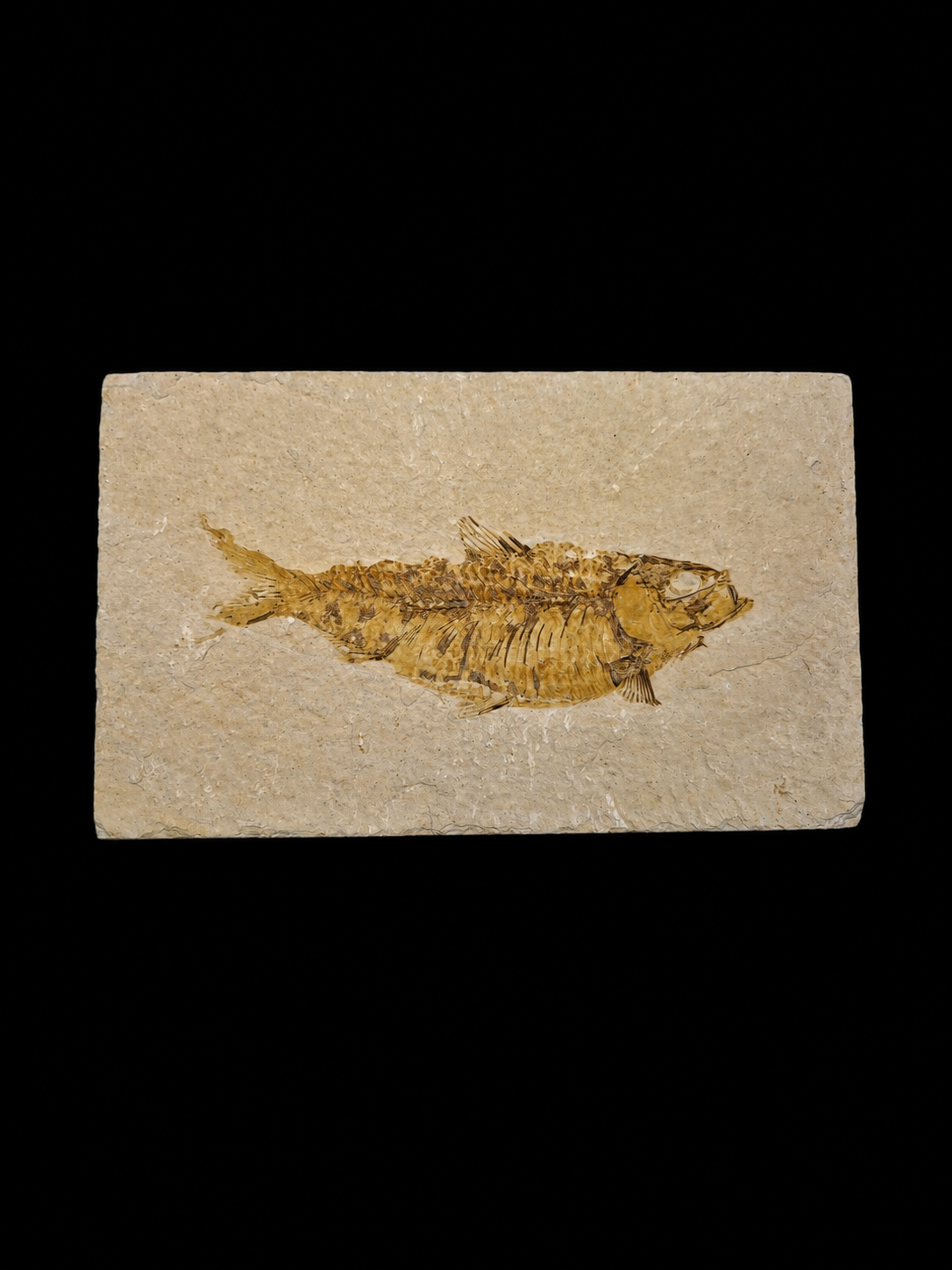
Knightia Fossil Fish
A beautifully preserved Knightia eocaena, an extinct freshwater herring-like fish from the famous Green River Formation. These fossils formed within ancient lakebed sediments during the Eocene Epoch and are among the most iconic fossil fish specimens from North America. Fine skeletal preservation and warm natural coloration make Knightia a classic display fossil for both scientific and aesthetic collections.
Locality -
Green River Formation, Wyoming, USA
Age -
Approximately 50–52 million years old
- Era: Cenozoic Era
- Period: Paleogene Period
- Epoch: Eocene Epoch
Size -
Approximately 152mm
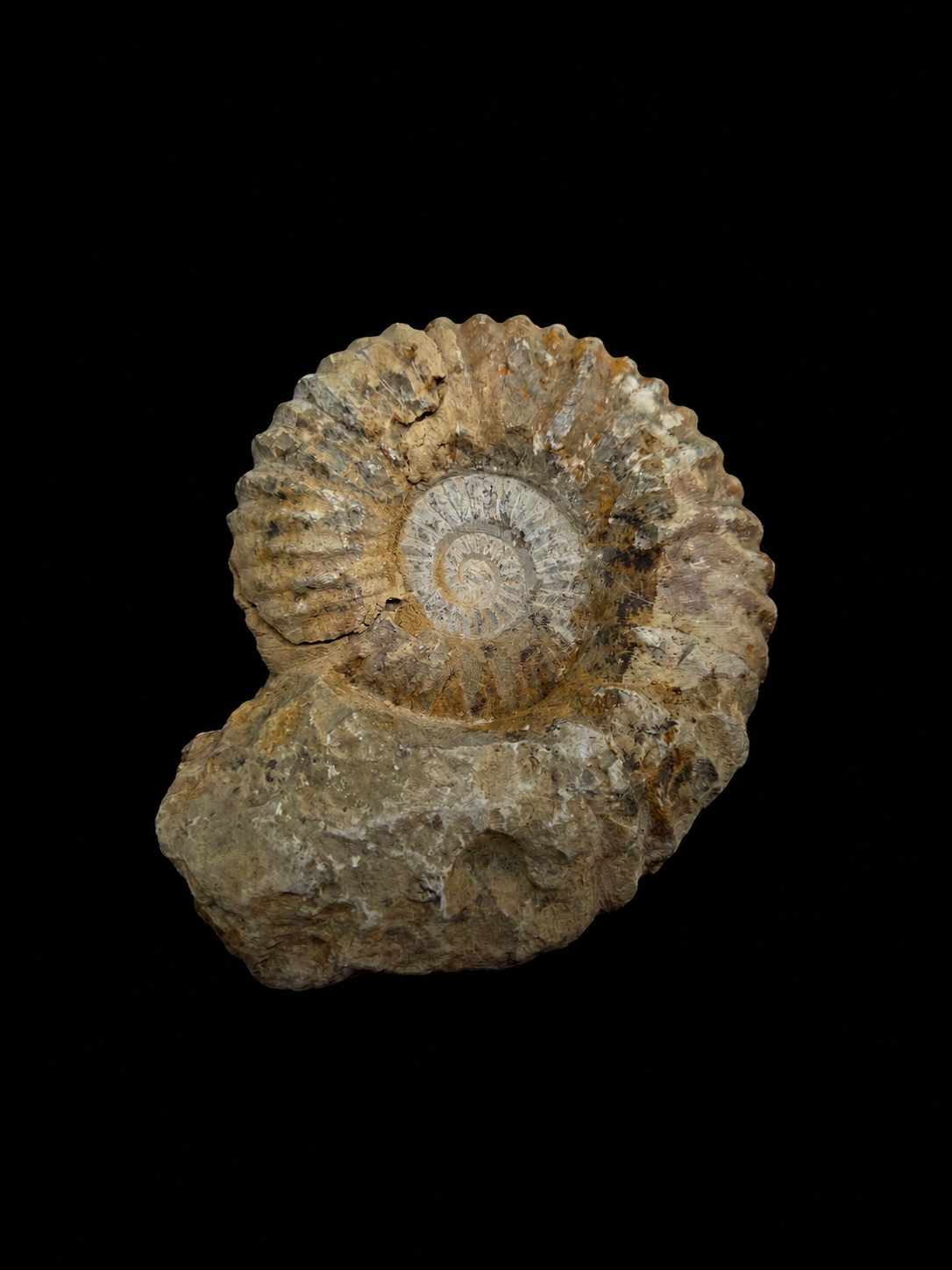
Ammonite Fossil
A large ammonite, Perisphinctes sp. (family Perisphinctidae), preserved in natural limestone matrix from the Upper Jurassic (Oxfordian Stage, ~163–157 million years ago) deposits of Madagascar. At approximately 165 mm diameter, this is a substantial specimen. The shell displays well-defined radial ribbing across the volution, a clearly visible open umbilicus, and partial suture patterning — characteristic features of the Perisphinctidae.
Ammonites were nektonic cephalopod mollusks that first appeared in the Early Devonian and went extinct at the close of the Cretaceous (~66 Ma). Perisphinctids are among the most widely distributed ammonite genera of the Jurassic and serve as important index fossils in marine biostratigraphy. The specimen is presented on its natural matrix with no restoration.
Locality -
Mahajanga Basin, northwestern Madagascar.
Age -
Approximately 157–163 million years old
- Era: Mesozoic Era
- Period: Jurassic Period
- Epoch: Late Jurassic
Size -
Approximately 165 mm across
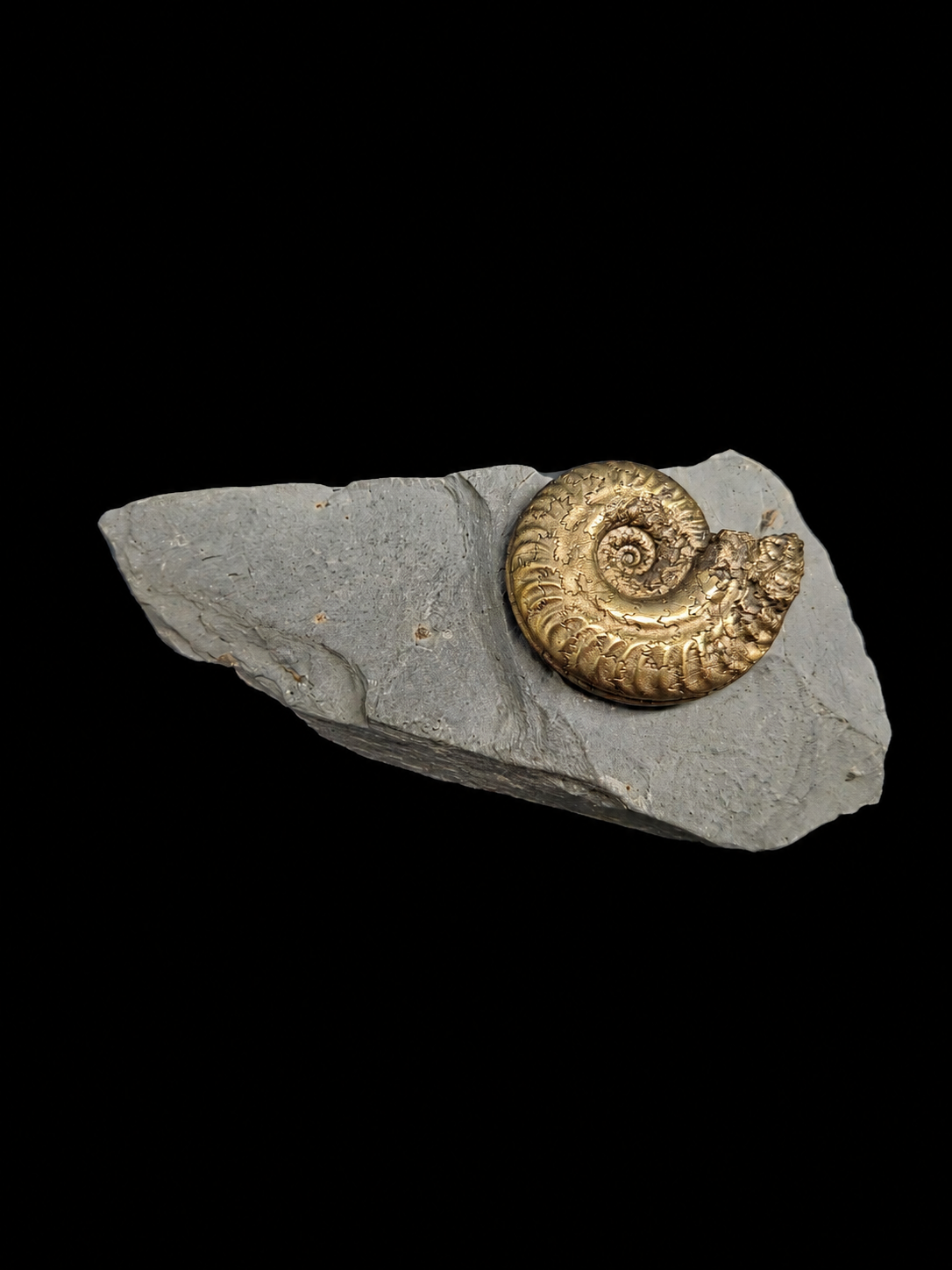
Pyritized Ammonite Fossil
A pyritized ammonite preserved in dark grey shale matrix, from the Jurassic deposits of France. The shell retains well-defined ribbing and suture detail, with iron pyrite (FeS₂) replacement producing the characteristic metallic golden coloration. Pyritization of this quality requires specific low-oxygen burial conditions and is relatively uncommon in the fossil record.
Ammonites were free-swimming cephalopod mollusks that appeared in the Early Devonian and went extinct at the close of the Cretaceous (~66 Ma). They are important index fossils used in biostratigraphic dating of marine sediments worldwide. The specimen is presented on its natural shale matrix with no restoration.
Locality -
France
Age -
Approximately 145–200 million years old
- Era: Mesozoic Era
- Period: Jurassic Period
- Epoch: Early to Late Jurassic
Size -
Ammonite Diameter: Approximately 30–35 mm
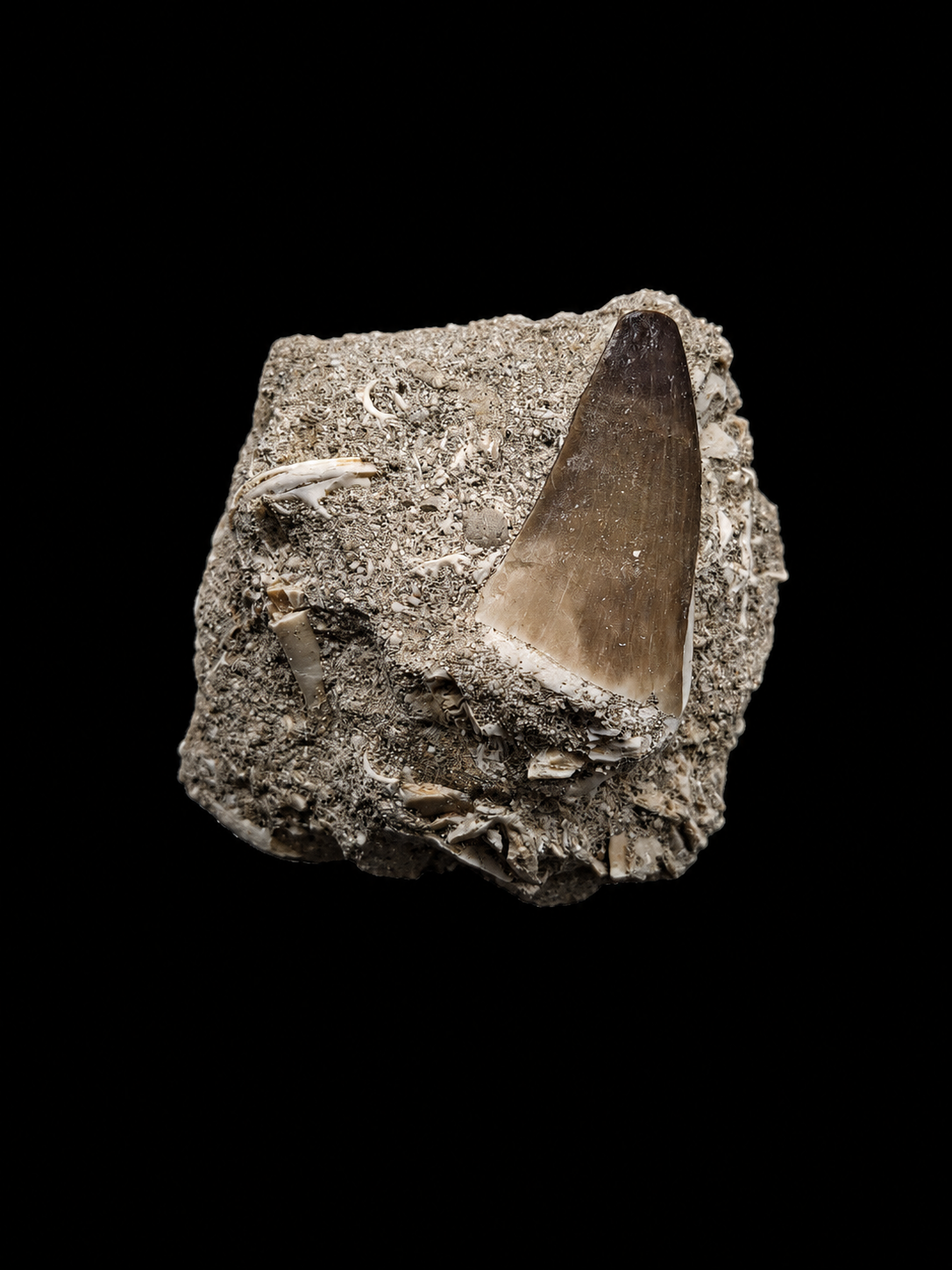
Mosasaur Tooth on Natural Matrix
A mosasaur tooth, referred to Prognathodon sp. (family Mosasauridae), preserved in situ within its original phosphatic marine matrix. The tooth displays a well-preserved conical crown with intact enamel, a defined root-crown boundary, and slight recurvature — characteristic of large predatory mosasaurids. The surrounding matrix retains abundant shell and skeletal debris, reflecting the bone-bed depositional environment typical of the Moroccan phosphate deposits.
Mosasaurs were large, fully aquatic marine reptiles that occupied apex predator niches in Late Cretaceous seas. They went extinct at the close of the Cretaceous (~66 Ma). Specimens from the Oulad Abdoun Basin are among the most taxonomically diverse mosasaur assemblages known from the fossil record.
Locality -
Oulad Abdoun (Khouribga) Phosphate Basin, Morocco.
Age -
Approximately 66–72 million years old
- Era: Mesozoic Era
- Period: Cretaceous Period
- Epoch: Late Cretaceous
Size -
Tooth Length: Approximately 32 mm
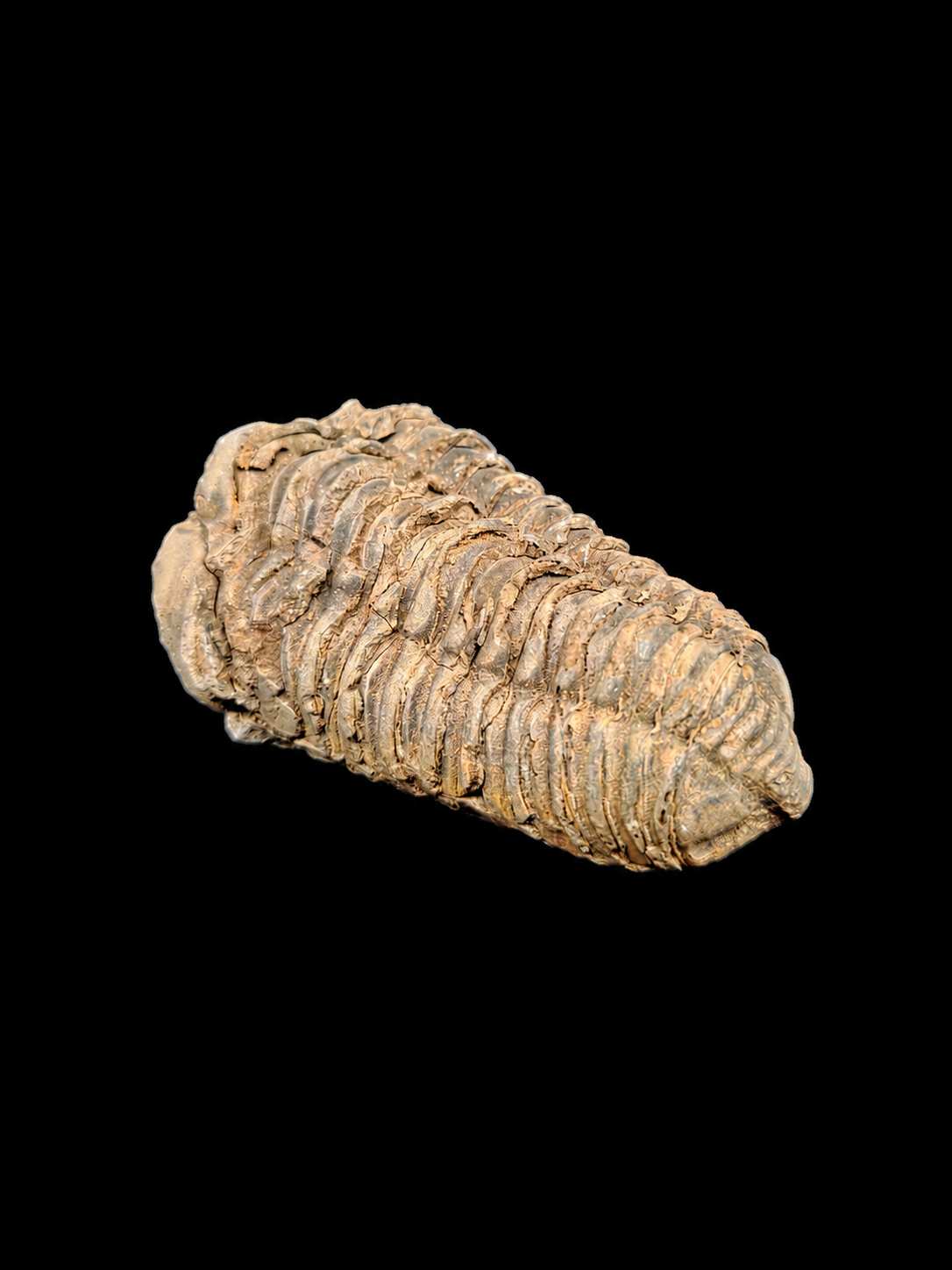
Trilobite Fossil
A trilobite, Drotops sp. (Order Phacopida, family Phacopidae), from the Middle Devonian deposits of the Anti-Atlas region, Morocco (~385–393 Ma). The specimen is preserved in full dorsal relief, displaying the characteristic broad, domed cephalon, strongly inflated and tuberculated pleural lobes, and well-segmented thorax and pygidium. Three-dimensional preservation of this quality is a notable feature of Anti-Atlas Devonian material and is less common than flattened or partial specimens.
Trilobites were marine arthropods that first appeared in the Early Cambrian (~521 Ma) and persisted until the end-Permian extinction (~252 Ma), a range of approximately 270 million years. Phacopids are among the most morphologically distinct trilobite orders and are well represented in the Devonian carbonate platform deposits of Morocco.
Locality -
Anti-Atlas Mountains, Morocco (Alnif/Erfoud region)
Age -
Approximately 385–393 million years old
- Era: Paleozoic Era
- Period: Devonian Period
- Epoch: Middle Devonian
- Stage: Eifelian to Givetian
Size -
Specimen Length: Approximately 57 mm
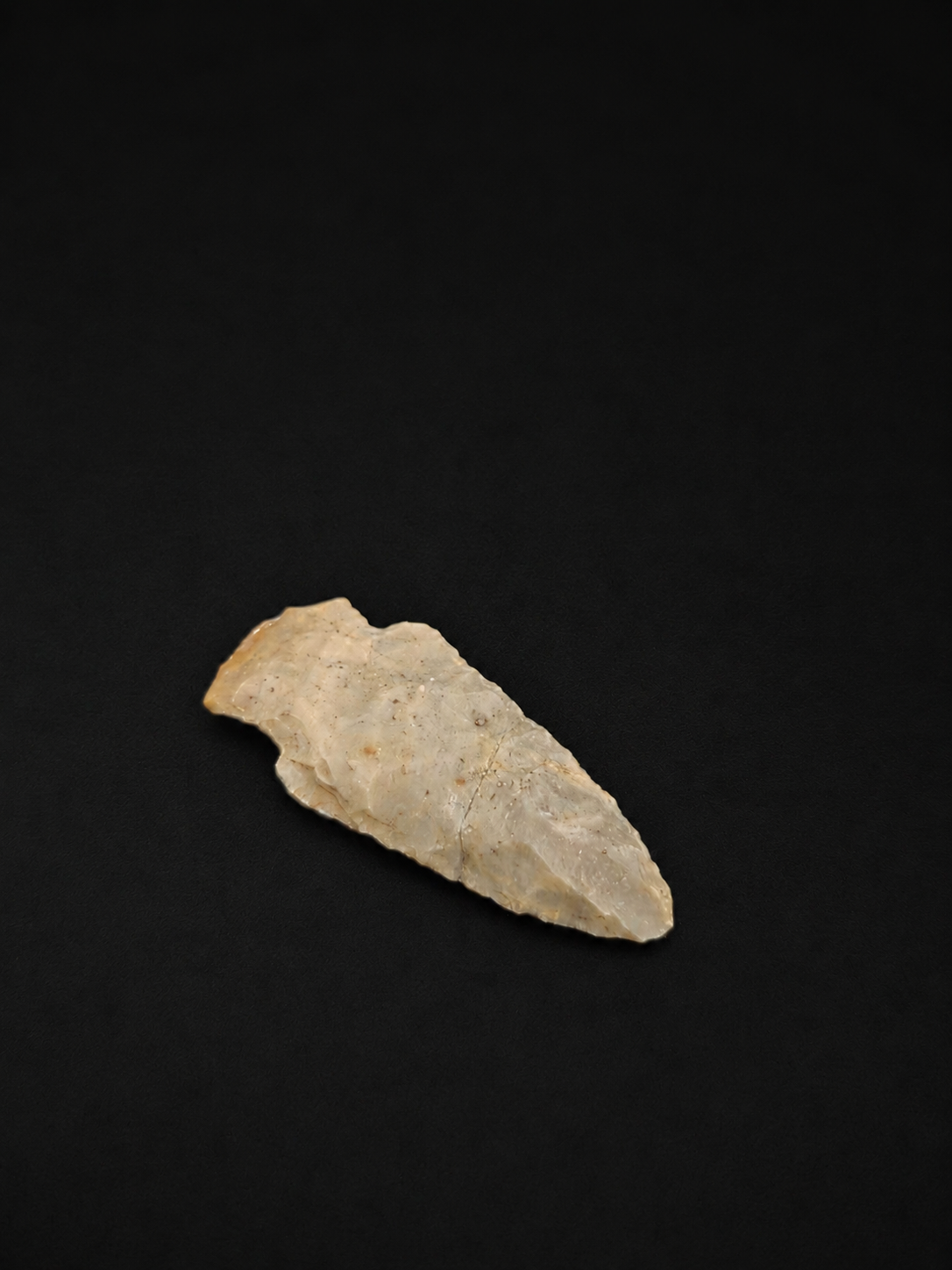
Native American Projectile Point
A hand-knapped Native American stone projectile point crafted from light cream to tan chert/flint. This specimen shows clear flaking patterns and pressure-worked edges, with a classic notched form designed for hafting onto a shaft. The surface patina and workmanship suggest authentic age and use rather than a modern reproduction.
The softer earth tones and weathered finish give the piece a strong archaeological character while still displaying well as a standalone artifact. Its asymmetrical shaping and visible percussion scars reflect practical field craftsmanship rather than ceremonial refinement, which adds to its historical authenticity and appeal.
Possible Cultural Association -
- Lenape (Delaware)
- Susquehannock
- Shawnee
Age -
Late Woodland to Mississippian Period
Approx. 500–1,500 years old
Size -
Approximately 76 mm
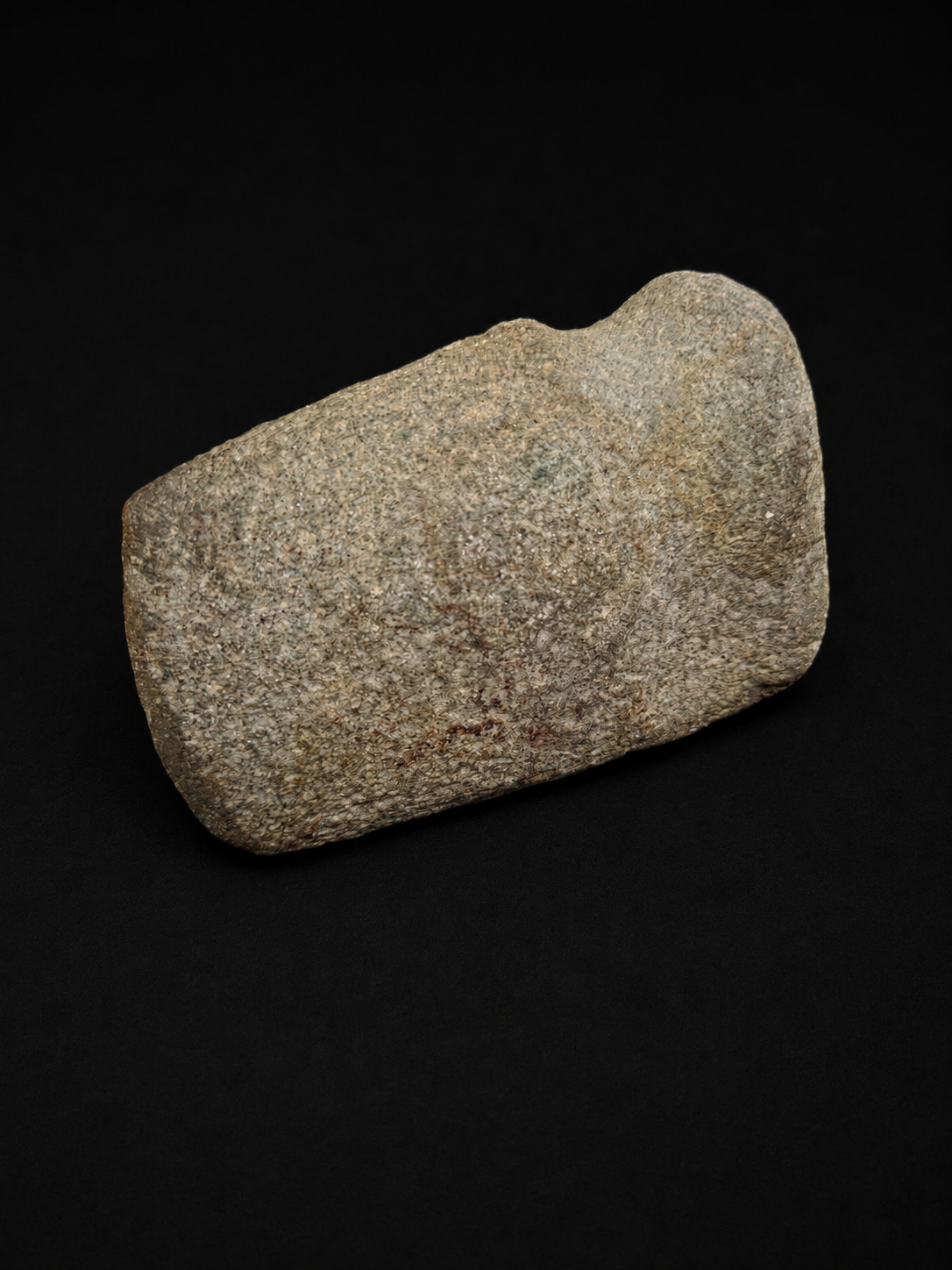
Native American Grooved Stone Axe Head
A substantial Native American grooved stone axe head fashioned from dense, coarse-grained stone and shaped through grinding and pecking techniques. The specimen features a broad cutting end and a partially defined hafting groove area where the head would have been secured to a wooden handle using rawhide, sinew, or plant fibers.
Unlike smaller ceremonial pieces often seen in modern reproductions, this example carries the heavy proportions and weathered surface expected of a true utilitarian woodland axe. The softened edges, natural mineral patina, and creek-worn texture strongly support long-term burial and exposure in a natural environment.
Possible Cultural Association -
- Lenape (Delaware)
- Nanticoke
- Susquehannock
Age -
Archaic to Woodland Period
Approx. 1,000–4,000 years old
Size -
Approximately 127 mm
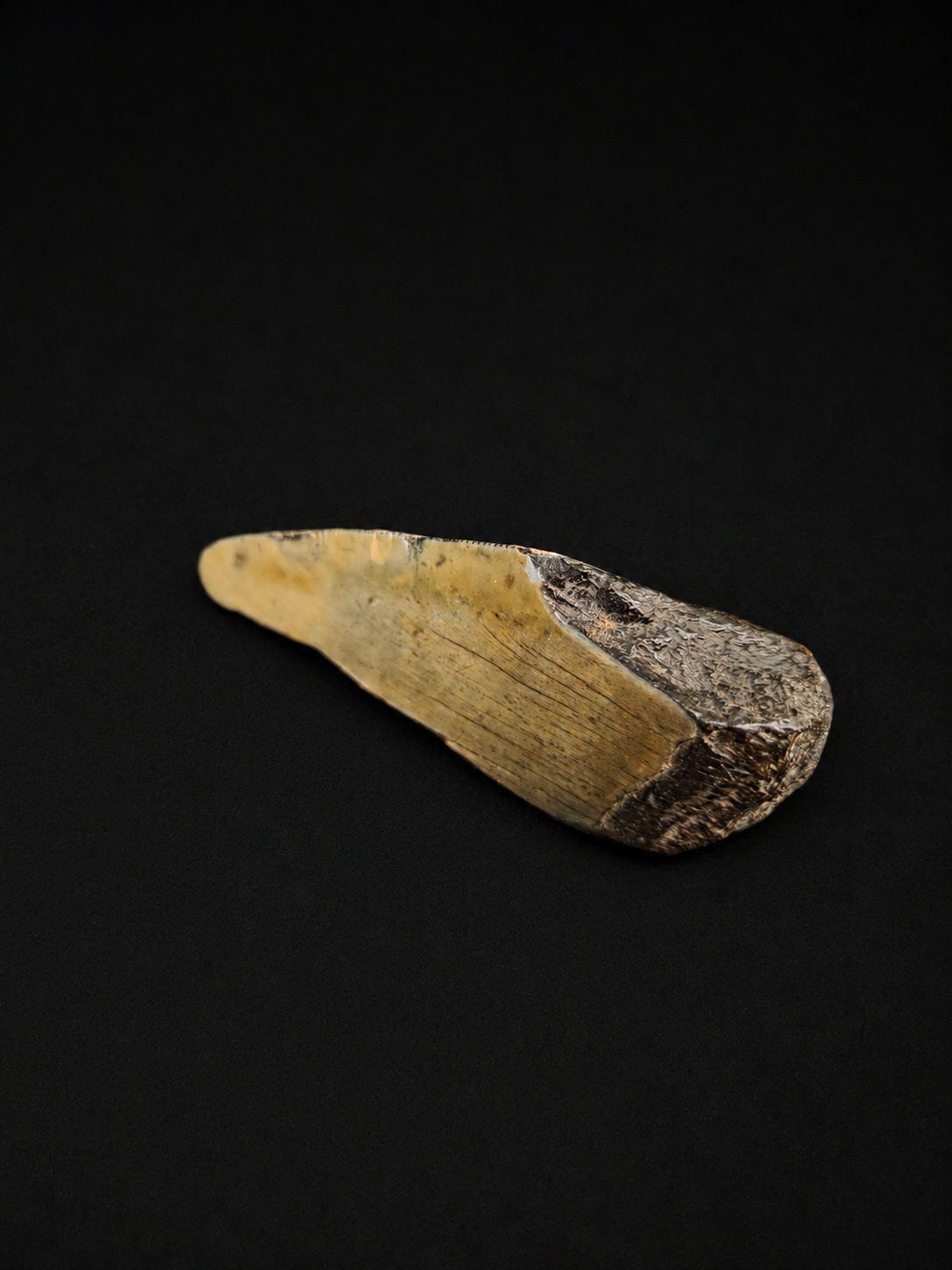
Fossil Shark Tooth
A fossilized shark tooth displaying a well-preserved enamel crown with visible feeding-edge serrations and a partially mineralized root. The specimen exhibits strong natural coloration ranging from tan and honey tones to deep charcoal mineralization near the root, created through long-term fossil replacement within marine sediment.
Fine surface striations and preserved enamel texture remain visible across the blade, while the darker root structure retains substantial natural detail and density. The asymmetrical blade profile and broad root are characteristic of large predatory sharks that inhabited ancient coastal seas.
Locality -
Exact discovery locality unknown.
Likely recovered from marine sediment deposits of the Eastern United States coastal plain, potentially from Mid-Atlantic or Southeastern fossil-bearing formations.
Age -
Miocene Epoch
Approx. 5–23 million years old
Size -
Specimen Length: Approximately 76 mm