Craftsmanship & Continuity
From hand tools to domestic artifacts, these antiques reflect the materials, workmanship, and lived experiences of earlier generations. The collection emphasizes authenticity, preservation, and historical context over nostalgia or decoration.
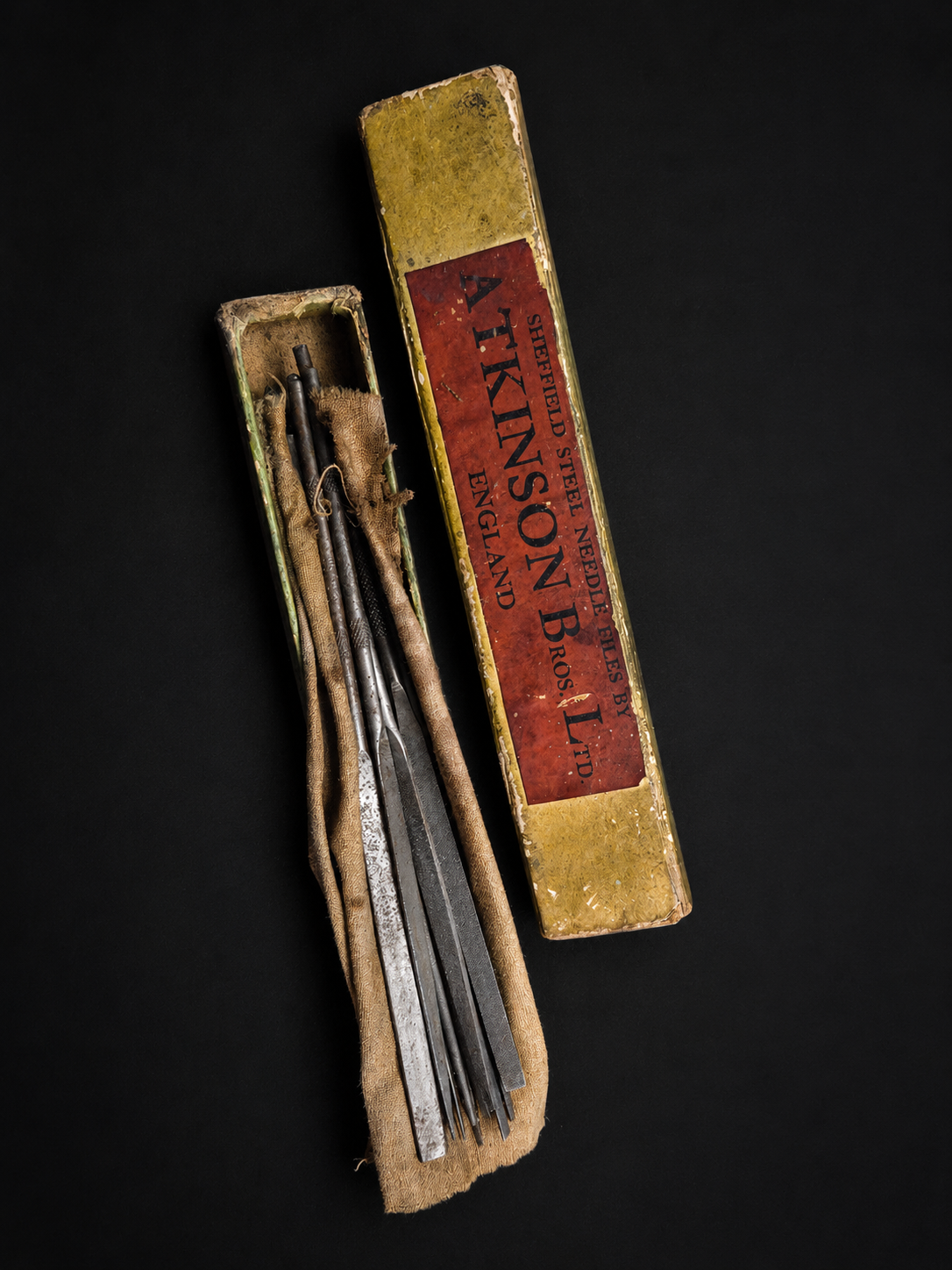
A. KINSON Bros. Needle File Set
Sheffield, England
Object Type
Precision hand tools / jeweler’s or machinist’s needle files
Estimated Date
Circa 1920s–1950s
Materials
Hardened Sheffield steel, paperboard box, cloth wrap
Dimensions
Approx. 5–6 in. overall file length
(Box appears approximately 6–7 in. long)
Notable Features
- Original labeled storage box
- “Sheffield Steel” marked branding
- Multiple precision file geometries
- Visible period wear and patina from use
- Family provenance tied directly to the curator’s great-grandfather
Historical Context
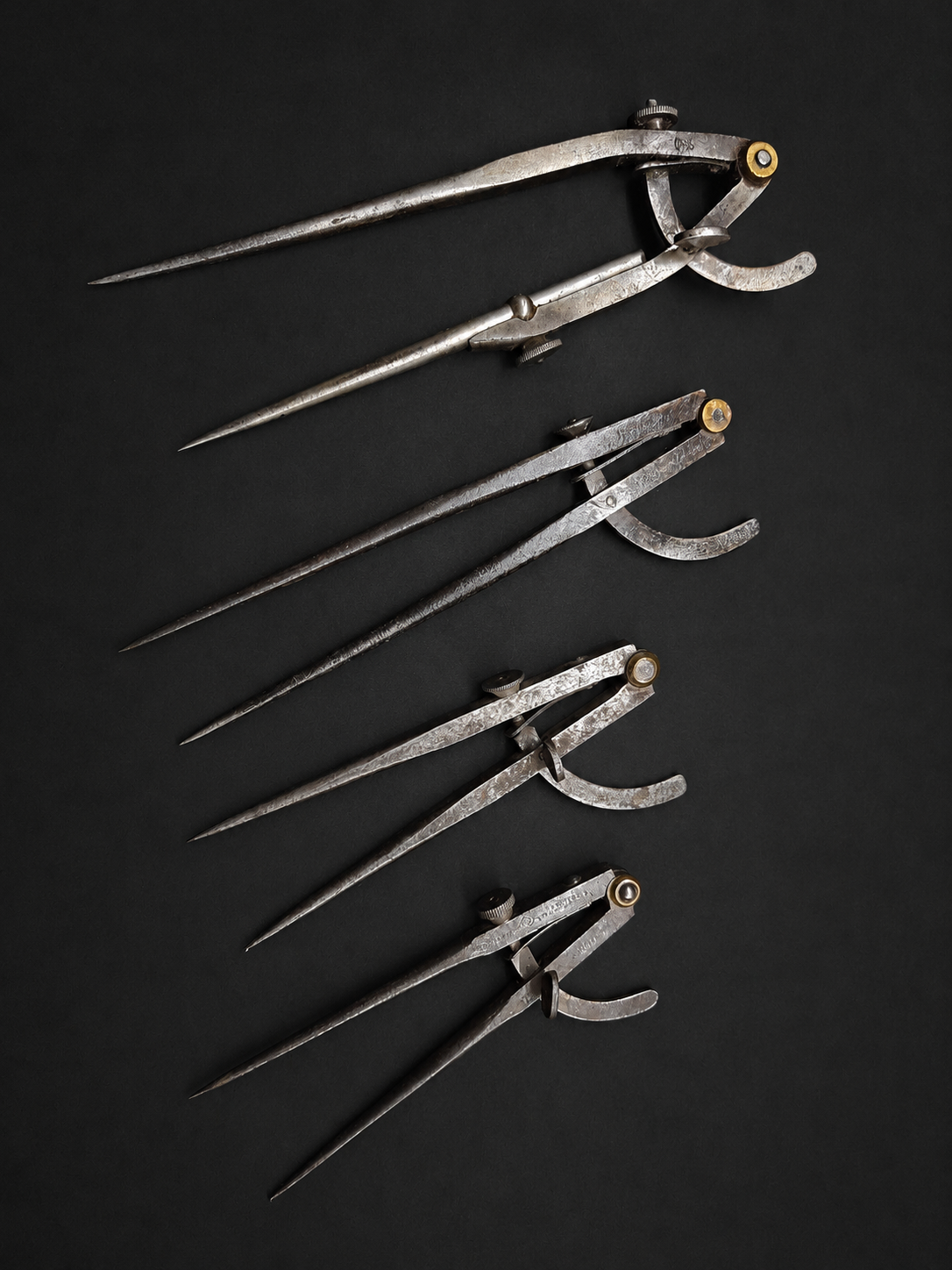
WMF Wing Dividers & Spring Calipers
Object Type
Wing dividers and spring calipers / precision layout and measuring tools
Estimated Date
Circa 1880s–1900s
Maker / Origin
Likely WMF, Wurttembergishe Metallwarenfabrik
Germany
Materials
Forged and machined steel with brass pivot and adjustment components
Dimensions
Largest example approximately 8–9 in. overall length
Smallest example approximately 4–5 in. overall length
Notable Features
- Adjustable spring tension and wing-lock mechanisms
- Hand-forged and machined steel construction
- Brass pivot accents and threaded adjustment hardware
- Multiple sizes for varied measuring applications
- Visible period wear, oxidation, and workshop patina
- Likely late 19th century German industrial manufacture


Uranium Glass Powder Jar
Object Type
Uranium glass powder jar / decorative vanity container
Estimated Date
Circa 1920s–1930s
Maker / Origin
Depression-era production
Likely Federal Glass
Materials
Pressed uranium glass (vaseline glass)
Dimensions
Approximately 3–4 in. diameter
Approximately 2–3 in. height
Notable Features
- Brilliant yellow-green uranium glass composition
- Strong fluorescent glow under ultraviolet (blacklight) illumination
- Pressed geometric and faceted Art Deco styling
- Thick molded glass construction with repeating symmetrical patterning
- Originally intended as a vanity or dresser powder jar
- Distinctive optical refraction and internal light response characteristic of uranium-bearing glass
- Visible age-related wear and minor surface marks consistent with period household use
- Retains both decorative and historical significance as an example of early 20th century fluorescent glassware production
Uranium Glass Candy Jar
Object Type
Uranium glass candy jar / covered decorative container
Estimated Date
Circa 1930s–1940s
Maker / Origin
Likely Jeannette Glass Company
United States
Materials
Pressed uranium glass (vaseline glass)
Dimensions
Approximately 3–4 in. overall height
Approximately 3–4 in. diameter
Notable Features
- Brilliant translucent green uranium glass composition
- Strong fluorescent glow under ultraviolet (blacklight) illumination
- Diamond-pattern pressed glass body with faceted geometric styling
- Pointed finial lid characteristic of Depression-era decorative glassware
- Thick molded glass construction with pronounced optical refraction
- Likely produced as a small candy, trinket, or vanity container
- Distinctive neon-green fluorescence caused by trace uranium compounds within the glass mixture
- Intricate repeating pressed patterning designed to imitate cut crystal at lower cost
- Visible minor wear and internal inclusions consistent with age and period manufacturing methods
- Representative example of early 20th century American Depression glass and uranium glass production


Uranium Glass Leaf Serving Set
Object Type
Uranium glass leaf serving set / decorative console or tidbit dishes
Estimated Date
Circa 1930s–1950s
Maker / Origin
Likely L.E. Smith Glass Company
United States
Materials
Pressed uranium glass (vaseline glass)
Dimensions
Largest leaf approximately 8–10 in. length
Smaller examples approximately 4–6 in. length
Notable Features
- Brilliant yellow-green uranium glass composition
- Strong fluorescent glow under ultraviolet (blacklight) illumination
- Stylized naturalistic leaf form with molded vein detailing
- Scalloped and textured edges designed to imitate organic foliage
- Thick pressed glass construction with pronounced optical refraction
- Likely produced as decorative serving dishes, console trays, or tidbit plates
- Distinctive neon-green fluorescence caused by trace uranium compounds within the glass mixture
- Mid-century decorative styling combining natural forms with pressed glass manufacturing techniques
- Semi-translucent body with detailed surface texturing and molded vein structures
- Visible minor wear, surface marks, and manufacturing irregularities consistent with period glass production
- Representative example of American uranium glass decorative tableware from the Depression and post-Depression era