Structure. Color. Origin.
A growing collection of mineral and rock specimens chosen for their unique forms, vibrant colors, and geological origins. Each piece is individually labeled and documented to create a cohesive, display-ready catalog.
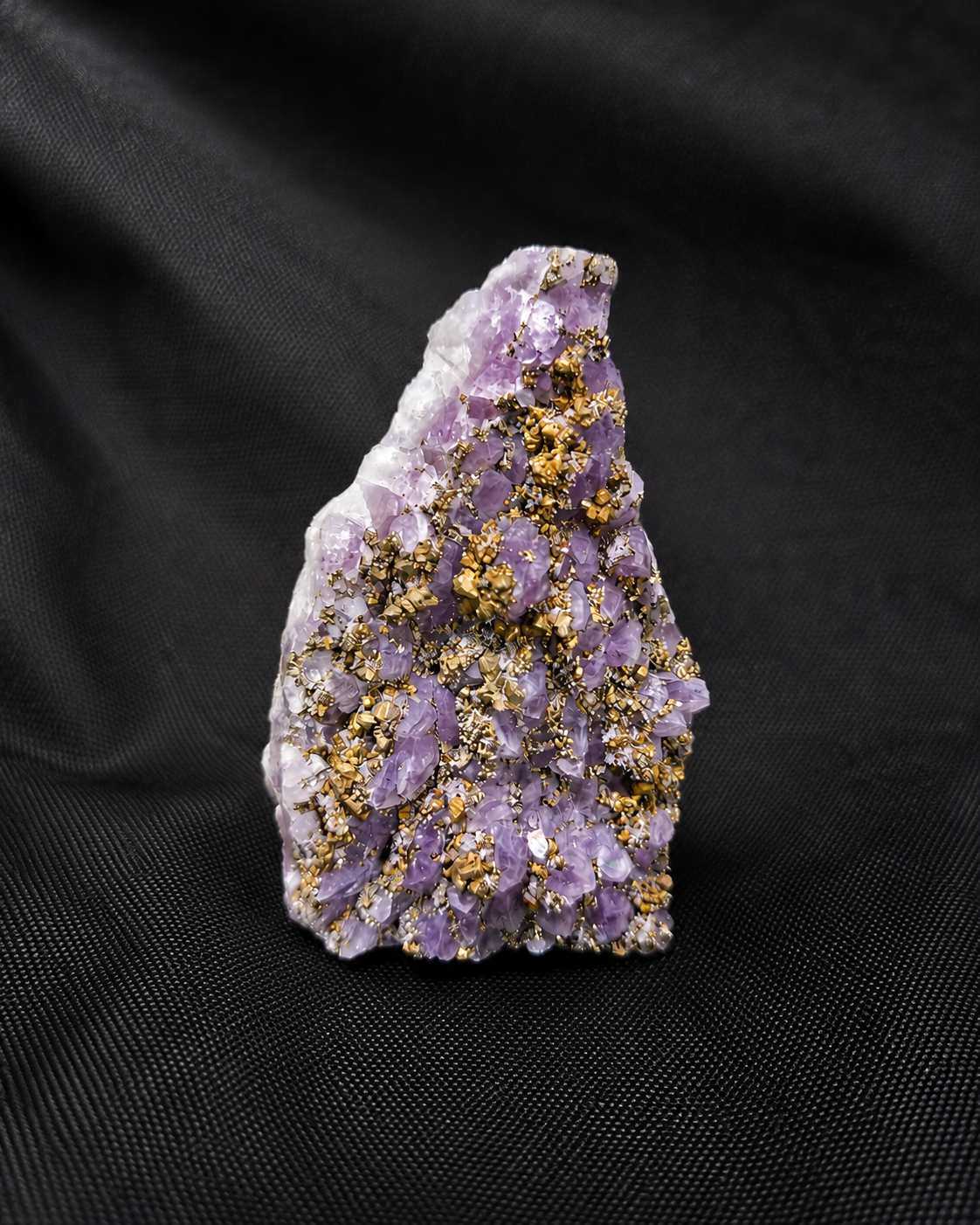
Amethyst with Chalcopyrite
A cluster of macrocrystalline amethyst quartz (SiO₂) with substantial epitaxial chalcopyrite (CuFeS₂) overgrowths, from the Chala Mine, Haskovo Province, Bulgaria. The amethyst crystals display well-formed termination faces ranging from pale lilac to mid-purple, with chalcopyrite crystallized densely across the upper faces of the primary matrix in characteristic tetrahedral habit. The coverage and uniformity of the chalcopyrite overgrowth is notable — partial or patchy examples are more common.
Locality -
Chala Mine, Haskovo Province, Bulgaria
Geology -
Formation occurred via hydrothermal vein deposition, in which low-temperature silica-rich fluids crystallized into the amethyst matrix, followed by a late-stage influx of copper-iron sulfide fluids producing the epitaxial chalcopyrite overgrowths. The two-stage mineralization sequence is responsible for the distinct visual layering between the quartz and sulfide phases.
Size -
• Approximately 102 × 76 × 51 mm
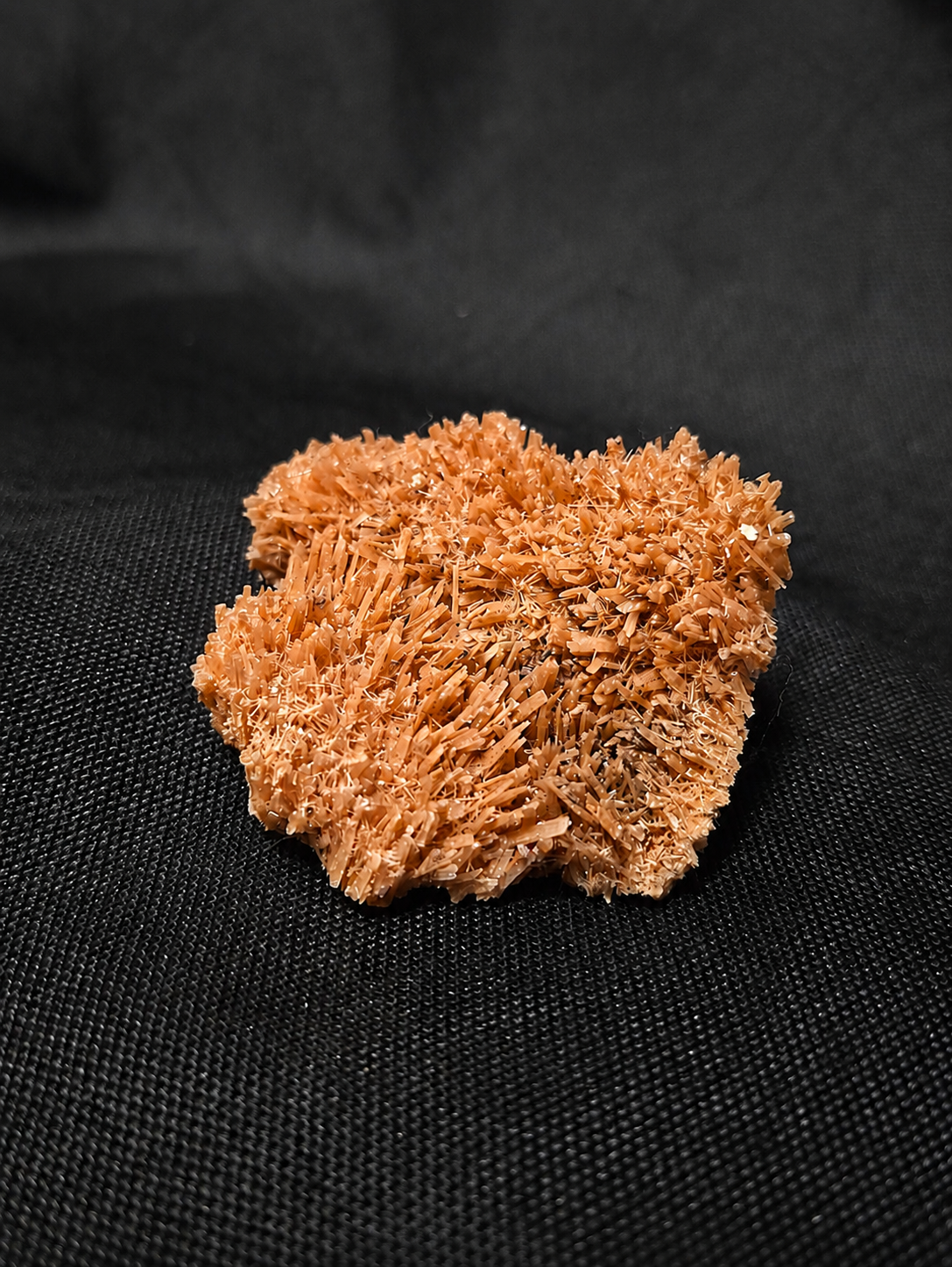
Acicular Gypsum
A cluster of acicular gypsum (CaSO₄·2H₂O) displaying a dense, divergent radiating crystal habit, from Hagans, Monongalia County, West Virginia. The needle-like crystals are intergrown throughout the mass with no dominant matrix base. The characteristic peach-orange to reddish-brown coloration results from hematite/goethite (Fe₂O₃/FeO(OH)) inclusions incorporated during crystal growth.
Locality -
Hagans, Monongalia County, West Virginia, USA
Geology -
Gypsum of this habit formed through precipitation of calcium sulfate from evaporite-associated sedimentary brines, with concurrent iron-oxide co-precipitation producing the uniform coloration throughout the crystal mass. The Monongalia County deposits are associated with the evaporite sequences of the Appalachian sedimentary basin.
Size-
Approximately 75 × 65 × 65 mm
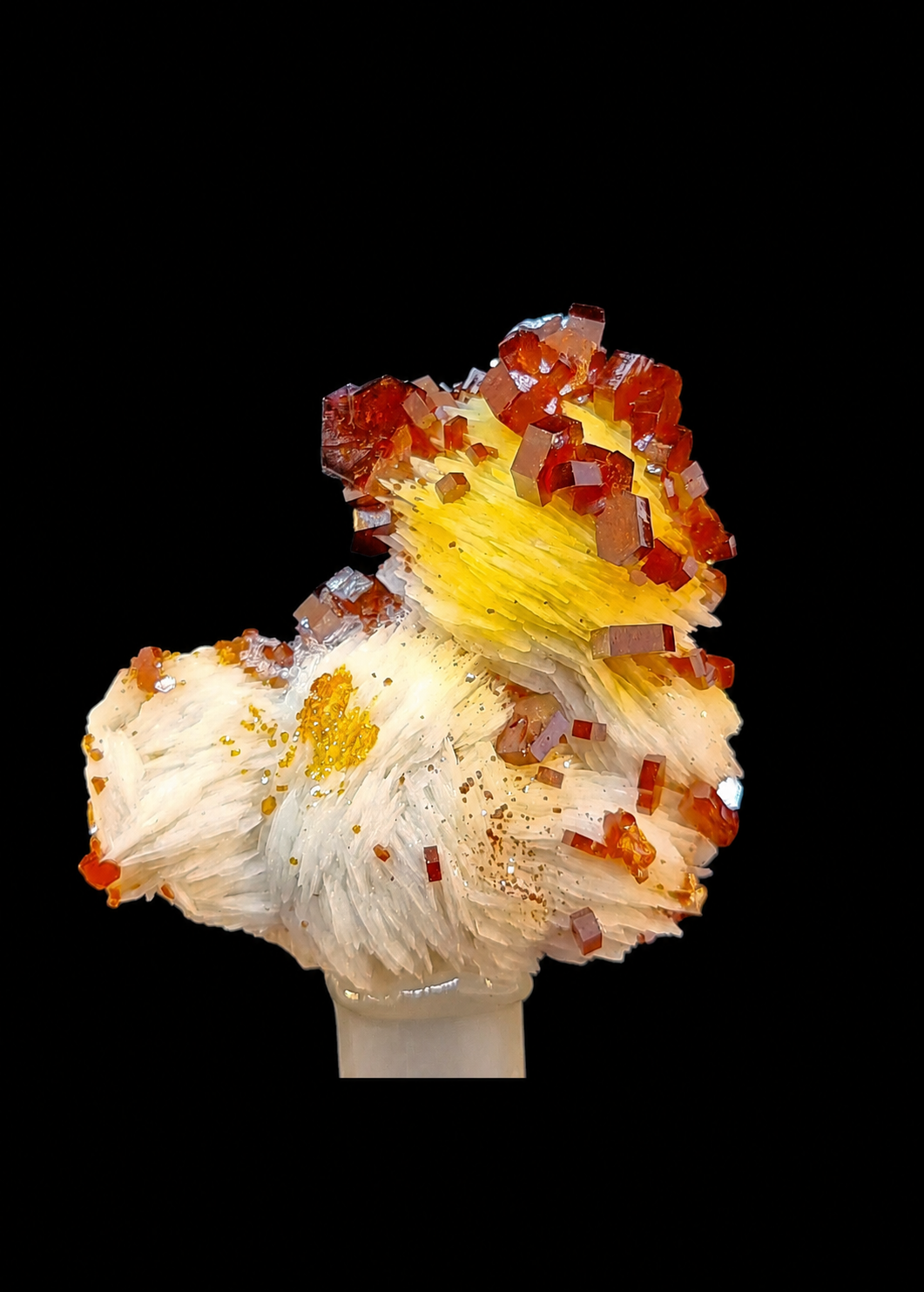
Vanadinite on Barite
A striking mineral specimen featuring red hexagonal vanadinite crystals formed atop bladed white barite.
Locality -
Mibladen Mining District, Morocco
Geology -
Oxidized zones of lead-rich hydrothermal deposits
Size -
Approximately 25 × 32 × 18 mm
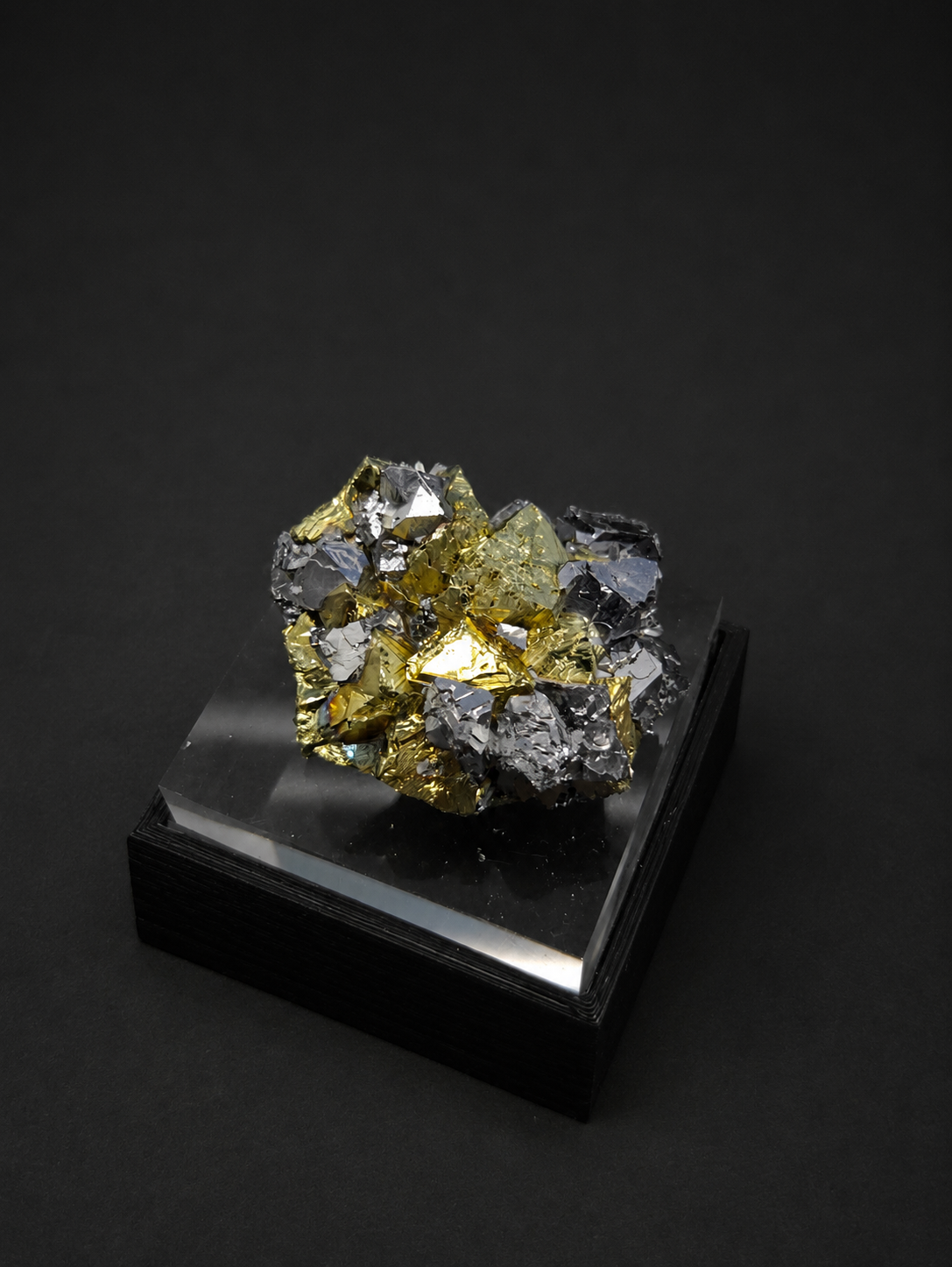
Galena w/ Chalcopyrite
cluster of cubic galena crystals (PbS) intergrown with chalcopyrite (CuFeS₂), from the Krushev Dol Mine, Madan ore field, Smolyan Province, Bulgaria. The galena displays sharply defined cubic habit with characteristic high-reflectivity adamantine to metallic luster on fresh cleavage faces. Chalcopyrite occurs as intergrown masses between and around the galena cubes, with iridescent surface tarnish visible on exposed faces. The contrasting crystal habits of the two sulfides — cubic galena versus the more irregular chalcopyrite — reflect sequential crystallization from the same metal-rich hydrothermal fluid system.
Locality -
Krushev Dol Mine, Madan ore field, Smolyan Province, Bulgaria
Geology -
Hydrothermal Pb-Zn sulfide deposit hosted in Paleozoic carbonate rocks of the Rhodope Massif. The Madan ore field is one of Europe's most significant lead-zinc mining districts and is internationally recognized among mineral collectors for producing galena specimens of exceptional crystal definition and luster. Galena and chalcopyrite co-crystallized from metal-rich hydrothermal fluids circulating through carbonate-hosted fracture systems.
Size -
Dimensions – Approximately 50 × 45 × 35 mm
Galena cubes approximately 10–18 mm across
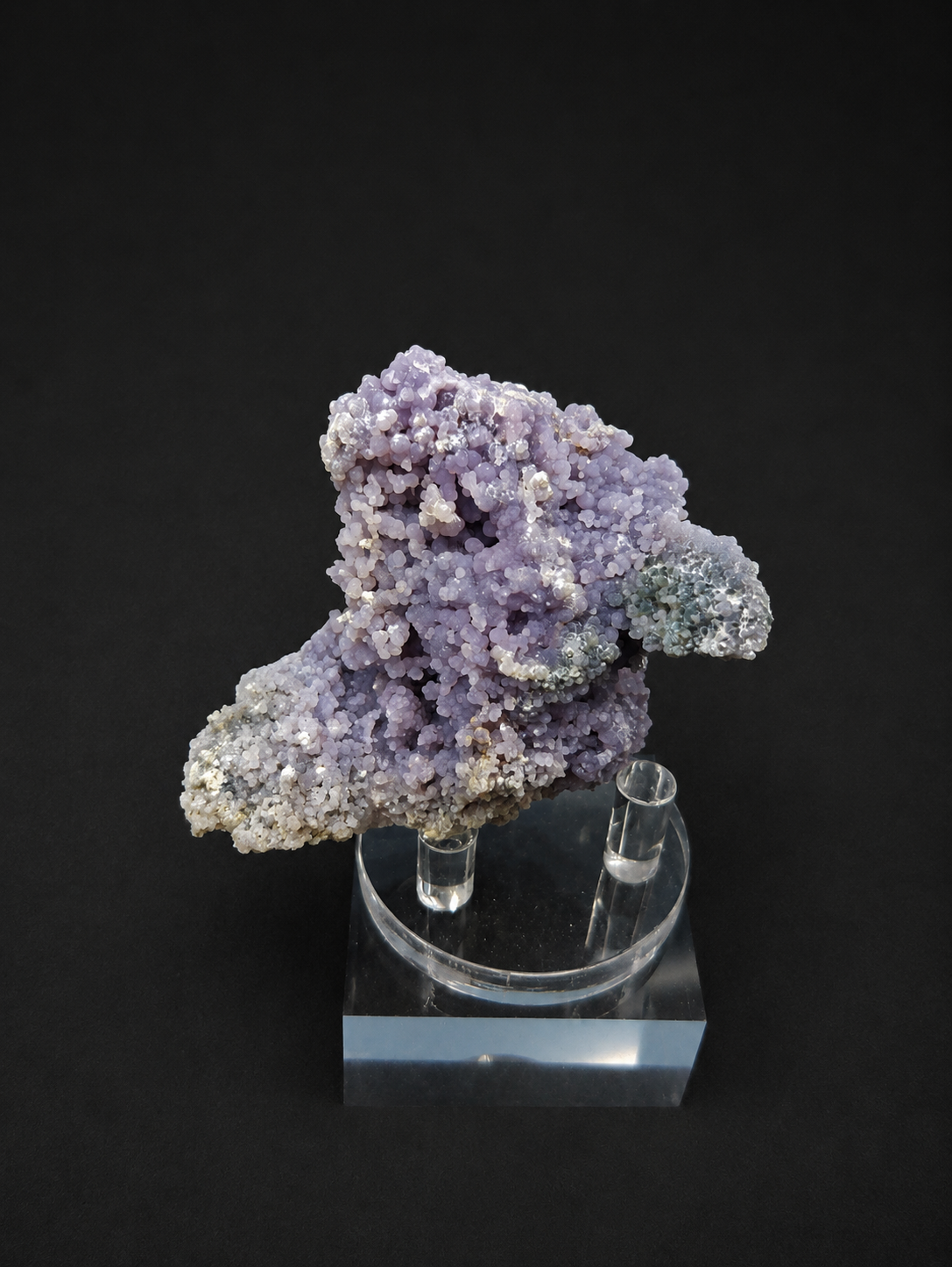
Grape Agate
A botryoidal cluster of microcrystalline quartz (chalcedony) composed of tightly packed, grape-like spheres with soft lavender to pale purple coloration. The rounded forms result from radial silica growth in void spaces within volcanic rock. This material is commercially known as “grape agate”, though it is mineralogically chalcedony rather than a true agate due the absence of banding.
Locality -
Mamuju Area, West Sulawesi, Indonesia
Geology -
Secondary silica deposition within volcanic cavities forming botryoidal chalcedony aggregates
Size -
Approximately 90 × 65 × 45 mm
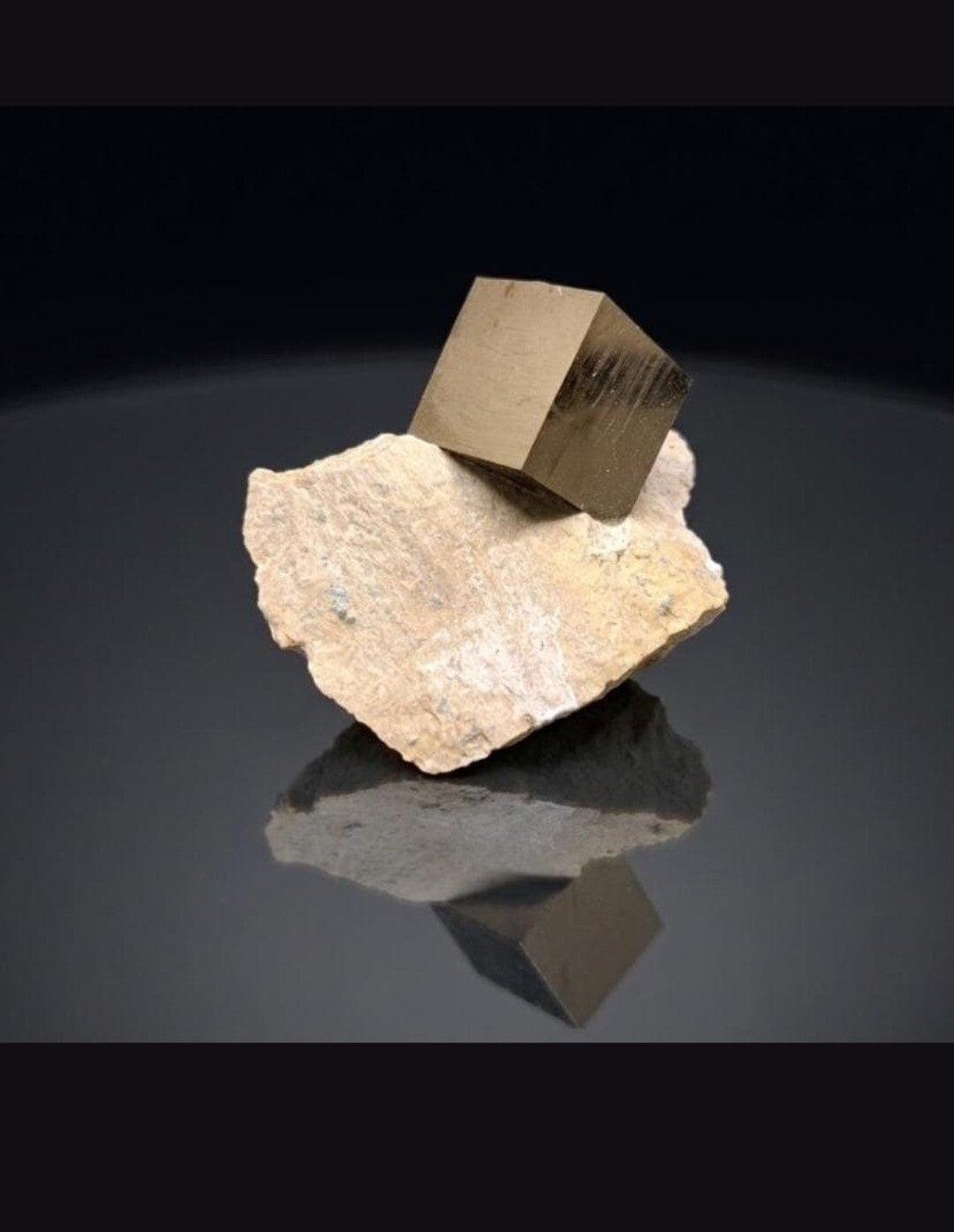
Cubic Pyrite on Matrix
A sharply formed cubic pyrite crystal hosted on natural matrix. Pyrite commonly forms in hydrothermal environments where iron and sulfur-rich fluids crystallize into metallic cubic structures.
Locality -
Navajún, La Rioja, Spain
Geology -
Hydrothermal sulfide veins
Size -
Approximately 55 × 45 × 40 mm
Pyrite cube approximately 25 mm across
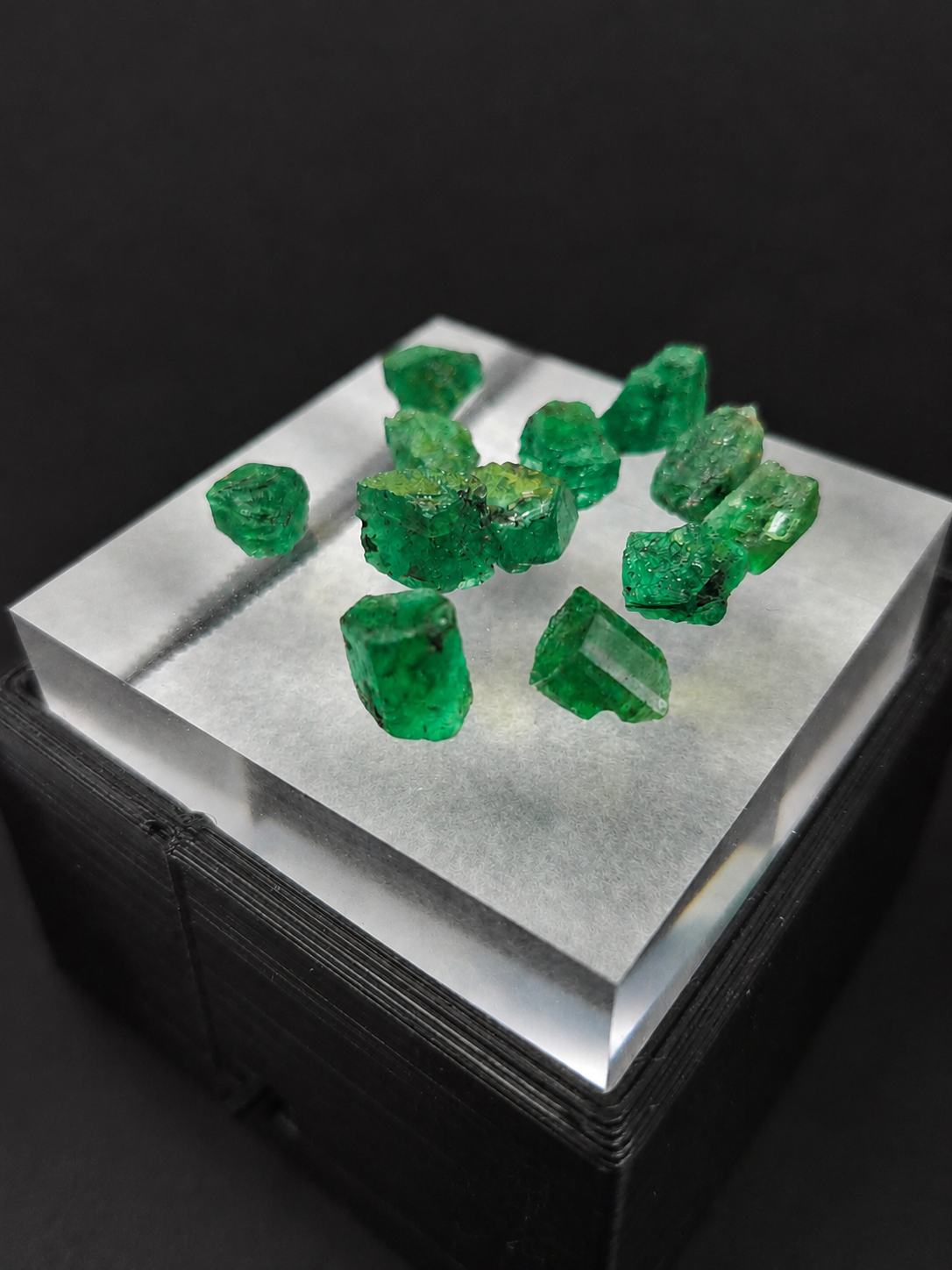
Emerald
A group of natural emerald crystals in rough form, exhibiting a vivid green color due to trace chromium and vanadium. Specimens show typical fracturing and irregular crystal development common to Swat Valley material, with moderate translucency and surface etching.
Locality -
Swat Valley, Khyber Pakhtunkhwa Province, Pakistan
Geology -
Formed under hydrothermal conditions where beryllium-rich fluids interacted with Chromium-bearing host rocks, producing emerald within a narrow vein system
Size -
Approximately 6.2 grams (31ct) total weight
Average crystal size approximately 6–8 mm
Largest crystal approximately 9 mm
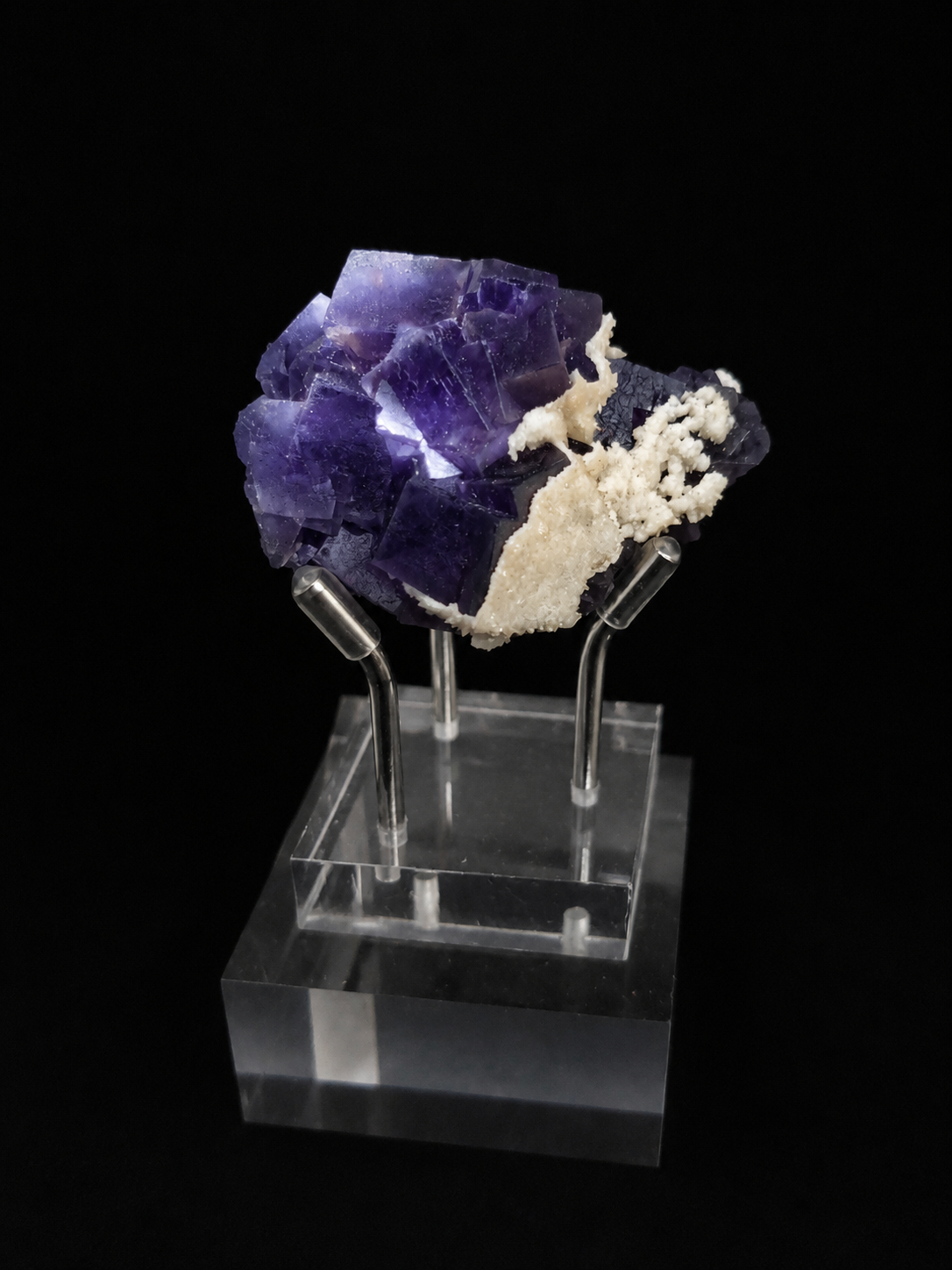
Fluorite
Fluorite is known for its distinct cubic crystal habit and wide range of colors. It commonly forms in hydrothermal environments alongside quartz, calcite, and metallic ore minerals.
Locality -
Yangjia Mine, Wuyi Fluorite Ore Field, Wuyi County, Jinhua City, Zhejiang Province, China
Geology -
Hydrothermal fluorite-bearing veins
Size-
Approximately 65 × 55 × 40 mm
Fluorite cubes approximately 15–22 mm across
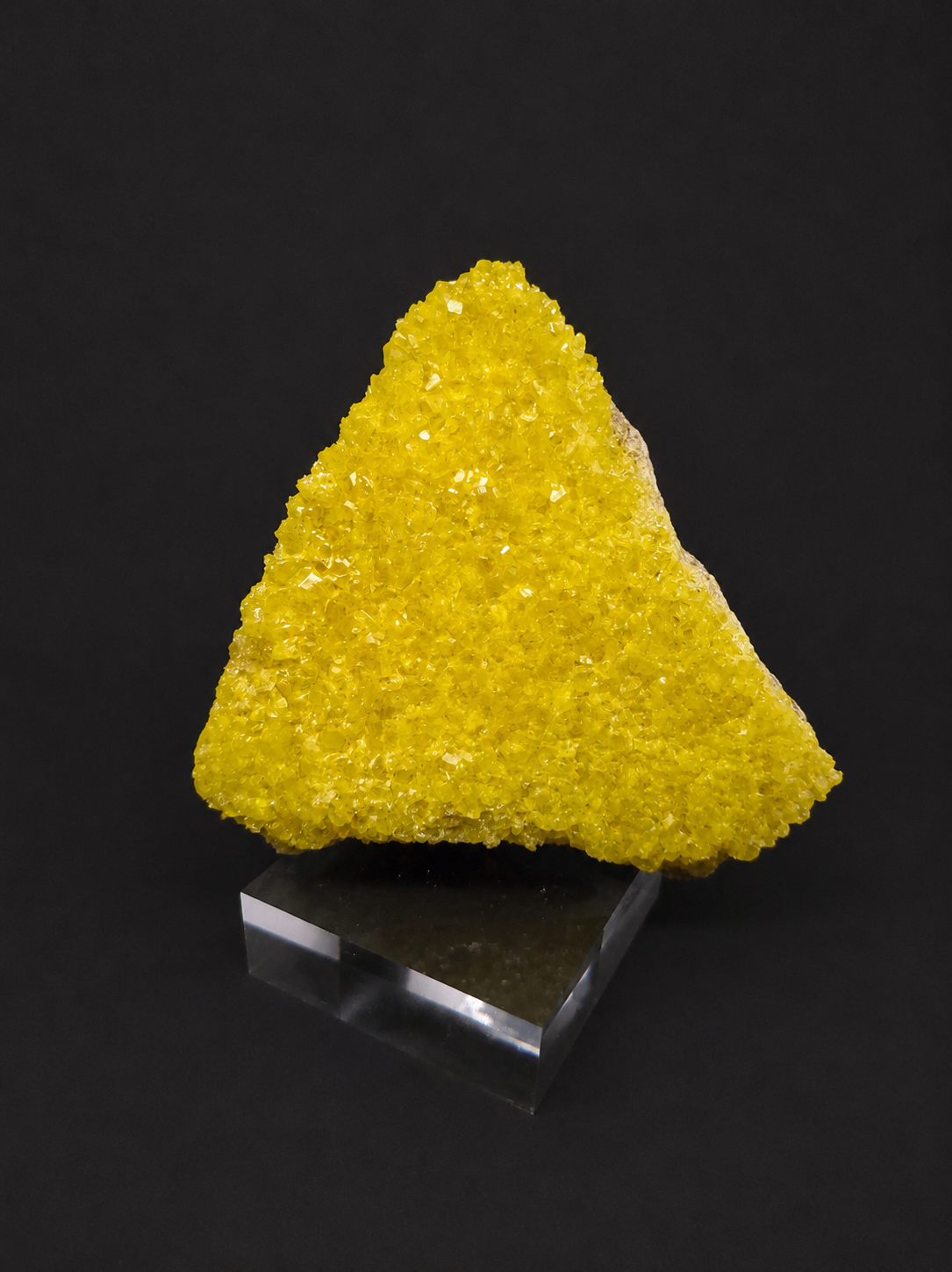
Native Sulfur
A dense coating of native sulfur crystals (S₈) in microcrystalline to granular habit covering the full display face of a natural sedimentary matrix. The characteristic bright yellow coloration is intrinsic to elemental sulfur. Crystal coverage is uniform across the display face with no significant matrix exposure. Contrary to common assumption, Sicilian sulfur is not of volcanic origin — the intense yellow color results from elemental sulfur precipitated through bacterial processes within ancient marine sediments, not fumarolic activity.
Locality -
Caltanissetta, Sicily, Italy
Geology -
Biogenic precipitation of elemental sulfur (S₈) through bacterial reduction of calcium sulfate within Miocene-age marine evaporite sequences (~5–10 Ma). The Caltanissetta district was historically one of the world's primary commercial sulfur sources prior to the development of the Frasch extraction process in the late 19th century.
Size -
Approximately 130 × 110 × 55 mm
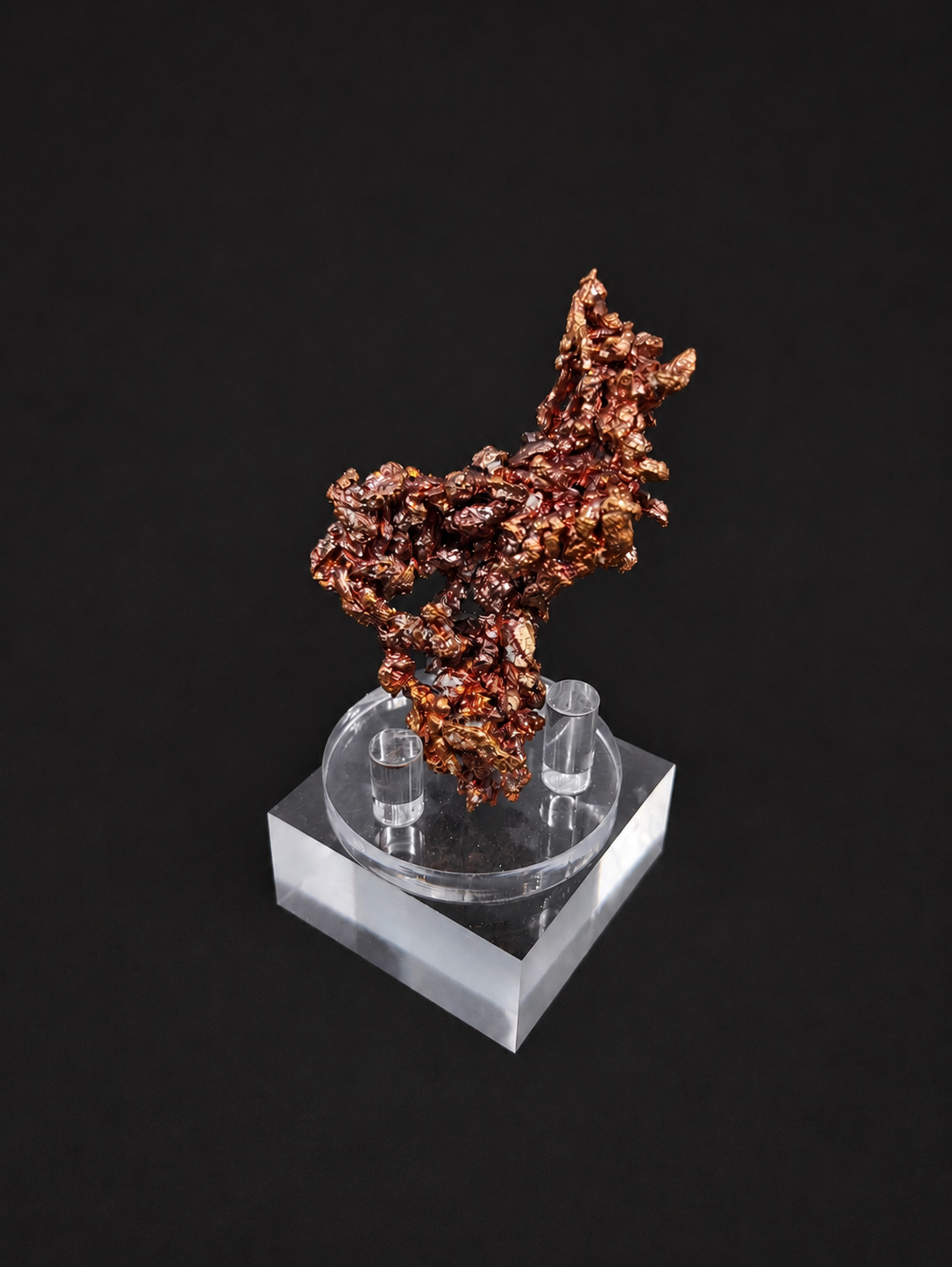
Native Copper
A native copper specimen (Cu) displaying a well-developed arborescent habit — a branching, tree-like crystal growth form produced by rapid crystallization along preferred lattice directions. The surface exhibits the characteristic metallic copper coloration with secondary cuprite (Cu₂O) development in the darker reddish-brown surface areas, reflecting natural surface oxidation over time. The arborescent form is free-standing and three-dimensional.
Locality -
Qinghai–Xizang Plateau, China
Geology -
Native copper of hydrothermal origin, deposited from copper-bearing hydrothermal fluids within fracture systems. The arborescent habit reflects rapid crystallization kinetics during deposition. Secondary cuprite development on outer surfaces is characteristic of native copper exposed to oxidizing conditions post-formation.
Size -
Approximately 75 × 45 × 30 mm
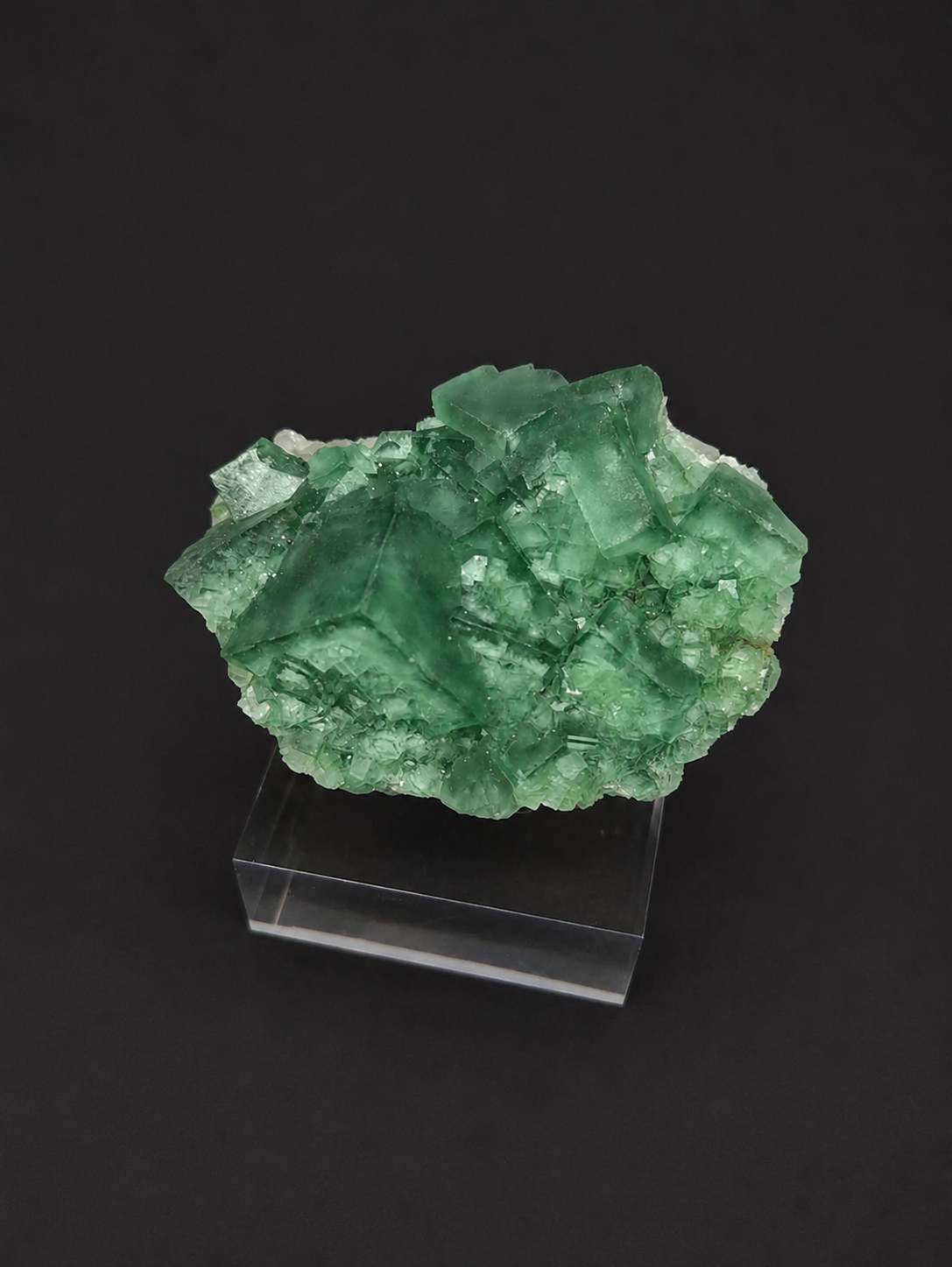
Fluorite Cluster
A cluster of cubic fluorite (CaF₂) displaying well-developed crystal faces with characteristic stepped growth patterns. Individual crystals measure approximately 25–40 mm across. The green coloration results from rare earth element substitutions and lattice defects within the crystal structure; color zoning visible within individual crystals reflects variations in hydrothermal fluid chemistry during successive growth stages.
Locality -
Xia Yang Mine, Xia Yang city, Yongchun Co., Quanzhou, Fujian, China
Geology -
Hydrothermal vein mineralization, with fluorite crystallizing from fluorine-rich hydrothermal fluids in association with quartz and sulfide phases. The Xia Yang Mine is a well-documented locality for large cubic fluorite recognized among collectors for consistent crystal geometry and color saturation.
Size -
Approximately 115 × 85 × 45 mm
Major fluorite cubes approximately 25–40 mm across
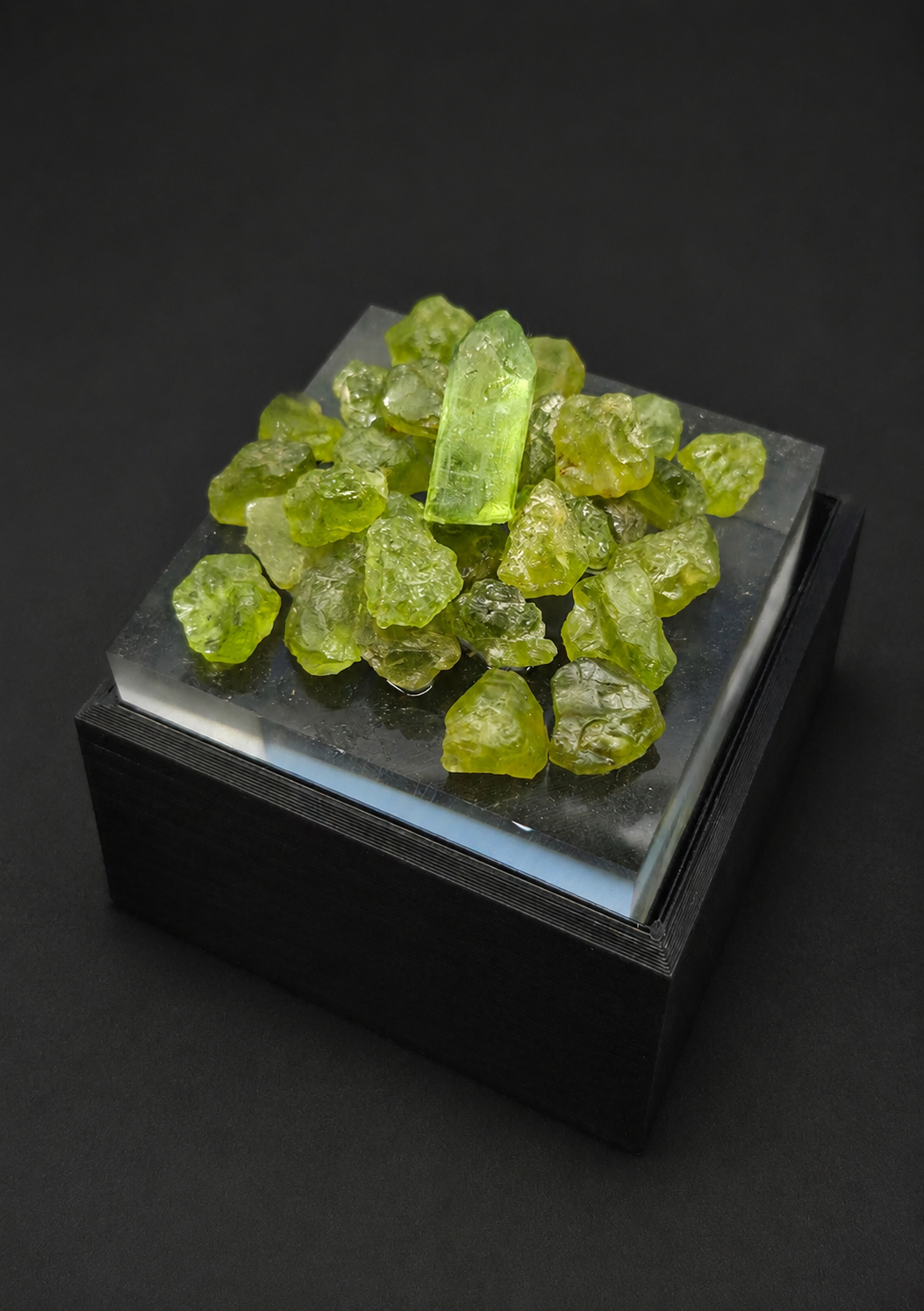
Peridot (Olivine)
A gem-quality variety of olivine formed deep within the Earth’s mantle and transported to the surface through volcanic activity. Its vivid green coloration is caused by iron within the crystal structure.
Locality -
Kohistan District, Pakistan
Geology -
Mantle-derived basaltic host rock
Size -
• Approximately 100 total carats combined weight
• Average rough crystal size: 8–10 mm
• Largest crystal: approximately 10 × 9 × 6 mm
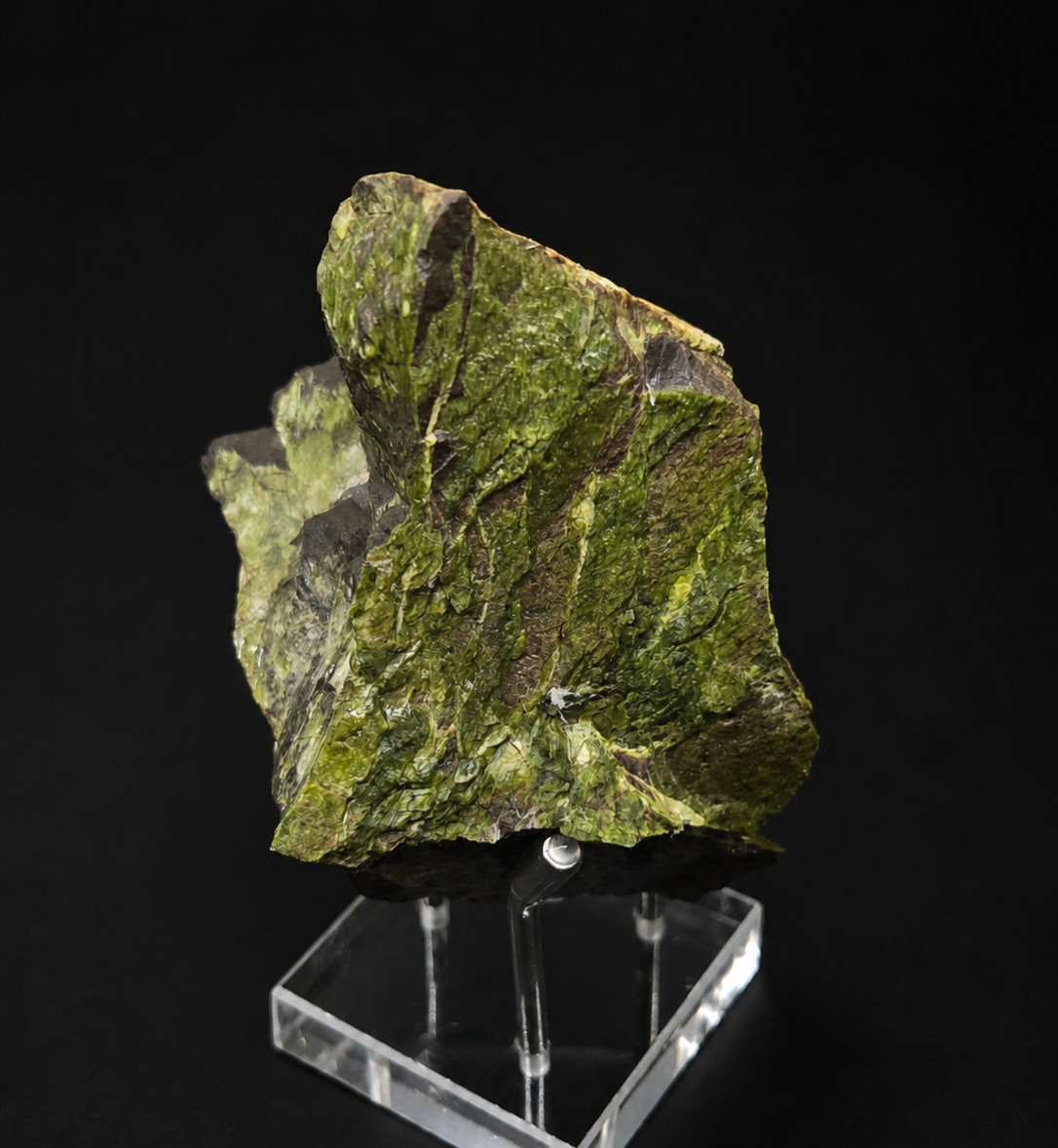
Serpentine
A group of green minerals formed by the alteration of ultramafic rocks from Earth’s mantle. Common in regional metamorphic settings, it is often associated with tectonic activity.
Locality -
Southeast Pennsylvania, USA
Geology -
Regional metamorphism of ultramafic mantle-derived rock
Size-
Approximately 80 × 65 × 45 mm
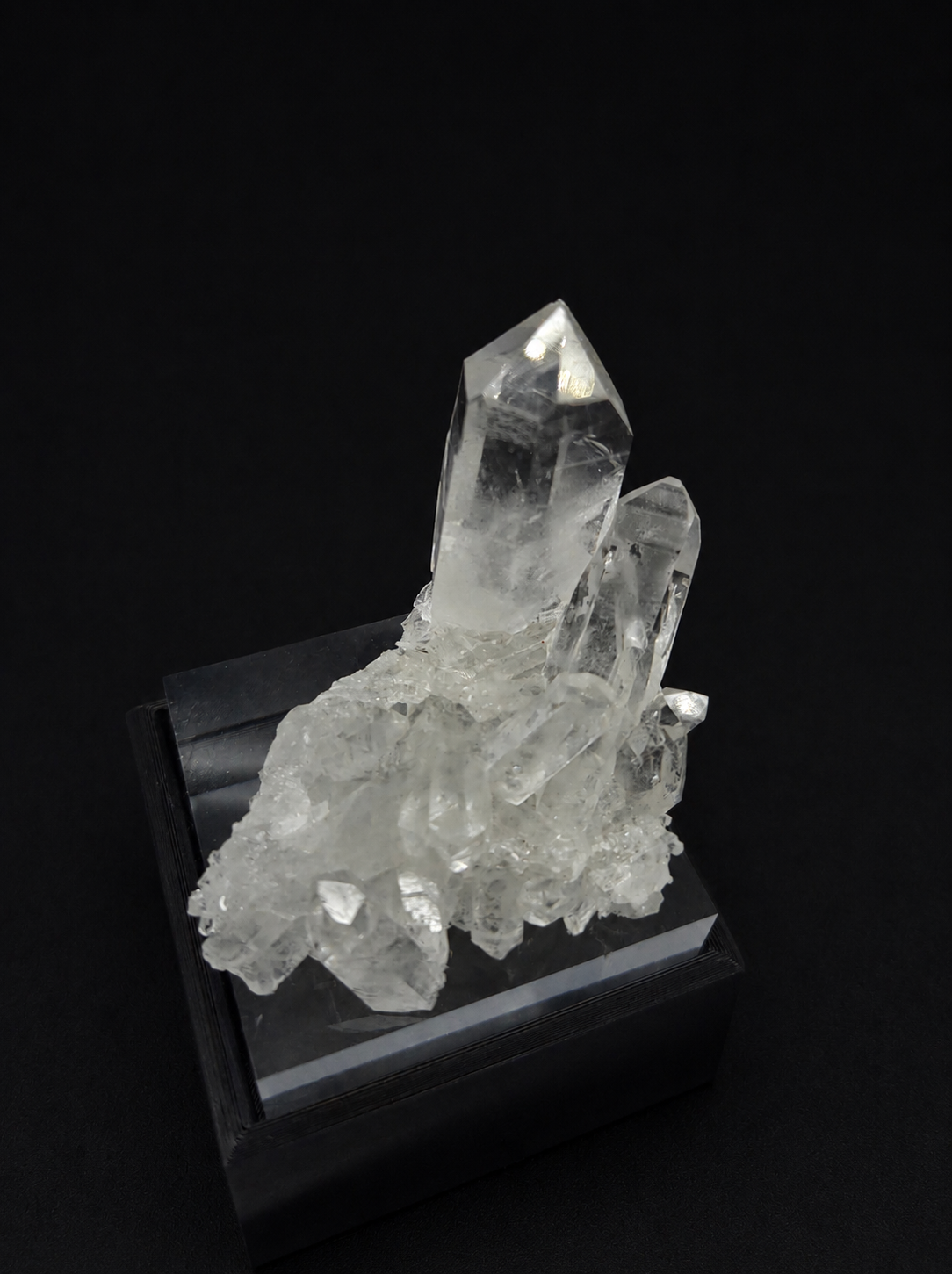
Quartz Cluster
A natural cluster of quartz crystals formed from silica-rich hydrothermal fluids. Quartz is among the most abundant and widely occurring minerals on Earth, valued for its clarity, crystal habit, and geological significance.
Locality -
Madagascar
Geology -
Silica-rich hydrothermal veins
Size-
Approximately 85 × 60 × 55 mm
Primary crystal approximately 45 mm tall
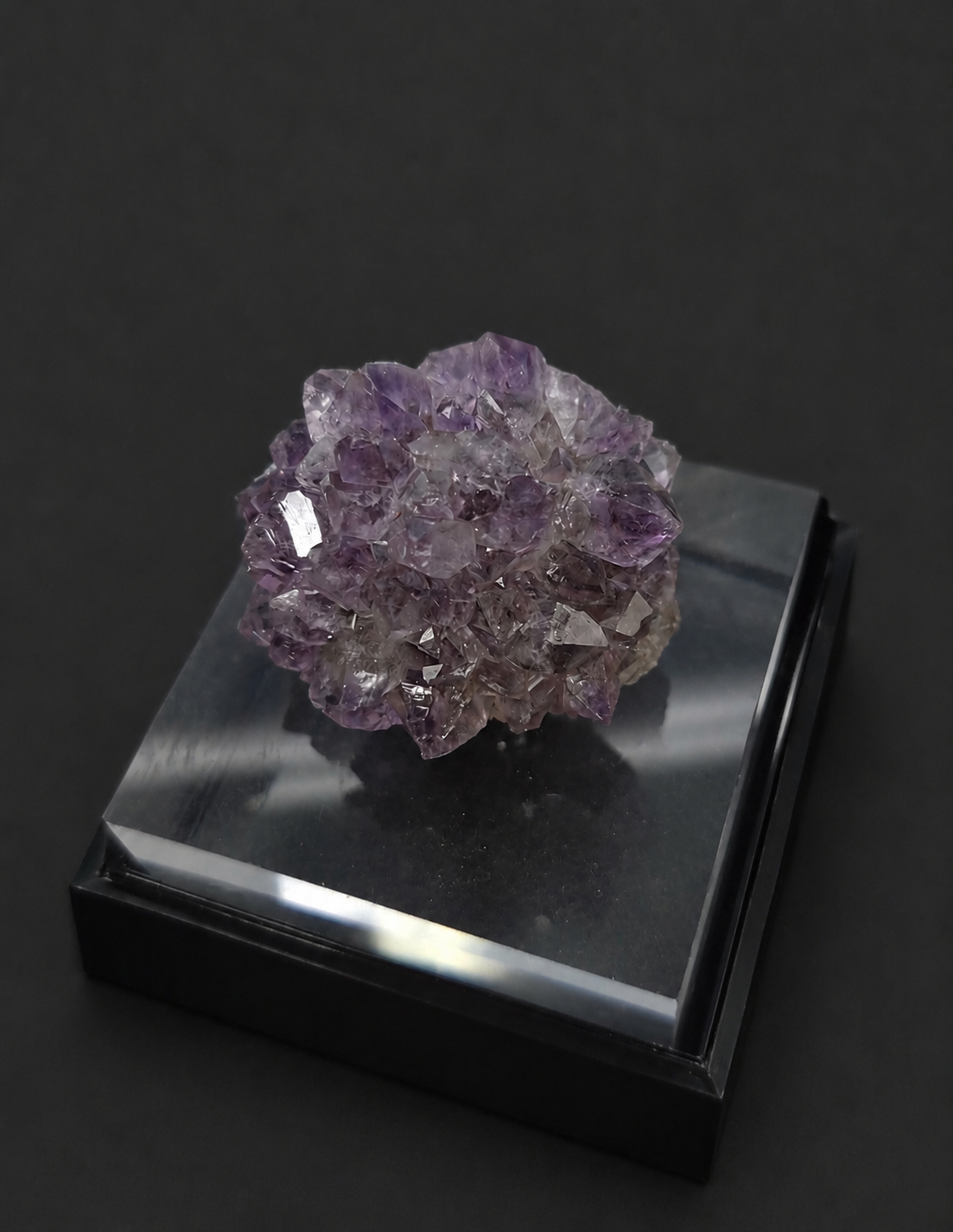
Amethyst Druze
A dense druzy surface composed of small amethyst crystal terminations formed within volcanic cavities by silica-rich mineral fluids.
Locality -
Uruguay
Geology -
Volcanic geode cavities
Size-
Approximately 45 × 40 × 35 mm
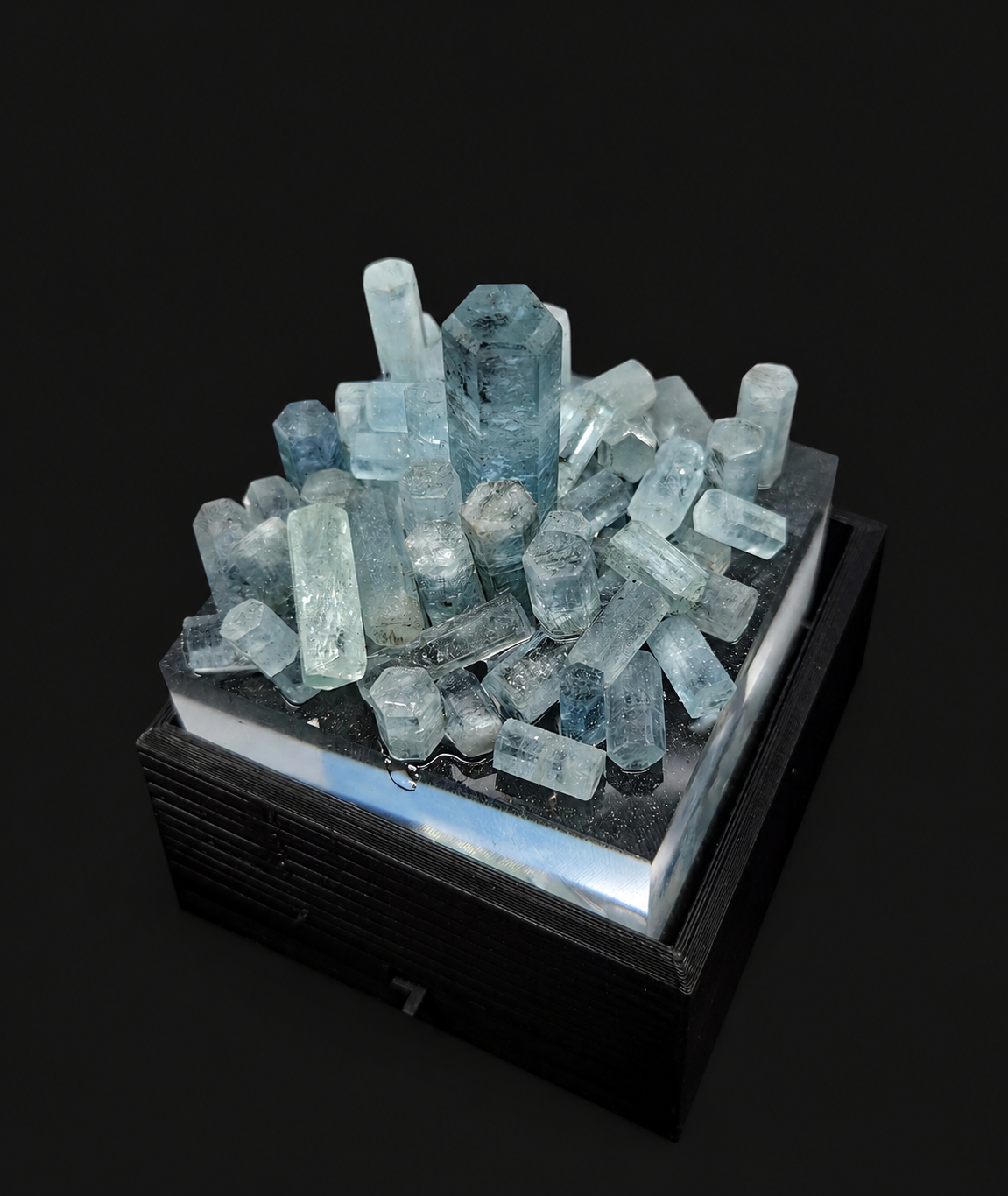
Aquamarine
Natural prismatic aquamarine crystals, a blue variety of beryl, formed within pegmatite environments under slow cooling conditions.
Locality -
Hindu Kush Mountains, Afghanistan
Geology -
Pegmatite deposits of the Hindu Kush region
Size -
Approximately 175 total carats combined weight
Crystal sizes range from approximately 10–22 mm
Largest crystal approximately 30 mm tall
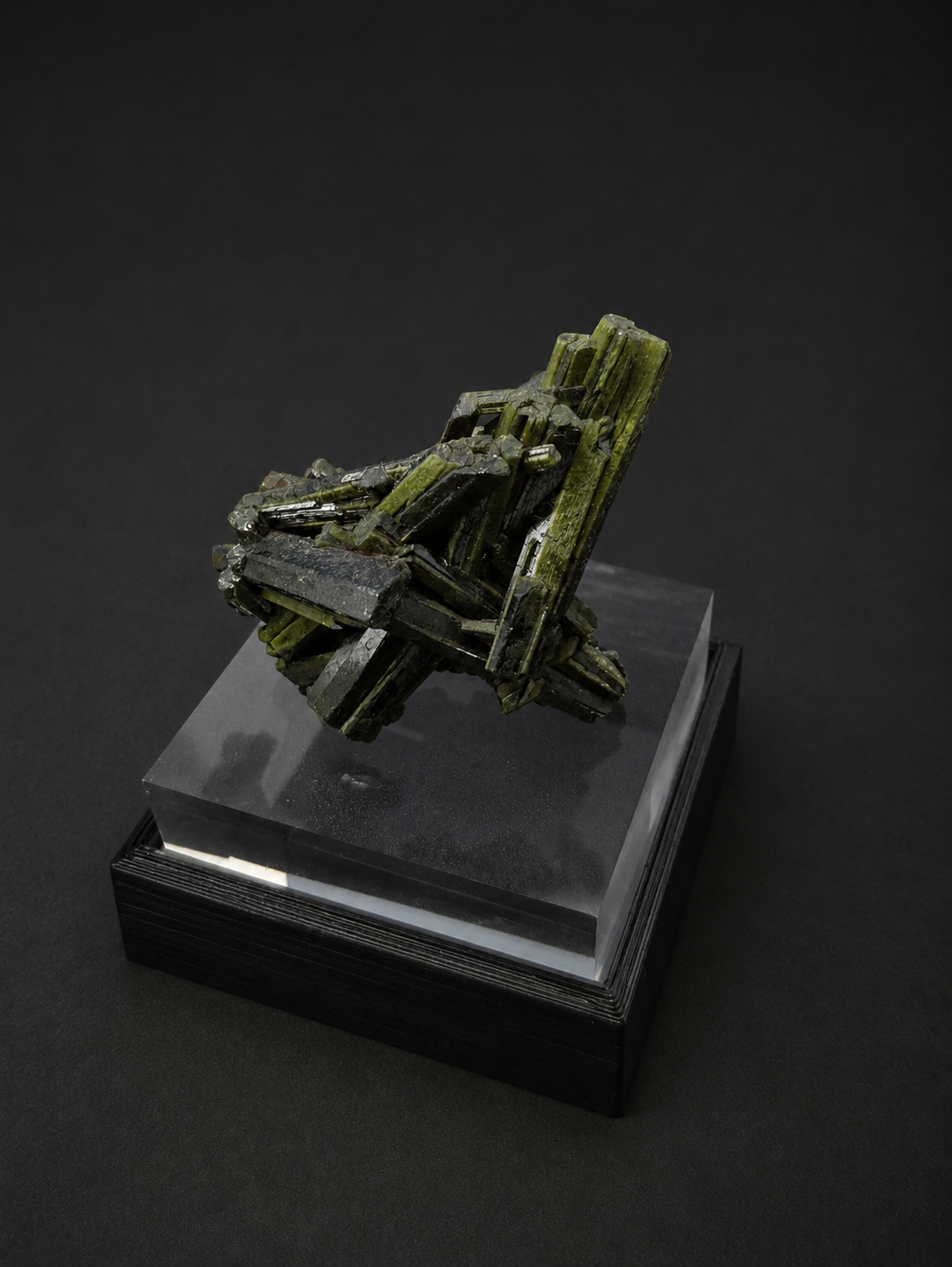
Green Tourmaline (Elbaite)
A subparallel cluster of prismatic elbaite tourmaline crystals (Na(Li,Al)₃Al₆(BO₃)₃Si₆O₁₈(OH)₄) displaying characteristic vertically striated prism faces and elongated prismatic habit, from Pakistan. The deep green coloration results from iron (Fe²⁺/Fe³⁺) substitution within the crystal structure. Individual crystals reach approximately 35 mm in length with well-developed prismatic form throughout the cluster.
Locality -
Gilgit-Baltistan region, Pakistan
Geology -
Elbaite tourmaline crystallized within granitic pegmatite systems, where late-stage magmatic fluids enriched in boron, lithium, and aluminum precipitated complex borosilicate minerals within pegmatite pockets and fractures. The Gilgit-Baltistan region of northern Pakistan is among the most prolific sources of gem and specimen quality tourmaline globally, associated with Himalayan-age granite pegmatites.
Size -
Dimensions – Approximately 55 × 45 × 40 mm
Longest crystal approximately 35 mm
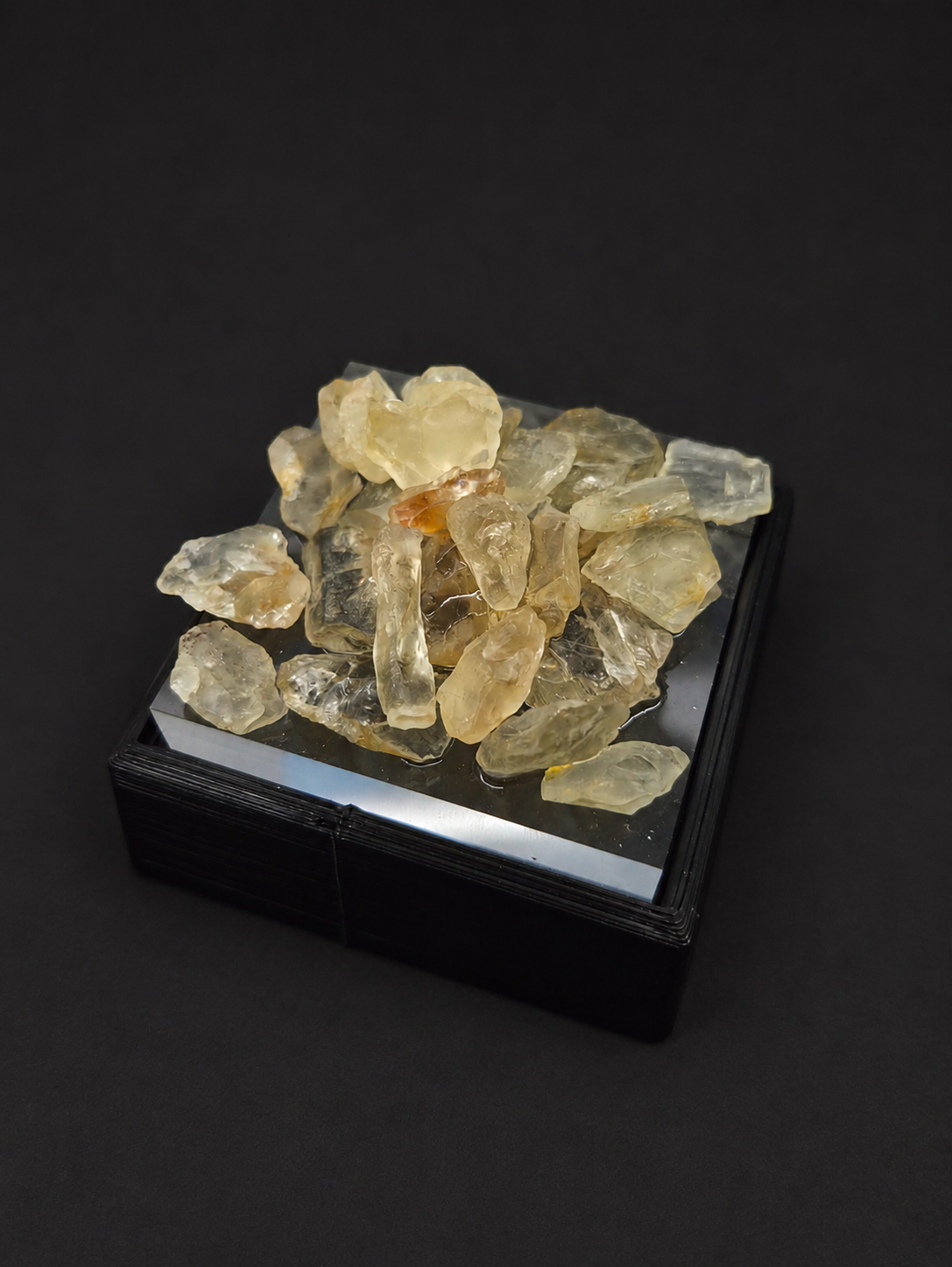
Oregon Sunstone
(Labradorite-Feldspar)
A collection of rough Oregon sunstone crystals ((Ca,Na)(Al,Si)AlSi₂O₈), from the Plush area, Lake County, Oregon — the only significant deposit of copper-bearing feldspar in the world. The crystals display characteristic plagioclase cleavage faces and range from colorless to pale yellow-peach, with copper inclusion density varying between individual pieces. Aventurescence — the metallic glitter effect produced by oriented copper platelet inclusions — is visible in select pieces under direct light. Specimens were recovered as loose roughs weathered from their basaltic host rock.
Locality -
Plush Area, Lake County, Oregon, USA
Geology -
Oregon sunstone crystallized as phenocrysts within Miocene-age basaltic lava flows of the High Lava Plains. The presence of native copper inclusions (Cu⁰) within the feldspar is geochemically unusual and specific to this deposit — most aventurescent feldspars worldwide contain hematite or goethite inclusions rather than native copper. Post-volcanic weathering of the basalt released the feldspar crystals as loose roughs concentrated in alluvial soils.
Size -
Approximately 25 grams (125ct) total weight
Average crystal size approximately 12–28 mm
Largest crystal approximately 35 mm
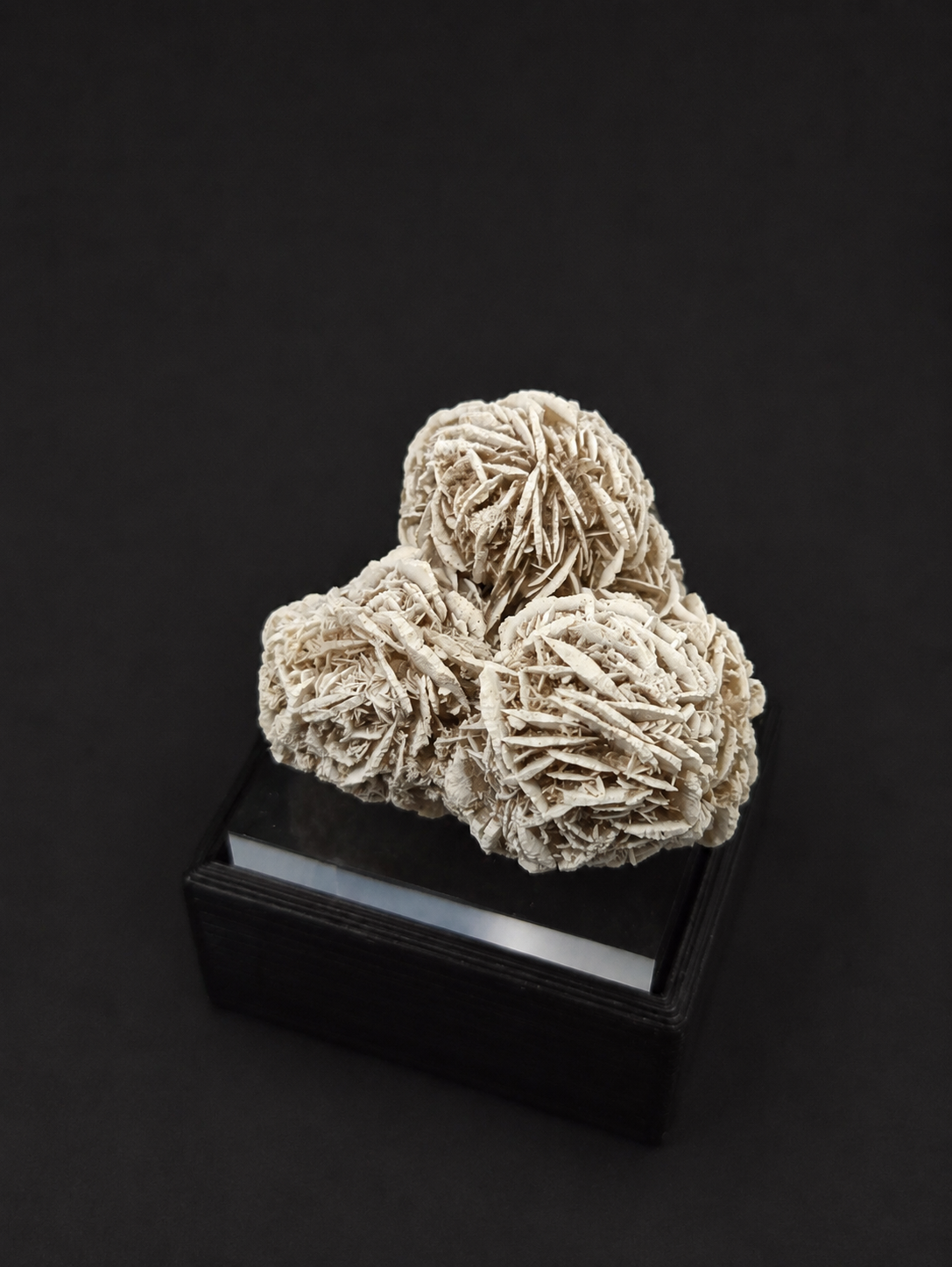
Desert Rose Gypsum
A rosette-shaped aggregate of bladed gypsum crystals forming a “desert rose” structure. The crystals incorporate sand grains during growth, producing the specimen’s characteristic texture and tan coloration. These formations develop in arid, evaporative conditions where mineral-rich ground water precipitates gypsum within loose sediment.
Locality -
Chott el Jerid Region, Tunisia
Geology -
Arid evaporite sediments with groundwater gypsum crystallization
Size -
Approximately 80 × 70 × 55 mm
Rosette clusters approximately 25–40 mm across
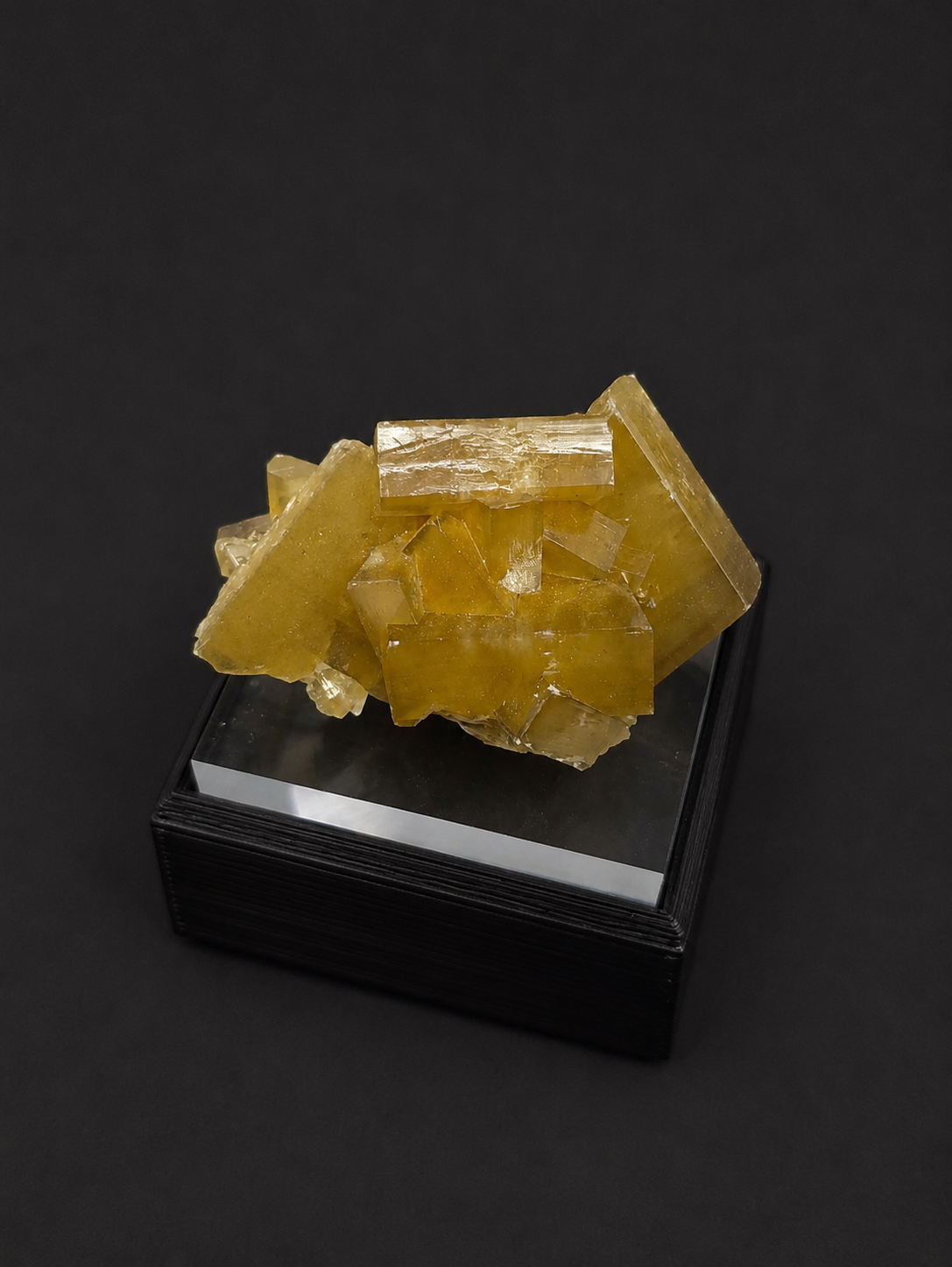
Barite
A cluster of tabular barite crystals exhibiting a warm honey-yellow coloration and characteristic tabular to plate-like crystal habit. The crystals display vitreous luster and stepped growth patterns typical of barite. Color is often influenced by trace impurities of included materials. Such specimens commonly form in hydrothermal veins and cavities associated with sulfide mineralization.
Locality -
Mibladen mining district, Morocco
Geology -
Hydrothermal barite veins associated with sulfide mineralization
Size -
Approximately 75 × 55 × 45 mm
Major barite blades approximately 25–40 mm across
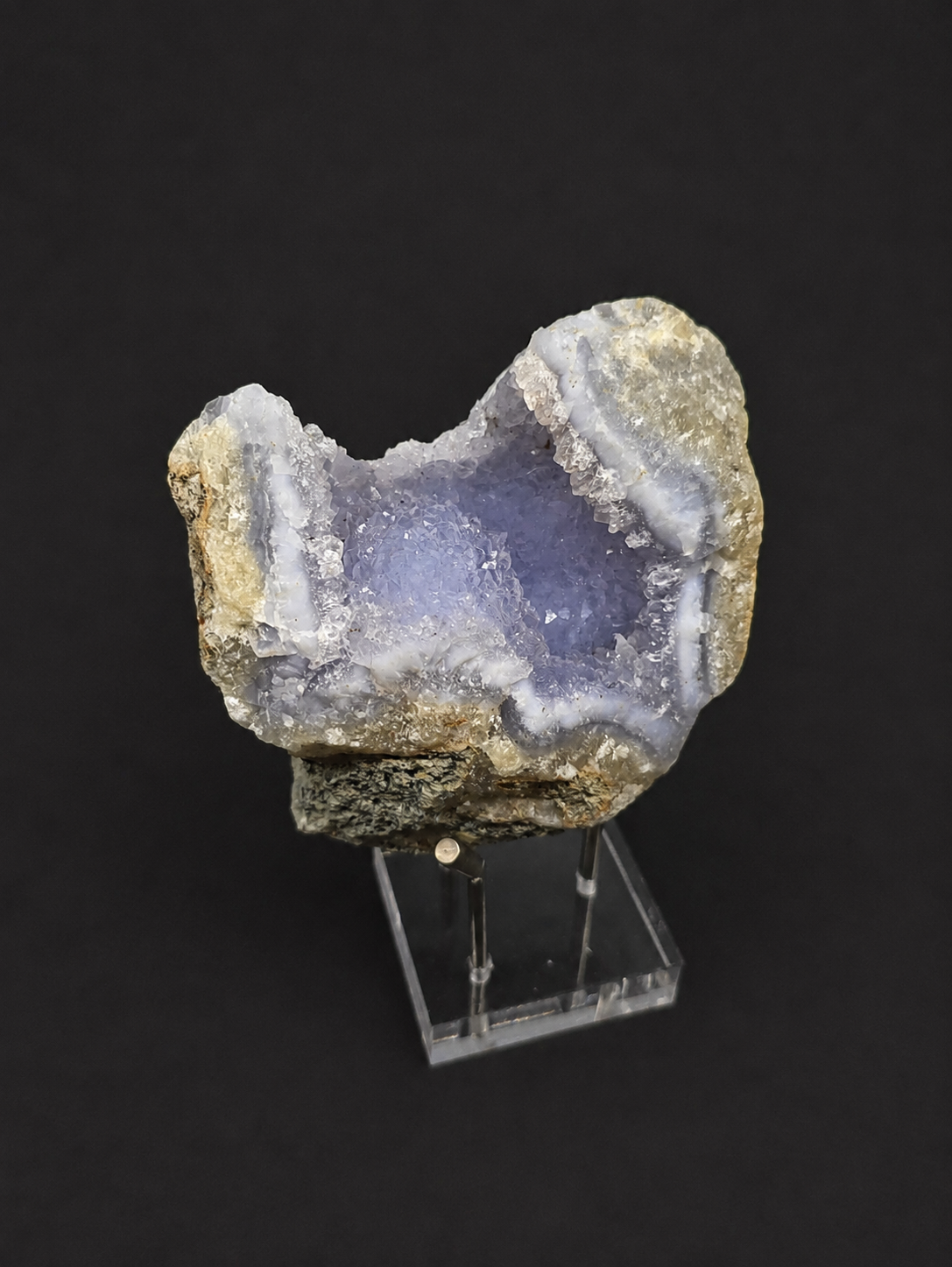
Agate Geode
A geode of banded chalcedony (SiO₂) with a central druzy quartz cavity, from the Atlas Mountains, Morocco. The outer wall displays concentric chalcedony banding reflecting episodic silica deposition within a volcanic vesicle. The interior cavity is lined with fine druzy quartz crystals representing a final crystallization phase after banding was complete. The pale blue coloration of the chalcedony is attributed to Rayleigh light scattering within the microcrystalline silica structure — the same optical phenomenon responsible for the blue appearance of the sky — rather than trace mineral impurities. The specimen retains its natural weathered volcanic host rock on the exterior.
Locality -
Atlas Mountains, Morocco
Geology -
Formed within a vesicle in basaltic volcanic host rock. Silica-bearing groundwater infiltrated the cavity over successive episodes, depositing concentric chalcedony bands inward from the vesicle wall, followed by a later crystallization phase producing the central druzy quartz lining. The Atlas Mountains region is a documented source of blue chalcedony geodes associated with Mesozoic to Cenozoic volcanic sequences.
Size -
Approximately 75 × 65 × 40 mm
Central druzy cavity approximately 40 mm across
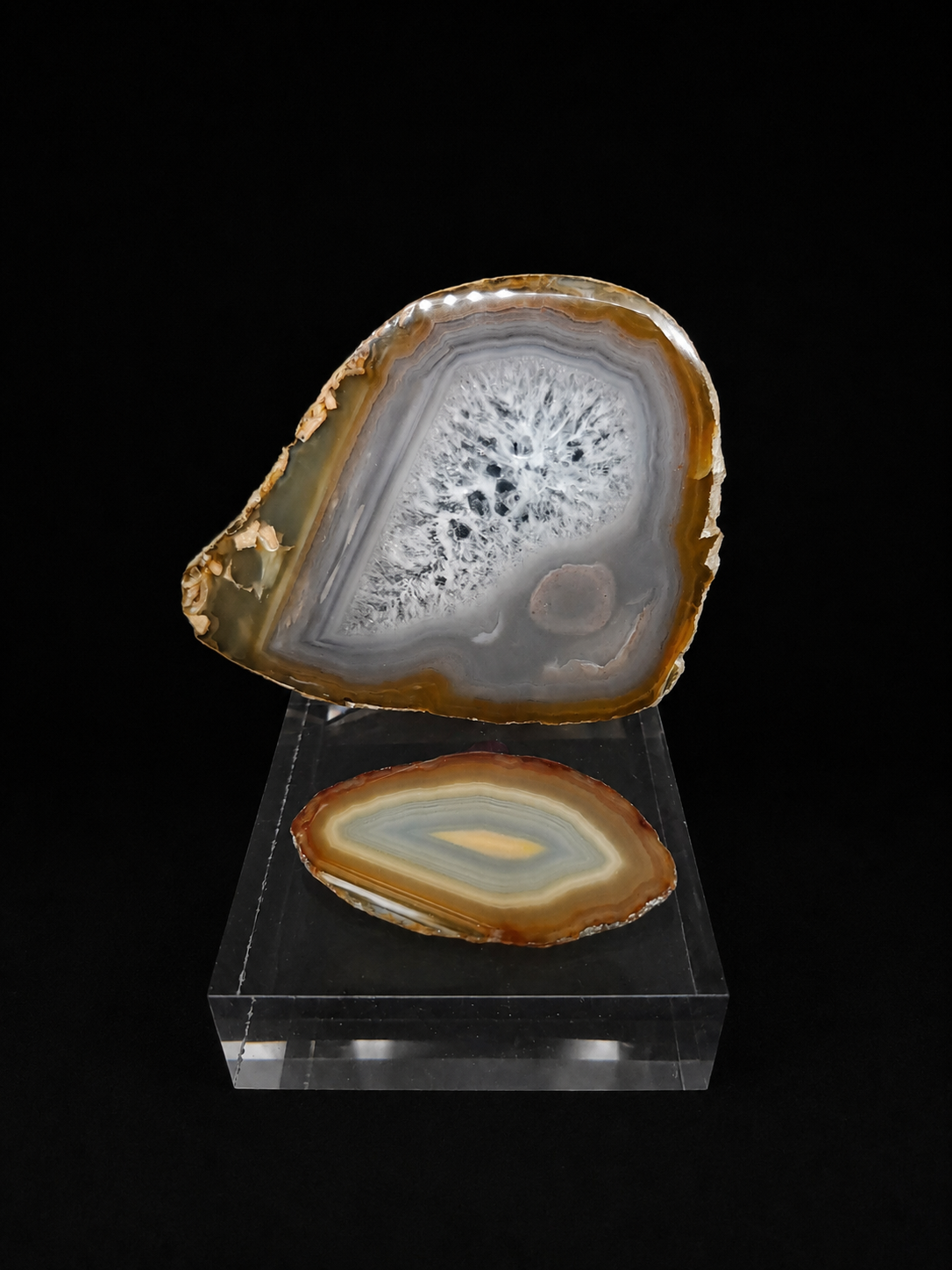
Banded Agate
A polished cross-section of banded agate (SiO₂, cryptocrystalline chalcedony) displaying well-defined concentric growth bands in tones of white, grey, and iron-stained brown, from Rio Grande do Sul, Brazil. The banding reflects episodic silica deposition within a volcanic vesicle, with each band representing a distinct fluid infiltration event. The central void has partially infilled with crystalline quartz druse, visible as the radiating white crystalline structure at the center. The natural outer rind of the original volcanic vesicle wall is preserved on the upper edge. Presented as a matched pair — main display slice and a smaller companion slice.
Locality -
Rio Grande do Sul, Brazil
Geology -
Sequential chalcedony deposition within silica-rich volcanic cavities (vesicles) in basaltic host rock. Rio Grande do Sul is the world's primary commercial source of banded agate, with mineralization associated with the Paraná Basalt flood volcanic province. Silica-bearing groundwater infiltrated vesicles over extended periods, depositing successive chalcedony layers inward from the vesicle wall.
Size -
Main slice approximately 115 × 95 mm
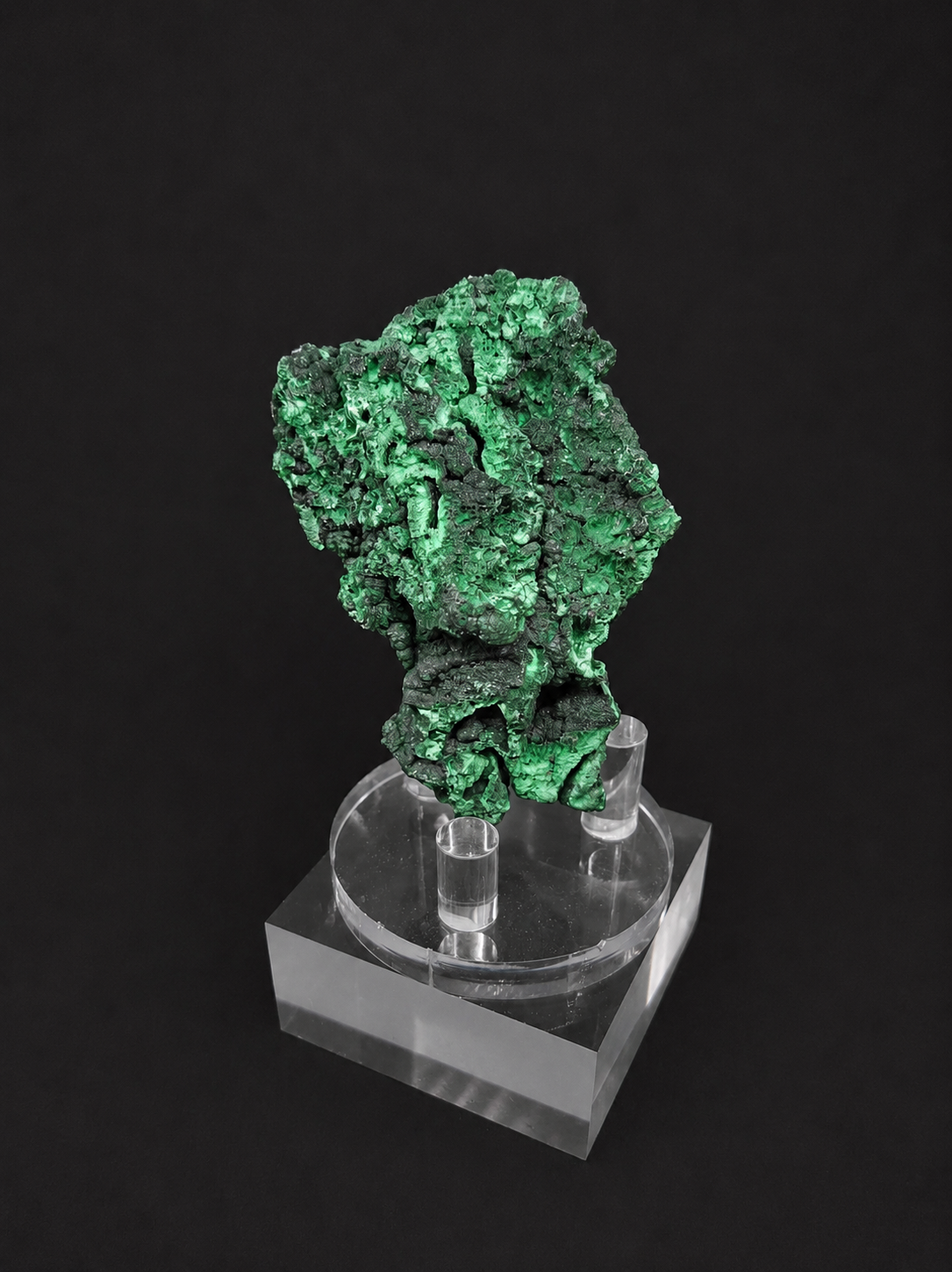
Malachite
A malachite specimen (Cu₂(CO₃)(OH)₂) displaying two distinct growth habits: fibrous silky malachite with radial crystal structure in the lighter green zones, and botryoidal malachite forming rounded masses in the darker zones. The variation in habit reflects differing crystallization conditions during successive growth phases. The dark matrix material represents remnant primary copper ore or associated oxide phases from the host deposit.
Locality -
Katanga Copper Belt, Katanga Province, Democratic Republic of Congo
Geology -
Secondary copper carbonate hydroxide mineralization formed within the oxidation zone of primary copper sulfide deposits. Malachite precipitates where descending carbonate-bearing groundwater reacts with copper-bearing primary sulfides, typically chalcopyrite or bornite. The Katanga Copper Belt represents one of the world's most significant copper mineralization provinces, with secondary oxide and carbonate minerals of exceptional quality.
Size -
Approximately 80 × 50 × 40 mm
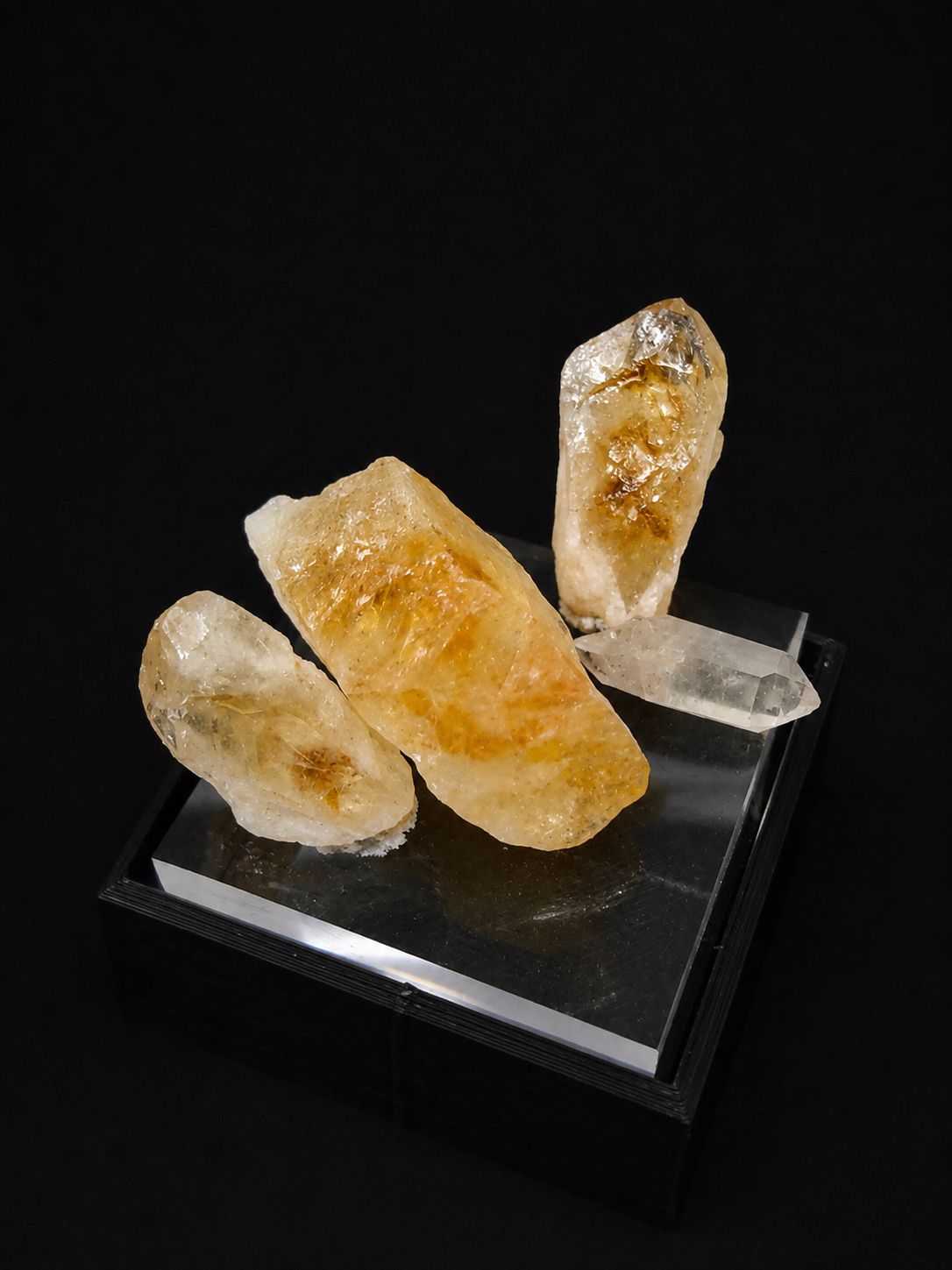
Citrine
A group of three natural citrine quartz crystals (SiO₂) displaying prismatic habit with rhombohedral terminations, presented on a display base. Crystal color ranges from pale yellow to deeper amber-orange, produced by Fe³⁺ iron impurities within the crystal lattice during hydrothermal growth. Internal color zoning and milky inclusion zones are visible within the larger crystals, reflecting variations in fluid chemistry and growth conditions. These specimens are represented as natural citrine, not heat-treated amethyst.
Locality -
Minas Gerais, Brazil
Geology -
Hydrothermal quartz mineralization within pegmatite or vein systems. Natural citrine forms where iron-bearing hydrothermal fluids deposited silica under conditions favoring Fe³⁺ incorporation into the quartz lattice. Minas Gerais is one of the globally recognized localities for naturally colored citrine quartz.
Size -
Largest specimen approximately 65 mm long
Crystal sizes range from approximately 40–65 mm
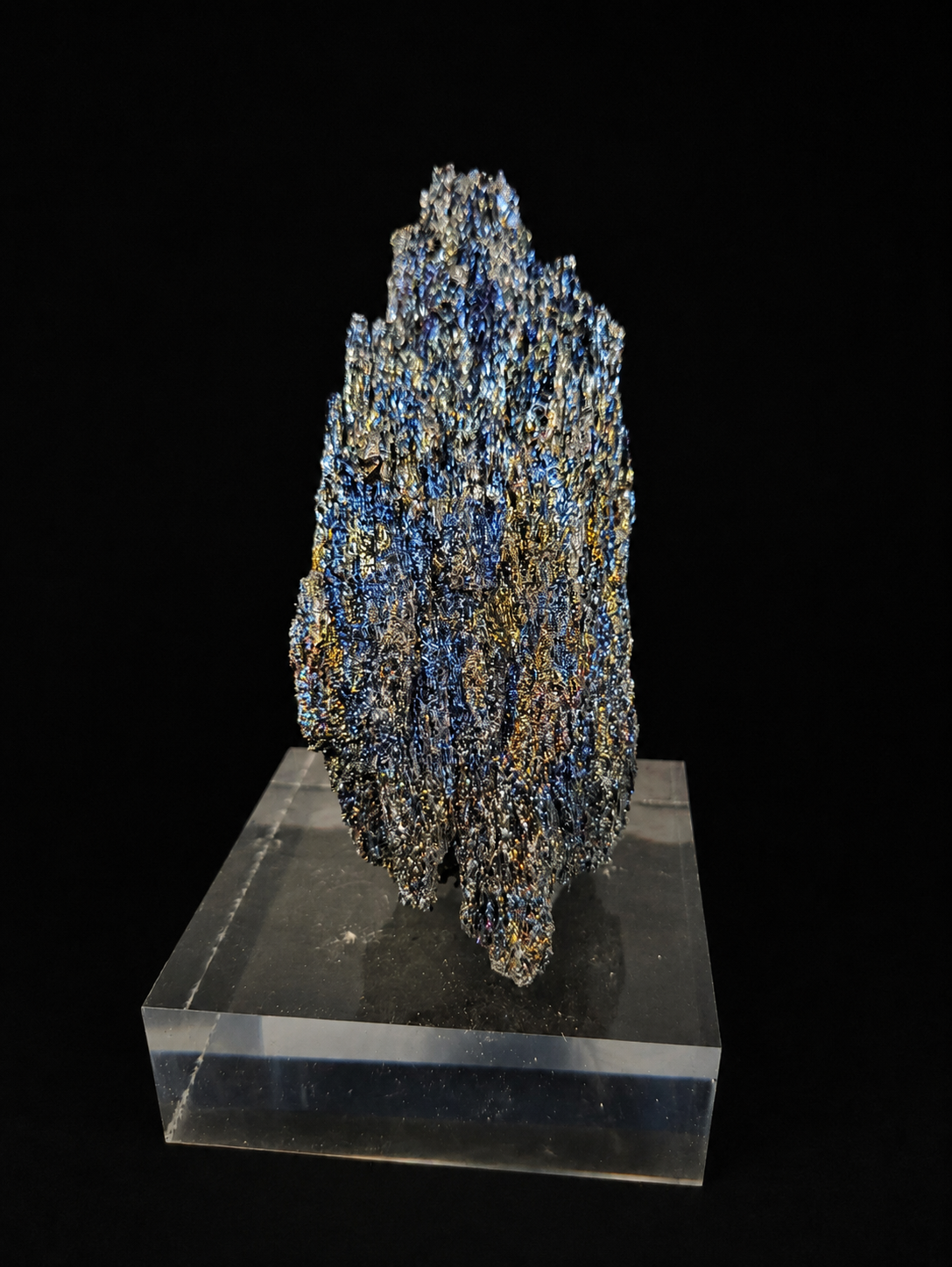
Carborundum
A synthetic silicon carbide crystal aggregate displaying metallic luster with vivid iridescent blue and multicolored surface effects. The bladed columnar structure results from high-temperature industrial crystallization processes.
Locality -
Synthetic industrial material
Formation -
High-temperature industrial crystallization of silicon carbide
Size -
Approximately 115 × 55 × 35 mm
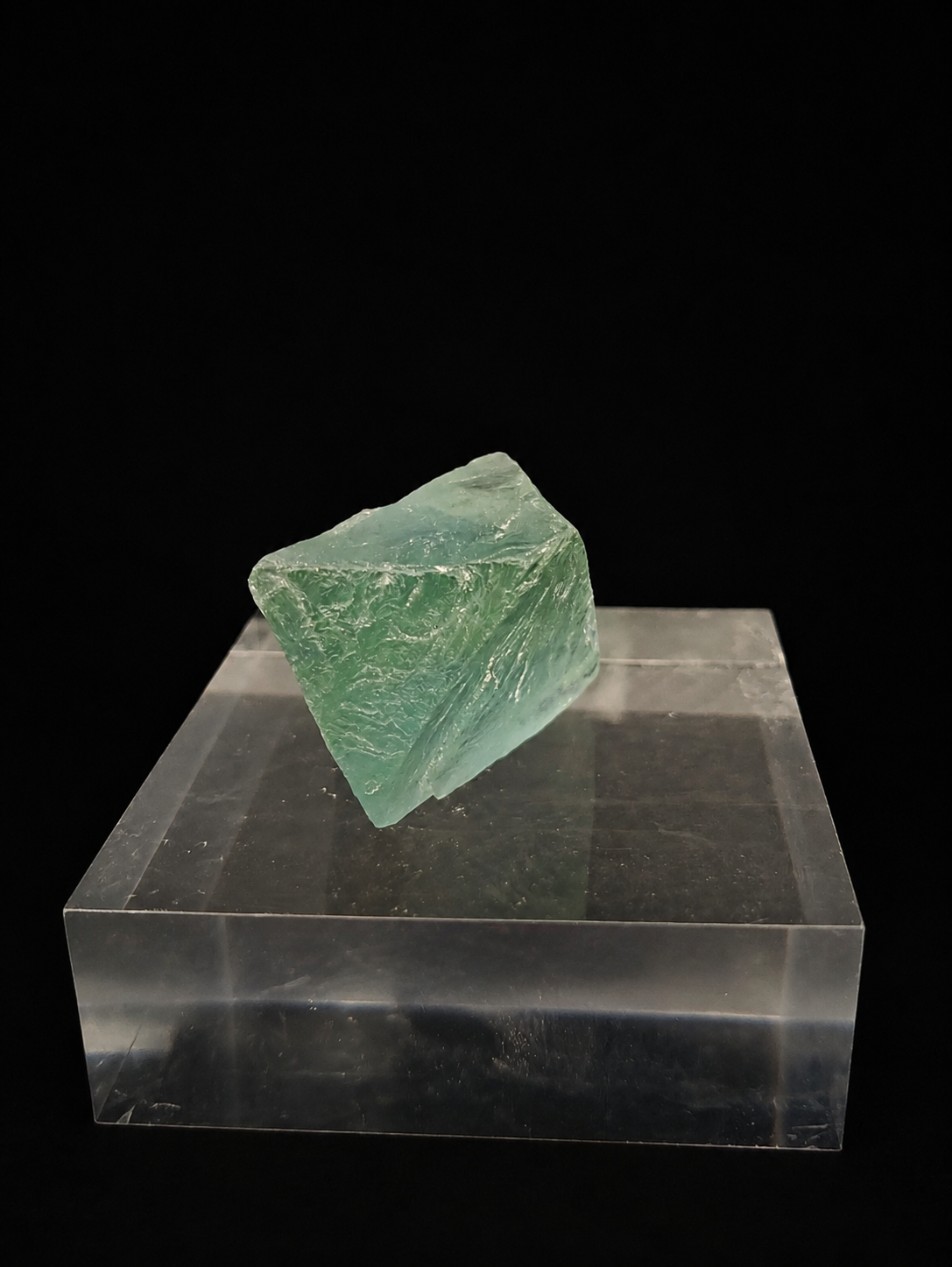
Cubic Fluorite Crystal
A pale green fluorite crystal exhibiting characteristic cubic form, internal translucency, and stepped cleavage surfaces typical of fluorite. The specimen reflects well-developed isometric crystal growth formed in hydrothermal environments.
Locality -
Las Cuevas Mine, San Luis Patosi, Mexico
Geology -
Formed in Hydrothermal Veins
Size -
Approximately 38 × 32 × 30 mm
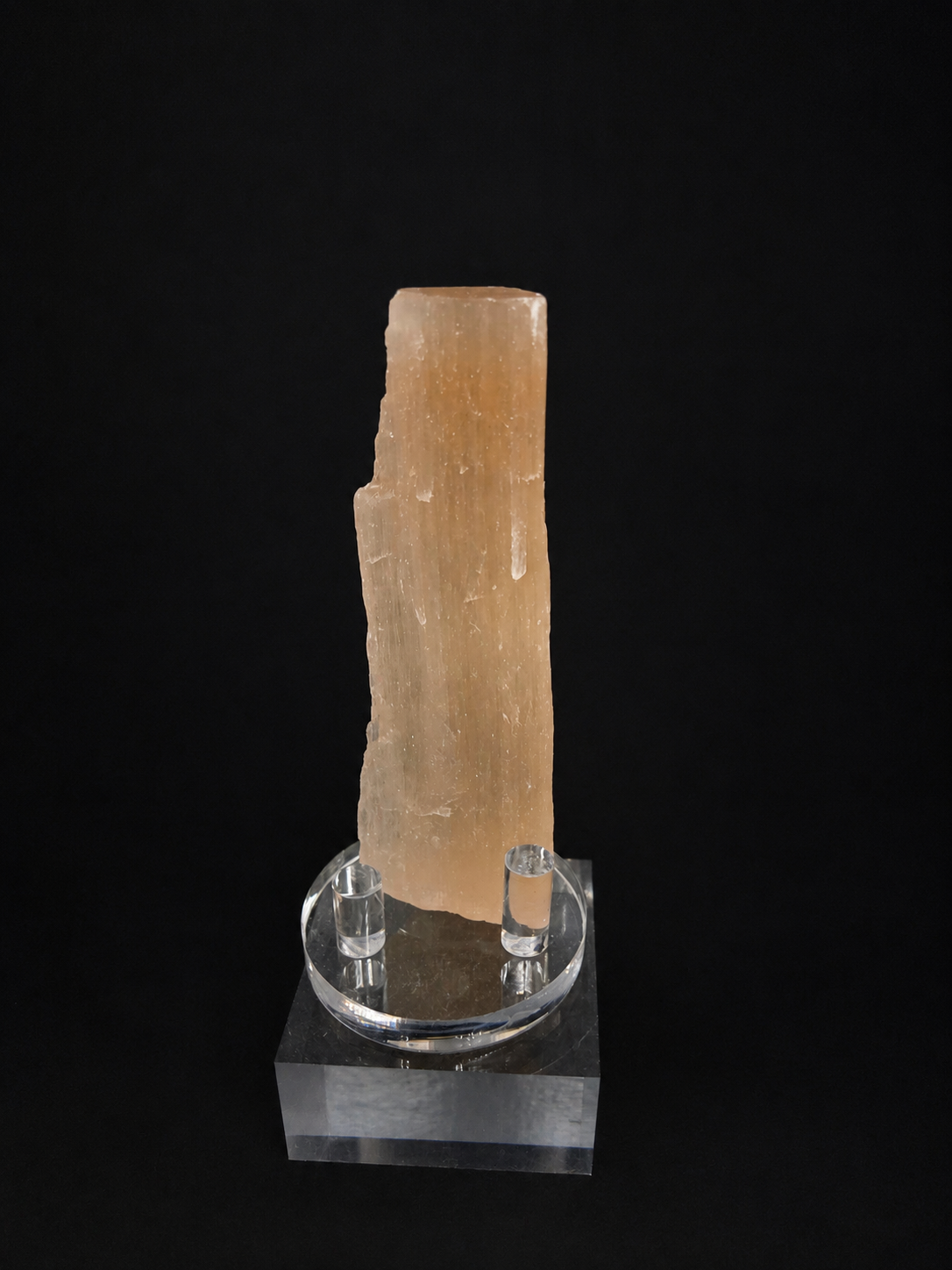
Orange Selenite
(Satin Spar Gypsum)
A columnar satin spar gypsum crystal (CaSO₄·2H₂O), a fibrous variety of gypsum sold in the mineral trade as "orange selenite." The specimen displays a well-developed columnar habit with a characteristic silky satin luster produced by tightly packed parallel crystal fibers that scatter and reflect light along the fiber axis. Iron oxide (Fe₂O₃) co-precipitation within the crystal structure during formation is responsible for the uniform peach-orange coloration.
Locality -
Unknown — locality not confirmed at time of acquisition
Geology -
Formed through evaporite precipitation of calcium sulfate from shallow saline waters or groundwater within arid sedimentary basins. The fibrous satin spar habit develops during rapid crystallization under specific low-temperature conditions. Orange coloration results from iron oxide incorporation during crystal growth rather than surface alteration.
Size -
Approximately 105 × 38 × 35 mm
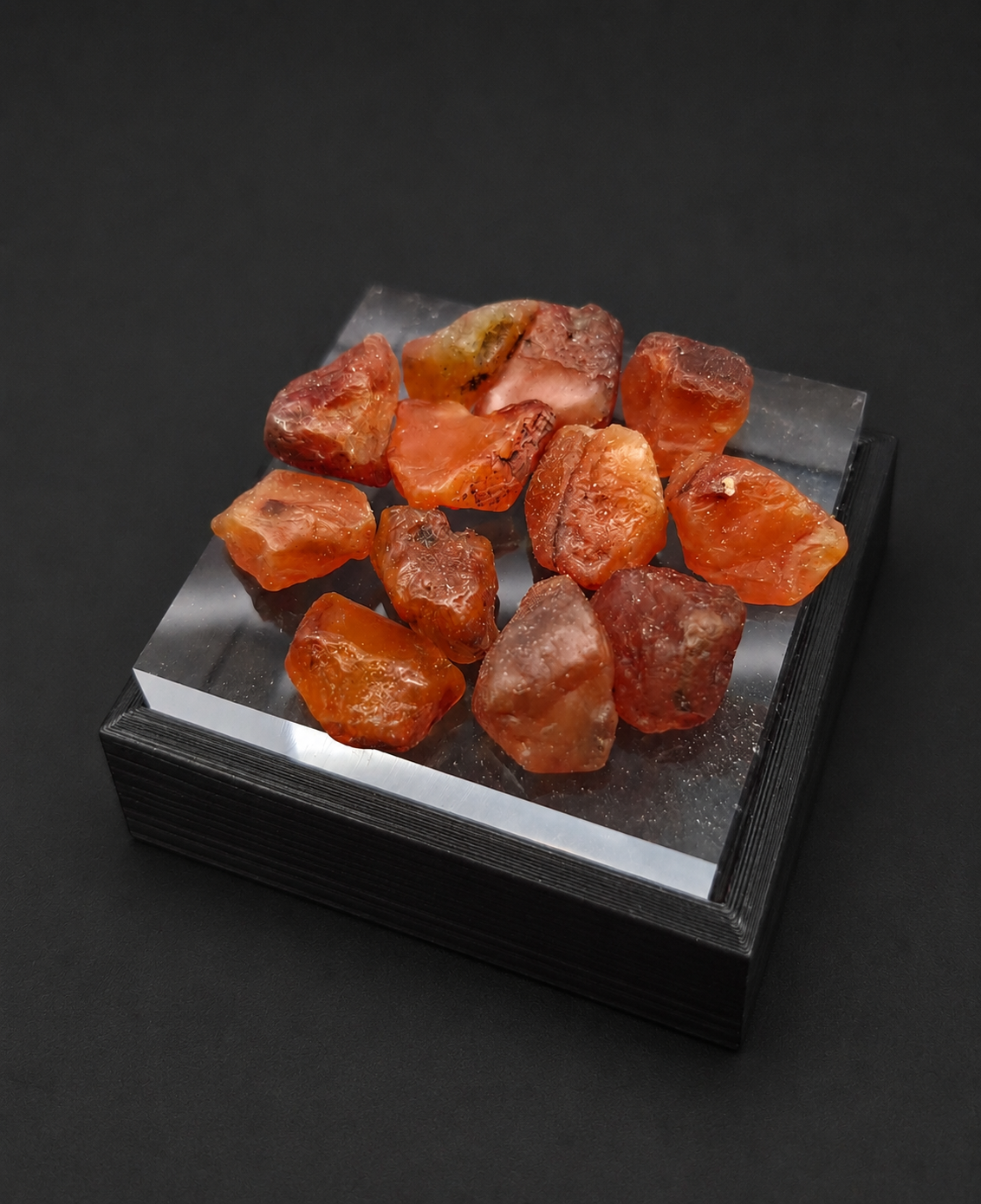
Carnelian (Chalcedony)
A translucent orange variety of chalcedony colored by iron impurities within the silica structure. Carnelian commonly forms in volcanic environments and has been valued for ornamental and decorative use since antiquity.
Locality -
Western India
Geology -
Volcanic silica deposits
Size -
approximately 20–25 mm
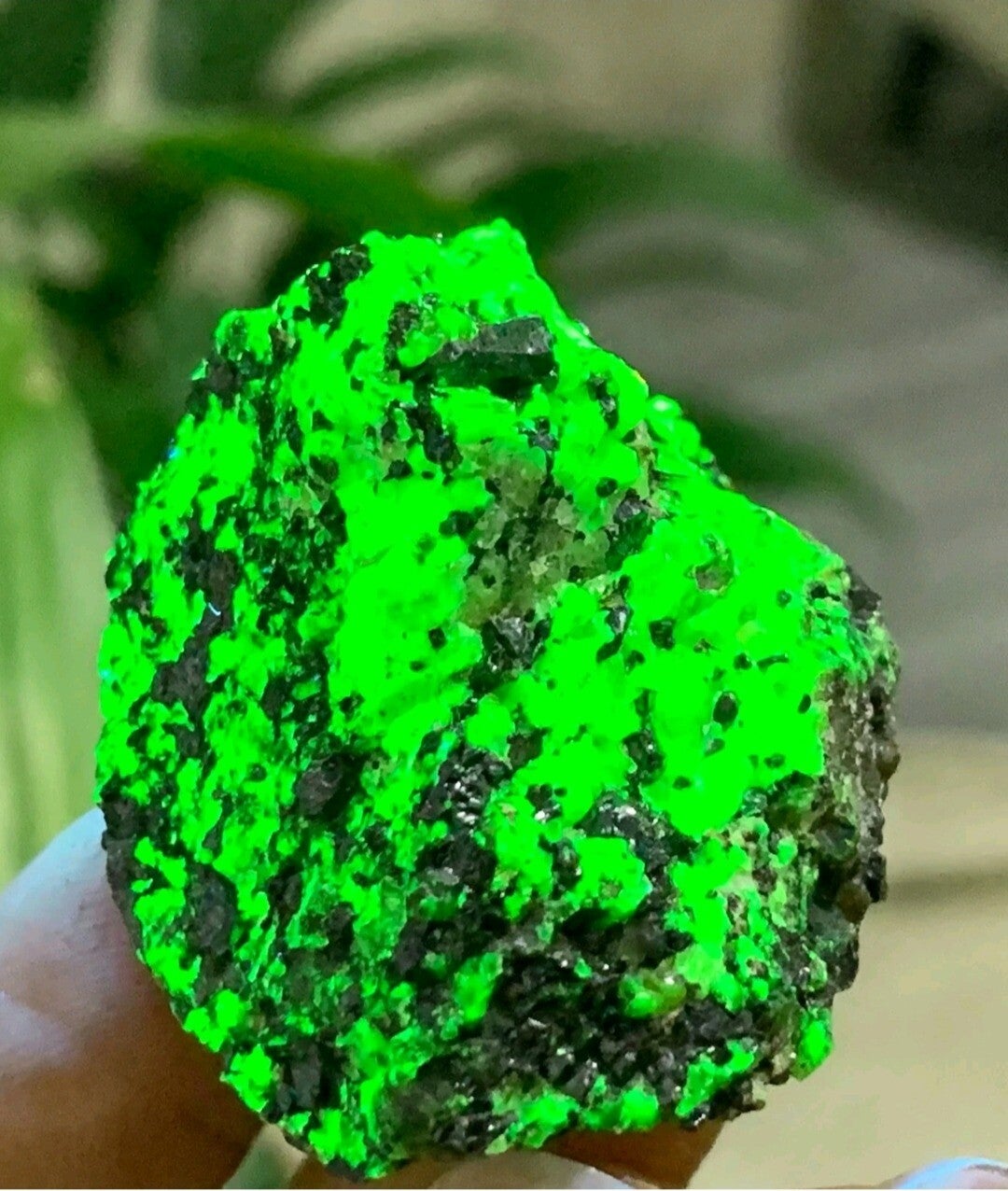
Fluorescent Willemite
A classic New Jersey mineral specimen that fluoresces bright green under UV light. Formed in a unique zinc ore deposit, it is internationally known among collectors.
Locality -
Franklin / Sterling Hill, New Jersey (USA)
Geology -
Metamorphosed Zinc Ore Deposit
Size -
Approximately 52 mm